
Archive
How green are our (summer) pastures
Wednesday, 1 Jan 2003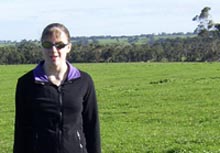 A Charles Sturt University (CSU) PhD student has won a $15 000 scholarship to help improve the growth and management of summer pastures in high rainfall areas of south western Victoria. Margaret Raeside is evaluating the benefits of a summer-growing variety of tall fescue grass species called ‘Quantum’ for the EverGraze research project undertaken by CSU and the NSW Department of Primary Industries. The project aims to boost profits to wool and livestock producers while reducing groundwater levels and reducing soil salinity. CSU’s Dr Michael Friend is an EverGraze NSW site leader and Ms Raeside’s supervisor. He said the scholarship recognises the importance of Ms Raeside’s work to utilise perennial pastures in grazing systems to improve farm profitability and environmental outcomes. The three year scholarship is from the South Australian-based AW Howard Memorial Trust.
NWGIC international quality accreditation
Wednesday, 1 Jan 2003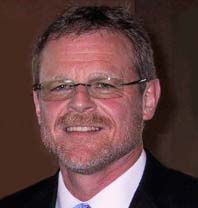 Charles Sturt University’s (CSU) National Wine and Grape Industry Centre (NWGIC) has been awarded much sought after international quality accreditation. The NWGIC, located at the CSU Wagga Wagga Campus, implemented a quality management system for its research activities in 2006. Following an external review and audit in June 2007, the Centre was awarded accreditation for its implementation of the ISO 9000 Quality Management System. This achievement, driven by Mrs Helen Pan (NWGIC), Mr Chris O'Connell (NSW DPI), Professor Geoff Scollary (CSU), and Mrs Cathy Campbell (NSW DPI), reinforces the NWGIC’s place at the forefront of Australian research facilities. Director of the NWGIC Professor Thomas Henick-Kling says the quality accreditation is a wonderful achievement and shows a commitment to quality. The NWGIC is the home of leading wine industry research activities including the Winegrowing Futures Program.
 Bless me, Father, for I have tilled
Wednesday, 1 Jan 2003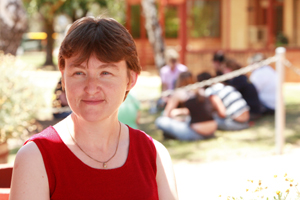 What does religion have to do with farming – and vice versa? Quite a lot, according to Dr Judith Crockett, lecturer in social sustainability at the Orange Campus of Charles Sturt University. She identified three distinct groups of farming families: the non-religious, the religious – who make occasional trips to church, often for social reasons, and Christian, whose “whole lives are permeated by their Christian beliefs and values”. These families tend to exhibit quite distinct gender and family relationships, have fewer problems with “succession planning” - the transfer of the farm between generations – and, “many are very progressive sustainable managers of land, very involved in Landcare as well as broader community activities,” said Dr Crockett. “That is because they see themselves as caretakers of the land rather than the owners of it.”
CSU Dubbo nursing student heads to Japan
Wednesday, 1 Jan 2003Charles Sturt University’s (CSU) affiliation with the Ajisai Nursing College (ANC) in Minokamo in Japan will be further enhanced when Sally Ellis, a Bachelor of Nursing student at CSU Dubbo, visits Kizawa Memorial Hospital and the ANC this month. For ten years now, Japanese students who have completed ANC’s three-year nursing diploma have been able to undertake a conversion degree to a full Bachelor of Health Science (Nursing) at CSU, which includes clinical placements at Dubbo Base and Lourdes Hospital. Ms Ellis says she wants to “develop an insight into transcultural nursing and Asian culture”, and will look at “health care delivery for the older person, and community care”. She has also been invited to observe at an open-heart operation. CSU has committed $2 000 to Ms Ellis’s trip. “It wouldn’t have happened if it wasn’t for the support of CSU,” she said. Heather Bell, Manager of Campus Services at CSU Dubbo, said, “This is a great example of the University providing support to students to internationalise their degree.”
Echinacea recommended for winter colds
Wednesday, 1 Jan 2003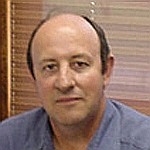 An analysis of 14 existing studies on Echinacea, published last week in the journal Lancet Infectious Diseases, shows that the herbal remedy can cut the risk of catching a cold, and reduce the severity of a cold by up to a day-and-a-half. This comes as no surprise to Dr Philip Kerr, lecturer in Medicinal Chemistry at Charles Sturt University’s Wagga Wagga Campus. “I’m a tincture rather than tablet man myself,” says Dr Kerr. Echinacea supplements are available as tablets, extracts, tincture, tea and even in fresh juice. He adds it should be taken, “At the very first sign of feeling a bit off.” Dr Kerr says to watch for the “tingle on the tongue” as a sign of an effective Echinacea remedy. Echinacea effectiveness can be reduced by “the process by which the plant extract has been prepared, and which variety of the plant has been used,” Dr Kerr said.
CSU partners IBM to raise IT skills
Wednesday, 1 Jan 2003Charles Sturt University (CSU) and international computing giant IBM have announced a scholarship and internship program that will see CSU information technology (IT) students gain invaluable industry experience with IBM in Bathurst while completing their degrees. Initially six students will receive scholarships from IBM while they work for 40 weeks part time with the global information technology provider, developing skills in application development and maintenance and IT helpdesk support. “This program provides an exciting opportunity for the University’s students to engage with one of the world’s leading corporations in providing quality courses and graduates for the information technology industry,” said Professor John Hicks, Dean of CSU’s Faculty of Business.
Nurses raise professional standing on the job
Wednesday, 1 Jan 2003 Nurses working in the Riverina will be able to complete their nursing degrees while working in their communities thanks to a collaborative program between Charles Sturt University (CSU), Greater Southern Area Health Service (GSAHS) and the Riverina Institute of TAFE. Thirty Enrolled Nurses with the GSAHS will upgrade their qualifications to Registered Nurse by enrolling in the CSU Bachelor of Nursing in 2008. To prepare them for their studies via distance education, they are participating in a two day workshop funded by the GSAHS at the University’s Wagga Wagga Campus on Tuesday 10 and Wednesday 11 July. Workshop organiser Heather Latham says this successful partnership between CSU and GSAHS is helping address the critical shortage of qualified nurses in regional Australia and the Riverina. This group will join the 35 GSAHS nurses who commenced their CSU degrees earlier this year.
The Rock of the Riverina
Wednesday, 1 Jan 2003 A landmark of the Riverina features in an exhibition of art works by Charles Sturt University (CSU) PHD student Errol Fielder. The Rock hill, an ancient and commanding monolith with a brooding presence, marks the division between the south western slopes and the western plains in southern NSW. It has been a strong influence upon the lore and history of its surrounding district. Charles Sturt during his exploration along the Murrumbidgee River used this prominent hill as a navigational reference point. Mr Field says his exhibition, The Rock Hill; Intimacy, Nostalgia and Alienation is a visual examination of the hill’s natural history, its Wiradjuri lore, its spiritual significance, its psychological influence and it’s effects on both his own and the community's identity.
A journal for a brave new world
Wednesday, 1 Jan 2003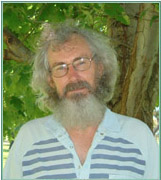 Will nano-technology save the world or spell the end of civilisation? Professor John Weckert of Charles Sturt University’s Centre for Applied Philosophy and Public Ethics says as well as those two groups of people with diametrically opposed view of this new technology, there is also a third viewpoint: “These voices are trying to get the arguments into perspective so that the technology can be used in ways that are most beneficial.” Professor Weckert is the editor-in-chief of a new journal, NanoEthics. “It was thought that now is a good time to set up an academic journal that can be a forum for serious discussion of these issues,” said Professor Weckert. He says the journal is aimed at academics, philosophers, ethicists, policy makers and “people involved in regulation, many of whom are lawyers. It is very much a cross-disciplinary journal.”
NRN celebrates tenth anniversary
Wednesday, 1 Jan 2003 1997 was a big year for Charles Sturt University (CSU). CSU was named The University of the Year for 1997 by the Good Universities Guides, the foundation stone for the first academic building at the Thurgoona site at Albury-Wodonga Campus was laid, the National Wine & Grape Industry Centre at Wagga Wagga Campus commenced work – and Australia’s third, non-commercial, independent national radio news service, National Radio News (NRN) was launched at the Bathurst Campus. From small beginnings, “about 30 stations in the network in the early days – mostly in NSW and Victoria,” according to NRN Manager Peter Hetherington, NRN has grown to providing a news service to “just on 100 stations in every state and territory across Australia”. Mr Hetherington says NRN is looking to soon provide an Internet delivery of service that will include podcasting, full-length interviews and specialist reports.