
Archive
Champion for community services retires
Tuesday, 11 Jul 2006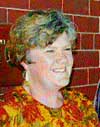 A leading advocate for community services in regional Australia and an academic who has championed the cause for older Australians, Celia Bevan, will retire from Charles Sturt University (CSU) this week. Apart from a 12-year academic career as course coordinator in gerontology with CSU, Ms Bevan was a NSW representative with the Australian Council for Social Services (ACOSS) and NSW president and national secretary with the National Tertiary Education Union (NTEU). Ms Bevan will be farewelled by her academic colleagues this Thursday 13 July at the University’s Albury-Wodonga Campus.
Local expert on national diabetes concern
Tuesday, 11 Jul 2006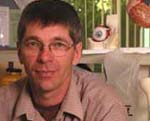 Charles Sturt University (CSU) diabetes expert Dr Herbert Jelinek is concerned at the rapid growth of diabetes on the Border and around Australia in recent years. “Diabetes is the fastest growing disease in Australia, a trend reflected in regional areas including Albury-Wodonga,” he said. Dr Jelinek leads a group of CSU researchers investigating low-cost methods of assessing people for diabetes at the early stages of the disease. “We aim to allow diabetes and its complications to be assessed quickly in screening units in regional and rural areas before people face the more debilitating symptoms of the disease, such as high blood pressure and blindness,” Dr Jelinek said. This week is National Diabetes Week which runs until 15 July.
 A magic pill
Tuesday, 11 Jul 2006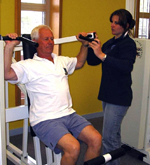 “As you get older you get weaker and become more frail. Imagine a magic pill that could turn the clock back 10 or 20 years. With all the research we have, resistance training is the closest you are going to get to a magic pill,” says Dr Jack Cannon of Charles Sturt University’s (CSU) School of Human Movement Studies. Dr Cannon’s PhD research showed that resistance training can improve the quality of life in older women. Last year in conjunction with the Bathurst Information and Neighbourhood Centre he and colleague Dr Rylee Dionigi ran the Promoting The Power In You program for Bathurst residents over the age of 60, with remarkable results. Dr Cannon and Dr Dionigi found that all the participants reported feeling much better both physically and mentally during and after their 12-week exercise program. Dr Cannon says, “They were able to do things they were not able to do previously and things they were able to do, they could do with a lot more ease. One said instead of struggling to pull herself out of the bath, she was almost jumping out. Someone else said they were riding their pushbike in fifth and sixth gear instead of third gear. They would play golf all day and come home fresh and be able to cook dinner and walk the dogs, instead of just crashing on the couch.” Jim Glen was one of the participants last year. “The gym undoubtedly did help, I felt much stronger. My wife thought I was trimmer. I recommend it often to people.”
Leading CSU woman Professor named in Who’s Who
Tuesday, 4 Jul 2006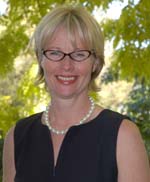 One of Charles Sturt University’s (CSU) leading academics Professor Gail Whiteford has been added to the latest list of top achieving women in Australia. Professor Whiteford joins over 4 000 high-profile achievers and unsung heroes across Australia in the new Who’s Who of Australian Women released on Friday 30 June. Originally educated as an occupational therapist (OT) working extensively in Australia and overseas, Professor Whiteford has over 20 years involvement in OT and holds several national professional positions. Her current research interests include research into occupational and professional and intercultural practice with research projects in the Murray Valley of southern Australia and in Vietnam. Professor Whiteford is now Head of the University’s Albury-Wodonga Campus as well as Director of the University’s Centre for Research into Professional Practical Learning and Education (RIPPLE) and a senior researcher with the centre. In her work to nurture other academics, Professor Whiteford also spearheaded a new program at CSU in 2004, the Banksia Program, to encourage more women researchers to undertake and complete research.
 Drought research prompts a philanthropic visit to CSU
Tuesday, 4 Jul 2006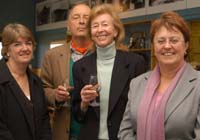 The importance of recent drought research by rural social researchers from Charles Sturt University (CSU) was on the agenda during a visit to the University’s Wagga Wagga Campus by members of the national philanthropic organisation, the Rural Education Program of the Foundation for Rural and Regional Renewal (FRRR). Led by FRRR patron and head of the Myer Foundation, Ballieau Myer, the group met with Professor Margaret Alston and Dr Jenny Kent from the University’s Centre for Rural Social Research on Saturday 1 July. As part of the vision of Federation for Rural and Regional Renewal to support communities to respond positively to change and build social and economic wealth in rural and regional Australia, the Foundation funded research into the impact of drought on young people’s access to education. The report, entitled The impact of drought on secondary education access in Australia's rural and remote areas, was also funded by the Federal Government. “The visit to the University gave us a chance to thank the Foundation for financially supporting significant research into the impact of one of the country’s worst droughts,” said Professor Alston. Further information on the drought report, including key recommendations can be found here.
Deliberately reviving local support
Tuesday, 4 Jul 2006 When Central Tablelands Landcare held community forums to try and boost local support, they turned to Charles Sturt University (CSU) lecturer Zelma Bone to monitor and evaluate their efforts. Using a grant from the Natural Resources Advisory Council of NSW and her US experience with what is called deliberative process, Ms Bone and Dr Judith Crockett from CSU have assisted in three community forums so far, not only reinvigorating interest in Landcare, but also re-engaging the locals in community issues. In Blayney, the Landcare group established a relationship with one of the local schools, overcoming transport obstacles which had held them back in the past. And in Millthorpe, the primary school community garden will expand with help from the local gardening club, prompting interest in locally grown produce. Ms Bone explains that deliberative forums are unlike public meetings “where you get a lot of discussion and debate but sometimes not very useful outcomes. Deliberation is a process where we identify a couple of choices, look at the costs and consequences of each one, and ultimately the real benefit is moving people from the individual to a more community perspective”. Central to the success is follow-up, says Ms Bone. “They agree on a project, and we can help with external resources or steer them in the right direction, but then it is up to them. Our project goes back to these local communities in six months time to track the progress.”
International workshop on rare genetic disorder
Monday, 3 Jul 2006 The co-discoverer of a rare genetic disorder, Smith-Magenis Syndrome (SMS), will attend an international workshop on the disorder in Wagga Wagga on Tuesday 4 July. Dr Ann Smith, a genetic counsellor and head of the SMS Research Unit at the National Human Genome Research Institute in the US, will be a special guest at the workshop. Charles Sturt University (CSU) senior molecular biology lecturer and workshop organiser, Dr Chris Blanchard is the founder and mentor for the CSU Smith-Magenis Syndrome research group and is the father of a five year old daughter with SMS. The syndrome which is caused by a missing piece of genetic material from chromosome 17 (deletion 17p11.2), was first described by Dr Ann Smith and Dr Ellen Magenis in the early 1980s. Smith-Magenis Syndrome is a chromosomal disorder characterised by a recognisable pattern of physical, behavioural and developmental features including facial appearance; infant feeding problems; developmental delay; chronic ear infections; hearing impairment and speech delay. Although the condition is incurable and often underdiagnosed, it is estimated there are more than 1 000 people with SMS in Australia. “The workshop will provide local allied health professionals with an increased understanding of what is thought to be one of the most difficult genetic syndromes to treat and manage,” Dr Blanchard said. “The visit by three world-renowned US scientists highlights the increasing importance of research being undertaken at CSU.” Further information on SMS is available here.
The US pharmacy experience
Tuesday, 27 Jun 2006 The pharmacy program at Charles Sturt University (CSU) has been learning throughout June from the experiences of a visiting Professor from Denver in the USA. Professor Christopher Turner is Director of Experiential Programs at the School of Pharmacy, University of Colorado. Taking the opportunity of a change in the registration requirements for pharmacists in the USA, the University revised its pharmacy program so that students would gain experiences that would better position them to accept their professional responsibilities at graduation. This was based on progressively pushing students beyond their comfort zones through a range of experiential learning throughout their training. “This has had the effect of bringing students to greater competence and confidence at graduation,” said CSU Professor of Rural Pharmacy Patrick Ball, who has been accompanying the visiting US Professor. “Being competent in specific tasks before taking up a student placement has allowed the students to contribute actively to their workplace,” he added. More than 120 students started in CSU’s pharmacy program in 2006 including 45 in Orange and 79 in Wagga Wagga. This brings the total number of students in the first non-metropolitan pharmacy program in Australia in 2006 to about 340.
 Out of the ashes
Tuesday, 27 Jun 2006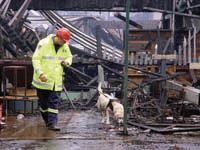 When Kelso High School burned to the ground in August last year, it was a sad day for school education in the Bathurst region. But now a new secondary college concept is rising from the ashes, sparked by a unique collaboration between Kelso and Bathurst High Schools, the local community, TAFE and Charles Sturt University (CSU). Mr Mike Tom, a project manager with the Department of Education and Training (DET) says the new school will share curriculum in years 11 and 12 with Bathurst High School and he is hoping the project will encourage even greater cooperation with CSU. A “critical friend” in the process according to Mr Tom, is Dr Alan Bain, an expert in school renewal from CSU’s School of Teacher Education. Dr Bain worked on a number of public, private and charter school reform and renewal projects in the US and internationally before coming to Bathurst a few years ago. Dr Bain says while secondary college collaborations do exist in other parts of the state and country, the circumstances in Bathurst are unique with a TAFE and University in the same town. “It’s an opportunity for a different kind of collaboration, being driven by a series of unfortunate and traumatic events but nonetheless with the promise of producing something powerful. It has immense potential for CSU, TAFE and for other schools,” Dr Bain says.
 Wife accepts late husband’s PhD at St Mark’s graduation
Tuesday, 27 Jun 2006 David Hunter was determined to complete his PhD thesis before he died of bone marrow cancer in December 2003. After 10 years of juggling study, caring for three young children and cancer treatment, David completed the draft of his thesis on the hermeneutics of French philosopher Paul Ricoeur applied to the Gospel of John, just two weeks before his death at the age of 41. David’s widow, Rev. Jeanette Mathews accepted David’s posthumous Doctorate of Philosophy on his behalf at Charles Sturt University’s (CSU) School of Theology graduation earlier this month (June 2). As well as working on his PhD, David was a sessional lecturer in New Testament studies at CSU’s School of Theology which is based at St Mark’s National Theological Centre in Canberra. David Hunter did a degree in Agricultural Science at Melbourne University before switching to theology. After he and Jeanette were married they both completed Bachelor of Divinity degrees at the international Baptist Theological Seminary near Zurich, Switzerland. They moved to Canberra when Jeanette was appointed Associate Minister at the Canberra Baptist Church in 1997. David combined his PhD work with being a househusband and primary carer of the couple’s three young sons as well as his active involvement in social justice issues and Aboriginal reconciliation. After being diagnosed with Multiple Myeloma in 2000, David kept up his study which Jeanette says was “life-giving and sustaining” for him during his illness. “As I stood in David’s place to accept his PhD I felt his life’s work had been completed but it wouldn’t have been finished without the help and support of our friends and colleagues at St Mark’s,” said Jeanette who is also a sessional lecturer at St Mark’s National Theological Centre.