
Archive
Location, location, location
Wednesday, 1 Jan 2003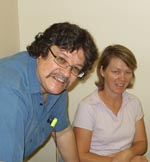 Is it fair that educational achievement can depend on where you live? Anecdotally, it is known that young, inexperienced teachers fresh out of university are usually sent to unpopular destinations such as western NSW. Another assumption is that school students in these areas have uneven educational outcomes. Now these "hunches" have been verified by the Rural (Teacher) Education Project, and the search is on for some solutions. "It’s all about attracting, preparing, retaining and renewing teachers for the bush," said project leader Professor Bill Green from Charles Sturt University’s (CSU) Faculty of Education. "One key issue was that location matters. You’re getting young teachers working with often the most disadvantaged groups. They have energy and enthusiasm and embrace innovation, but the downside is they don’t have experience." Some of the early recommendations to emerge include nominating certain isolated schools as professional development centres, better preparation of student teachers, changing staffing patterns so that groups of teachers are appointed to a region, and involving local communities and government agencies so that young professionals are connecting socially. More complete findings are due next month.
 Keeping an eye on sugar sweet
Wednesday, 1 Jan 2003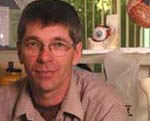 Diabetes is the fastest growing disease in Australia and a Charles Sturt University (CSU) research project that has run for the past four years aims to develop a cost-effective early warning system to detect diabetes in people living in regional Australia. CSU researchers are using simple blood and heart monitoring tests and eye and foot observations to compare known people with diabetes with "normal" people aged over 40 years to develop this system. "Rural Australians have poorer access to health services that could detect early symptoms of diabetes that affect their eyes, feet and hearts," said research team leader Dr Herbert Jelinek, based on CSU’s Albury-Wodonga Campus. The researchers will make their next round of observations of people in Albury-Wodonga starting next Monday 24 April for two weeks.
White elephants of the future
Wednesday, 1 Jan 2003As the Federal Government urges innovation in housing and urban design to take Australia’s ageing population into account, one scenario could be acres of empty ‘McMansions’ as older people flee to smaller homes with easy access to healthcare and social ties. Community for All Ages – Building the Future seminars were recently held all over the country to discuss the topic. Facilitated by Dr Keith Suter, he will now put together a formal report and other findings and recommendations. Celia Bevan, senior lecturer in Gerontology at Charles Sturt University, says "one of the interesting things to come out of this circuit of conferences is that architecturally, we should be looking at housing which is adaptable", homes that are accessible for everybody, regardless of age or ability or mobility. It’s called Universal Design, but unlike architecture, the emotional needs of older Australians are anything but universal. "There are people who absolutely love retirement villages and that life suits them, but then there are other people who do not. To just look at an ageing population and say well, this is the kind of housing they would want would be as disastrous as leaving it as it currently is." But can governments successfully legislate for change? Probably not, according to Ms Bevan. "The will has to be there and the cultural shift has to occur. Obviously architects and the housing industry have to be able to see that there’s something in it for them, because our whole philosophy around housing is around profit as well. The industry has to be persuaded to see that it is in their interest to engage in a new form of housing."
Celebrations of academic achievement
Wednesday, 1 Jan 2003It is a week of celebration this week at Charles Sturt University’s (CSU) Albury-Wodonga Campus with a number of events highlighting the achievements of CSU students. The academic excellence of current allied health, business, environmental science and information technology students will be rewarded during prize giving ceremonies to be held around Albury this Thursday 27 and Friday 28 April. Some of the University’s top students will also be recognised at the CSU Foundation Scholarships evening where they will receive scholarships worth $2 000 to $6 000 from international and local businesses and organisations on this Thursday evening 27 April. Celebrations in the town will culminate on Thursday 27 and Friday 28 April at three formal graduation ceremonies for over 500 graduates to be held at the Albury Convention and Performing Arts Centre in central Albury.
Seeking solutions for young people and mental health
Wednesday, 1 Jan 2003 Last week the Federal Government announced its high-profile appointments to the Youth Mental Health Foundation Advisory Board to advise on ways to improve access to mental health services for the nation’s 12 to 25-year-olds. Experts agree that young people in Australia are increasingly troubled by various forms of mental disorder, including Dr Lynelle Osburn, a lecturer in the School of Humanities and Social Sciences at Charles Sturt University (CSU) in Wagga Wagga. “Why is it a growing problem? One reason is an increasing intolerance of kids who are a bit different.” She says the vulnerable are easy to recognise. “Young people who leave home in an unplanned way, are isolated, are taking extreme risks or have substance abuse problems, who have eating or stress disorders. There is a growing number of young people who are on medications like amphetamines or Ritalin, or using various party drugs.” Another CSU academic Dr Janki Shankar, lecturer in mental health also in the School of Humanities and Social Sciences, is on the Australian Association of Social Workers Mental Health Interest Group. She says “the current system is failing because of a lack of support services, particularly in rural areas. There are hardly any psycho-social rehabilitation programs that are targeted to youth, there’s almost nothing for people who need early intervention services.”
CSU’s veterinary science program passes muster
Wednesday, 1 Jan 2003 A leading group of veterinary educators has given their stamp of approval to Charles Sturt University’s (CSU) veterinary course, the first such course offered in regional Australia. The Veterinary Science Accreditation Advisory Committee which visited CSU’s Wagga Wagga Campus last week has recommended accreditation for the University’s new Bachelor of Veterinary Science degree. The committee of six veterinary practitioners and academics from Australian and New Zealand universities will recommend to the Australasian Veterinary Boards Council that they provide provisional accreditation of CSU’s veterinary program. CSU’s first dedicated building for veterinary science, the $4.5 million Pre-Clinical Centre for teaching anatomy and physiology, was formally handed over to staff and students last week. Professor Kym Abbott, Director of Veterinary Science at CSU, said the accreditation committee praised the high quality of staff and facilities and the strong support given to the new program by the University.
The best years of his life
Wednesday, 1 Jan 2003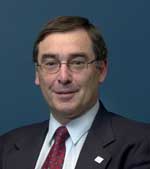 Glenn Tasker is the CEO of Swimming Australia Ltd (SAL), the nation’s governing body for the sport and a Charles Sturt University (CSU) graduate. After his recent travels to New York, Montreal, Shanghai and Madrid, what does he think of Bathurst? He says his student days were “the best years of my life”. After graduating in 1974, Glenn taught in Sydney before being seconded into the new NSW Department of Education Sports Unit, where his career in sports management and administration took off. He says the highlights of his time so far at SAL have been the Athens Olympics in 2004 and discovering and nurturing young athletes like Ian Thorpe. Glenn Tasker is a guest speaker at Bathurst graduation ceremony on Thursday 4 May. He wants to tell the graduates that “teachers have to have high expectations of not only themselves, but also of the pupils. I want to impress upon them that they have a very, very important role to play in society, and that they need to be inspirational and dedicated to the task”.
Graduation sees more firsts for CSU
Wednesday, 1 Jan 2003 Charles Sturt University’s (CSU) first professional doctorate in gerontology and a family affair will highlight the three graduation ceremonies to be held next week in Albury. Margaret Gartrell will receive a Doctor of Health Science during the afternoon ceremony on Thursday 27 April, for her research into how older people cope with pain and its implications for nursing. Meanwhile Anne Nevins will be joined by her daughters Amy and Rachel as they all receive their arts, business and health degrees during the two days of graduation ceremonies on Thursday 27 and Friday 28 April. Over 500 graduates from the University’s five faculties will receive their degrees during the three ceremonies to be held in Albury-Wodonga, joined by their parents and friends from around Australia.
Getting down to Business
Wednesday, 1 Jan 2003 Rising energy costs and living and learning in a clean environment have continued to influence the design of the new School of Business building proposed for Charles Sturt University's (CSU) Albury-Wodonga Campus. "As with previous construction on our Thurgoona site, the University is looking to reduce the cost of energy used in large public buildings and reduce greenhouse gas emissions associated with energy production," said Head of the Albury-Wodonga Campus, Professor Gail Whiteford. "One innovative feature of this building will be its insulation. Whereas most inland Australian buildings have their insulation inside, the new building will be like an 'esky', with insulation on the outside and the main support structures inside. This aims to reduce the fluctuation of temperature inside and drastically cut the need for heating and cooling, something we have learnt from our previous buildings." Plans for the $3 million, two-storey office building, which follows research by CSU staff into the existing buildings on the Thurgoona site, will be presented to Albury City Council next week. They will also be on public display during the Thurgoona Futures Festival to be held this Saturday 27 May on CSU's Thurgoona site.
Complex systems takes CSU researcher to Boston
Wednesday, 1 Jan 2003 Charles Sturt University (CSU) lecturer Dr Keith Nesbitt’s research on a design pattern for complex systems has won him a 12-month postdoctoral appointment to the New England Complex Systems Institute (NECSI) in Boston, USA. Dr Nesbitt, a lecturer in Information Technology at CSU, has been working in the relatively new field of science known as complex systems. The study of complex systems is about understanding indirect effects and the problems we find difficult to solve. They have causes and effects that are not obviously related. Examples of complex systems include beehives, ant colonies and even the stockmarket, as well as the human brain. NECSI, where Dr Nesbitt will be based, is an independent non-profit educational and research institution dedicated to advancing the study of complex systems. NECSI was established as a collaboration of faculty from Harvard, MIT, Boston University, Brandeis and other academic institutions. “I’m keen to take my research to the next level. That would be the ultimate goal: to try and understand what they call the theory of the mind”, said Dr Nesbitt.