
Archive
CSU Contact Centre presented with Vice Chancellor’s 2006 Team Award
Wednesday, 1 Jan 2003Charles Sturt University’s (CSU) Contact Centre (CC), located at the Bathurst Campus, was awarded the Vice-Chancellor's 2006 Team Award for Performance Excellence in a ceremony last night (Monday 26 February). Vice-Chancellor Professor Ian Goulter said, “This annual award recognises and rewards outstanding contributions to the achievement of CSU’s objectives and priorities. My congratulations and sincere appreciation goes to the CC team, and to all nominees for their ongoing contribution to CSU’s community.” Manager of the CC Ms Kerry Browning said, “We are delighted to be recognised for our contribution to CSU. It reinforces that we are one University working to achieve common goals.” The CC provides a first point of contact for prospective students seeking information about courses, fees, scholarships and accommodation. In 2006 they handled approximately 155 000 enquiries by phone, email and on the Internet.
Human resources and trade unionism
Wednesday, 1 Jan 2003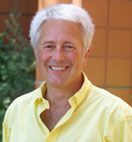 The role of trade unions in vocational training is the topic of the first international visit to be hosted by Charles Sturt University’s (CSU) Centre for Organisational Performance, Ethics and Leadership (OPEL) in 2007. International human resource management academic, Professor Jonathan Winterton is a Professor of Human Resource Development and Director of Research and International Development at the Toulouse Business School in France. He will give a seminar on trade union approaches to vocational training on the Wagga Wagga Campus at 12noon on Wednesday 28 February. In conjunction with the European Union and its agency for vocational training, Jonathan has helped develop the European Credit Transfer System for vocational training and developing improvements to training systems in Lithuania and Turkey.
CSU cheese to tempt tourism
Wednesday, 1 Jan 2003Advertising ethics? Not an oxymoron according to new CSU academic
Wednesday, 1 Jan 2003Advertising ethics might strike many as an oxymoron but not Dr John Hadley, a new appointment to Charles Sturt University (CSU) School of Communication on the Bathurst Campus. Dr Hadley is teaching Media Ethics and Public Policy to third year journalism and public relations students, as well as advertising ethics to advertising students. “The course deals with the ethical dilemmas that communication professionals face in their jobs,” he said. Dr Hadley completed his PhD Animal Property: Reconciling Environmentalism and Animal Rights in March 2006 at the University of Sydney where he taught last year. He is an associate of CSU’s Centre for Applied Philosophy and Public Ethics and his main interest is the practical application of ethics in people’s working lives. This is Dr Hadley’s first taste of Bathurst country life, after a background in inner-city Sydney. As a keen cyclist he is already revelling in “the fresh air and no cars”.
Questions about how we learn and teach
Wednesday, 1 Jan 2003Ideas commonly held by education providers and other stakeholders are open to challenge by the findings of contemporary research into learning, knowledge, quantum theory and brain science, according to Mr Patrick Bradbery. Manager of the Professional Development Unit in the Faculty of Business on Charles Sturt University’s (CSU) Bathurst Campus, Mr Bradbery will discuss these issues and the implications for the design and delivery of learning interventions at a presentation titled ”What the bleep do we know about learning?” at the University between 12.30pm and 2pm on Wednesday 28 February. “This presentation questions whether we have lost sight of the purpose and function of tertiary education, and whether it has become purely vocational in its focus,” Mr Bradbery said. His presentation will contextualise the finding from brain research that the ions which carry messages throughout the brain travel along pathways that are only just a little larger than the ions, thus creating a “quantum environment”.
Happy feet in Hollywood
Wednesday, 1 Jan 2003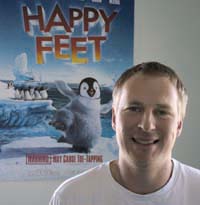
Beware the rIdes of March!
Wednesday, 1 Jan 2003 “Beware the rIdes of March!” (apologies to Shakespeare) is the catchcry for the Ride to Uni Day to be held by Charles Sturt University (CSU) on Wednesday 7 March. For the first time, bicycle riders will gather on the University’s Albury City Campus to ride to the Thurgoona site via the bike trail which follows the newly opened Albury bypass. Carbon dioxide is a major cause of global warming and it has been estimated that each car driven from Albury city to CSU Thurgoona releases five kilograms of carbon dioxide – or 100 ‘black balloons’ – into the atmosphere. Ride to Uni Day coordinator Peter Taylor said riding instead of driving to work not only increases fitness and relieves stress, but also allows each participant to play their small part in reducing greenhouse gases in the atmosphere.
CSU Bathurst hosts political forum for students
Wednesday, 1 Jan 2003Bedside manners for CSU veterinary students
Wednesday, 1 Jan 2003Charles Sturt University (CSU) veterinary students will be given practical guidance on leadership, team-work, communication, emotional intelligence and conflict management tomorrow Wednesday 7 March as part of a veterinary leadership experience (VLE) workshop on CSU Wagga Wagga Campus. CSU lecturer in dairy cattle practice Natasha Lees said, “The VLE is a chance for students to further develop their skills enabling them to successfully make the transition from the lecture hall to the workplace”. Ms Lees believes the workshops will help CSU produce graduates that meet the needs of its regional, national and international communities. First year students in CSU’s School of Agriculture and Veterinary Sciences will be addressed during the workshop by Professor Rick Debowes and psychologist Kathy Ruby, both from Washington State University, USA.
How green was my Gore?
Wednesday, 1 Jan 2003 Former US Vice President Al Gore was in the news last week when it was revealed his household energy bill amounted to US$30 000 a year. Jodie Kleinschafer, a Charles Sturt University PhD student currently studying ways households can become more energy efficient, said: “If he is being carbon neutral, using renewable energy sources that are 100 per cent green, then he is not being inconsistent with his environmental stance.” She says there are simple ways to reduce electricity consumption. “Turn down the temperature on your hot water, use the air conditioner less, and don’t turn your heater up quite so high.” Mrs Kleinschafer says “smart meters” are also a useful option for improving energy efficiency because they “give immediate feedback on how much electricity is being used and how much it is costing. Until our electricity is from 100 per cent renewable energy sources, it is in everybody’s best interest to become more energy efficient”.