
Archive
Echoes of the past
Wednesday, 1 Jan 2003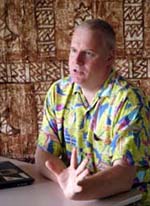 In the mid-1860s many hardworking German farmers left South Australia to select cheap farming land in the fertile Southern Riverina region of NSW. Charles Sturt University (CSU) archaeologist and cultural heritage manager, Associate Professor Dirk Spennemann, has captured this link to the region’s past in his first public photographic exhibition ‘Echoes of the Past, Voices of the Future’. The exhibition traces the remaining reminders of German communities such as Jindera, Gerogery, Walla Walla and Edgehill between Albury and Wagga Wagga, and examines what role their past may play in the future. Held in partnership with Albury City to celebrate National History Week 2008 from 6 to 14 September, ‘Echoes of the Past’ opens at the Albury Library Museum, Kiewa St, on Thursday 11 September. “We have a high concentration of German settlements in the region but not much research has been done on them. More than 30 per cent of people living here would have German ancestry,” said Professor Spennemann, a key researcher with the University’s Institute for Land, Water and Society.
Age and skills limiting regional businesses
Wednesday, 1 Jan 2003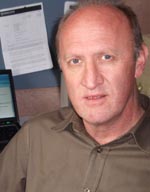 An ageing workforce and difficulties in attracting and retaining young professionals are seen as the most important concerns for the future of Border businesses, according to a group of leading businesspeople and Charles Sturt University (CSU) academics. Drawn from leading Border businesses and the University’s School of Business and Information Technology (SBIT), the group identified in-house graduate placement programs among the main ways of attracting and retaining young professionals in local businesses. Head of SBIT, Associate Professor John Atkinson, believes one solution to the skills shortage is to develop a stronger professional community, which could be facilitated by developing closer links between the community and CSU. “The group identified areas such as offering more work internships to CSU students, mentoring and guest lectures as ways the community could offer its services to the University, while the School can provide research expertise and findings, target employment skills in courses, and provide forums for topical community issues.” The group will meet again later in the year to further strengthen the linkages between the School and the Border community.
Rural cervical cancer research
Wednesday, 1 Jan 2003Services for women with cervical cancer who live in rural Australia could be improved as a result of a study to be carried out by a Charles Sturt University (CSU) psychology student. Ms Melissa Elleray, a fourth year Honours student at the School of Social Sciences and Liberal Studies, hopes her study of rural women who have had cervical cancer will provide insight into their experiences so that services and funding can be better targeted. “There seems to be little support for or awareness about how rural women experience cervical cancer, and as I have experienced a risk of developing the disease myself, I want to help these women have their stories heard. My research will explore what it was like going through treatment while trying to maintain a normal life,” Ms Elleray said. The research requires confidential face-to-face interviews with up to 12 women in rural NSW and Victoria before the end of 2008. Women interested in participating in the research can contact Ms Elleray on 0409 808 598.
Carbon trading top guns for Albury seminar
Wednesday, 1 Jan 2003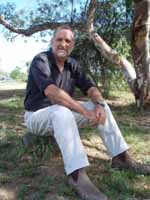 With climate change and carbon trading high on the national agenda, Border organisation will look at the opportunities for local farmers and land mangers to take advantage of the proposed carbon trading system. Charles Sturt University’s (CSU) Institute for Land, Water and Society (ILWS), in collaboration with Australian Alpine Valleys Agribusiness Forum, will host a forum on Wednesday 17 September to discuss carbon trading and its implications for rural businesses and wider communities, including the genuine and ‘other’ entrepreneurs who are expected to offer environmental services to them. The panel of carbon trading and environmental experts will include Martijn Wilder, head of Baker & McKenzie's global change and emissions trading practice, and Professor Max Finlayson, ILWS director and internationally recognised wetland ecologist and advisor to the Australian Prime Minister on carbon trading, as well as Professors Mark Morrison and Allan Curtis from ILWS. Other partners in the event are the Victorian North East Catchment Management Authority, the Victorian Department of Primary Industries and Plantations North East.
Choose science degree now
Wednesday, 1 Jan 2003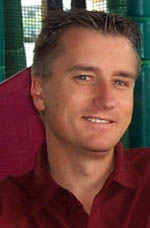 The recent decision by the Federal government to reduce the Higher Education Contribution Scheme (HECS) loan repayments for science and mathematics programs offered by Australian universities is a positive message for young Australians, especially those in inland areas, says the Dean of the Faculty of Science at Charles Sturt University (CSU), Professor Nick Klomp. “The move recognises the importance of science for Australia’s future in the knowledge world,” he says. “Although total university enrolments have increased in recent decades, enrolments in science courses have not. This recent federal announcement will help Australia obtain the science graduates it needs to meet the scientific, environmental and technological challenges of the 21st century.” CSU offers science courses in such diverse areas as agricultural, veterinary and wine sciences, dental, biomedical and health sciences, environmental and water sciences, and science teaching.
Improving new born lamb survival rates
Wednesday, 1 Jan 2003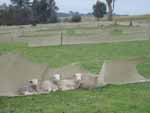 A research project at Charles Sturt University (CSU) using global positioning system (GPS) collars to track the movement of ewes and their newborn lambs aims to reduce the high lamb mortality rate and boost farm productivity. Starvation, mismothering and exposure contribute to up to 40 per cent of lamb mortalities and the rate for twins is higher, but appropriately designed ‘sheep shelters’ could reduce these levels. Based at the School of Animal and Veterinary Sciences, PhD student Mr John Broster says a greater understanding of how animals use shelter and appropriate shelter design may lead to a decrease in deaths. “I’m looking at how both ewes and newborn lambs use two different types of shelter: shrub rows and shorter hedgerows of either phalaris (a perennial pasture), or artificial hessian cloth,” he said. Preliminary data from the electronic tracking devices has shown that reducing wind speed through shelter has influenced lamb survival rates. “The project is important because the results will demonstrate to farmers the optimum shelter design in order to improve newborn lamb survival, which will increase farmers’ income. Farmers may also choose to design tree plantings to suit the needs of sheep during lambing.” The 3 year project is funded by the Future Farm Industries Cooperative Research Centre and is using an EverGraze project site in the Tarcutta catchment in southern NSW.
CSU academic gets buzz out of diabetes research
Wednesday, 1 Jan 2003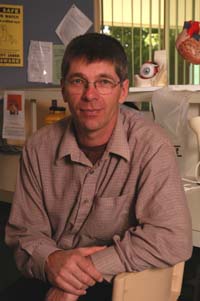 Spring has definitely sprung with daffodils blooming and bees buzzing, which also announces ‘Buzz Day’, a Diabetes Australia initiative raising funds into diabetes research. Charles Sturt University (CSU) academic Dr Herbert Jelinek supports the day, saying “Events like Buzz Day are essential to raise funds for research into diabetes," he says. "Without these funds, research projects like the studies we are conducting at CSU in the Border region could not happen.” A diabetes expert, Dr Herbert Jelinek is concerned at the rapid growth of diabetes on the Border and around Australia in recent years. “Diabetes is the fastest growing disease in Australia, a trend reflected in regional areas including Albury-Wodonga,” he said. An annual fundraising event, Diabetes Buzz Day is the biggest appeal by Diabetes Australia and aims to raise $400 000 for diabetes awareness, education, research and advocacy programs.
 Universities must educate for social justice
Wednesday, 1 Jan 2003 A keynote address by a Charles Sturt University (CSU) academic to a national conference in Melbourne on Monday 22 September will advocate that the concept of ‘cultural competence’ is necessary as a teaching framework for university-trained professionals because social attitudes and the services professionals provide to Indigenous Australians remain powerful barriers to achieving social justice. Ms Wendy Nolan, lecturer and Deputy Director of the Charles Sturt University (CSU) Centre for Indigenous Studies at its Dubbo Campus in NSW, will speak on Changing Paradigms, Changing Practices: A Cultural Competency Approach at the Indigenous Australians: Safe and Competent Counselling Practices Conference. “Australia’s professionals must have the skills to increase their professional capacity to work effectively to achieve social justice for Indigenous Australians,” Ms Nolan said. “Australian universities have a significant role to ensure that all graduates have a sound knowledge and understanding of Indigenous cultures, histories and issues.”
Promoting leadership skills
Wednesday, 1 Jan 2003Special recognition has been given by Charles Sturt University (CSU) to several staff for their commitment to developing their leadership and management skills. CSU Vice-Chancellor and President, Professor Ian Goulter, attended a special presentation for the staff in Wagg Wagga on Monday 22 September for the seven staff who completed the Graduate Certificate in University Leadership and Management. The qualification is offered through the CSU Faculty of Business as part of a CSU objective to provide a range of learning opportunities and resources for current and future leaders. The staff are Mr Peter Jones, Manager of Campus Services in the Division of Facilities Management (DFM) at the Albury-Wodonga Campus; Ms Shelley McMenamin, University Records Manager in the Division of Information Technology (DIT), Albury-Wodonga Campus; Mr Jorge Rebolledo, Academic Registrar and lecturer in Research Methods at the United Theological College, Parramatta Campus; Mr Brian Roberson, Manager, Technology Integration in DIT, Bathurst Campus; Mr Wayne Millar, Director of Operations in the DFM; Mr Sam Parker, Team Leader, Systems and Business Processes at the Learning Materials Centre at Wagga Wagga Campus; and Mrs Miriam Dayhew, University Ombudsman.
Walk at work
Wednesday, 1 Jan 2003Charles Sturt University (CSU) staff and students are being encouraged to participate in a Walk at Work Day on CSU’s Wagga Wagga Campus on Friday 3 October. As part of the Pedestrian Council of Australia’s Walk to Work Day, the University’s Occupational Health and Safety (OH&S) Committee has organised a four kilometre walk around the campus before work. The walk will start at 7.15am from the quadrangle outside the Nosh Pit canteen and will proceed along Tabbita Walk, Keajura Walk, Walla Walk, Valder Way, Pine Gully Road, Pugsley Place, Nathan Cobb Drive and then cross country back to the starting point for a free healthy breakfast. The breakfast will be served between 8am and 9am. Prizes will be presented for best outfits, including headwear, in the categories of individual and team walkers.