
Archive
Neonatal seminar for midwives in Wagga Wagga
Wednesday, 1 Jan 2003The Neonatal Emergency Transport Service (NETS) team from Sydney will conduct a seminar on neonatal emergency care and retrieval for Charles Sturt University’s (CSU) School of Nursing and Midwifery in Wagga Wagga on Friday 30 January. NETS is well known in rural NSW as the team flies to hospitals in Wagga Wagga and outlying areas to stabilise and transport sick babies to major hospitals for specialist care. “The seminar is for student midwives returning to a residential school at CSU after six months of clinical practice. The School has also invited 20 local midwives to attend. We see it as very important to participate in and promote the ongoing education of nurses and midwives,” Ms Shackleton said. “Most nurses and midwives in rural hospitals will have participated in the retrieval of a sick baby by the NETS team. These babies are usually very tiny and sick, so they require the highest level of professional nursing and medical care to achieve the best possible outcome.”
Dengue fever not a plague marching south
Wednesday, 1 Jan 2003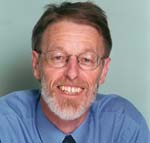 Recent media reports of a dengue fever ‘plague’ in northern Queensland are an overstatement of what periodically occurs in that State, according to a senior Charles Sturt University (CSU) academic and member of the Institute for Land, Water and Society. “I don’t see dengue fever marching south from tropical Australia as a great plague, but rather gradually moving with the fluctuations and movements of climate change over many years,” says Professor Kevin Parton. “My work on Ross River fever, a similarly mosquito-borne disease endemic to parts of southern Australia, shows that the virus is present in humans across NSW – which would surprise many people. It becomes more common in certain weather conditions, hence the appearance of an ‘outbreak’. Sure, take public health precautions such as use insect repellent, fix fly screens and tip out standing water around your house, but some current reports are a little sensationalist.”
Science for the future
Wednesday, 1 Jan 2003 Local and international scientists specialising in condensed matter and materials will converge on Charles Sturt University (CSU) at Wagga Wagga this week for the 33rd Annual Condensed Matter and Materials Meeting. Organising committee member, Associate Professor Trevor Finlayson, said it's an opportunity for scientists to discuss current research and future directions. “Over 100 people are attending and the program will include a session on ‘soft matter’ – an interdisciplinary field featuring studies of biomaterials,” he said. The program includes topics important to Australian science, such as the status of the international Avogadro project, a collaborative project to establish a new standard for mass, and an update on Synroc, the Australian-discovered artificial mineral with the potential to successfully process radioactive waste materials. “Condensed matter and materials scientists are important because their research leads to new applications of materials with improved properties for the benefit of society,” Professor Finlayson said.
Catering for student needs
Wednesday, 1 Jan 2003The success of new student accommodation at Charles Sturt University (CSU) at Wagga Wagga has led to a decision to build more student facilities. The University has appointed Joss Construction to develop an additional 60 rooms at CSU at Wagga Wagga later this year. The beds will be on top of the 200 new rooms which have been under construction by Joss since the middle of 2008. “The additional beds will help CSU meet the additional demand from dentistry and oral health students for accommodation,” said Executive Director of CSU Division of Student Services, Mr Andrew Callander. In the current project, 10 modular concrete and corrugated iron buildings are being built to provide self-catered accommodation, with open plan kitchens and living areas, dedicated study facilities and high quality data networks. The work is part of a large scale project for 600 new beds on CSU campuses. Eighty beds will be ready for Orientation Week, 40 rooms will be completed three weeks later and the remainder will be occupied in the following weeks. “Temporary accommodation arrangements will be made for the students who have been allocated the new rooms,” said Mr Callander.
Dental facilities take shape
Wednesday, 1 Jan 2003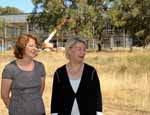 New buildings at Charles Sturt University (CSU) at Orange and Wagga Wagga are rapidly taking shape as the University prepares to welcome the inaugural students in its new dental and oral health therapy courses in 2009. After receiving hundreds of applications from across Australia and overseas, CSU is preparing to fill 40 places in the Bachelor of Dental Science program starting at Orange and 20 places in the Bachelor of Oral Health (Therapy/Hygiene) program starting at Wagga Wagga. “We are thrilled with the calibre of applicants,” said Associate Professor in Oral Health Barbara Taylor. “The student selection process has been very competitive, particularly for dentistry as it included an online questionnaire and interview.” “We had a diverse and skilled applicant pool and are confident this will result in a committed student group,” added the Head of the School of Dentistry and Health Sciences, Professor Ward Massey. Work on the dentistry buildings in Orange and oral health therapy facilities at Wagga continued over Christmas, as well as progress in the purchase of state-of-the-art equipment such as dental chairs and clinical software.
 New HSC nursing program launched
Wednesday, 1 Jan 2003A recently launched NSW Higher School Certificate (HSC) Nursing program will see high school students from Orange, Bathurst and Oberon step on Charles Sturt University (CSU) at Orange as enrolled university students this week. The HSC Board Endorsed Nursing Course, in collaboration with the Health e2 Schools, CSU and TAFE, is a link for HSC students interested in pursuing a career in nursing at CSU. “The HSC Nursing program allows Year 12 students to complete two subjects in CSU’s Bachelor of Nursing,” says Susan Bragg from the University’s School of Nursing and Midwifery. “Upon successful completion, students will gain entry to the Bachelor of Nursing and be given credit for the two subjects.”
Mining job losses to impact regions
Wednesday, 1 Jan 2003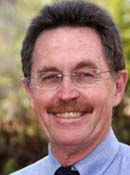 Communities and regions where mining occurs will be severely affected by the downturn in the Australian mining sector due to the global financial crisis. Mr Tom Murphy, Chief Executive Officer of the Western Research Institute (WRI) at Charles Sturt University at Bathurst, says that with the current contraction of the Chinese economy, the largest customer for Australia’s mineral resources, Australia will face increasing and probably prolonged reduction of revenue from mining. “Our studies indicate that mining jobs create economic multipliers of four to six in surrounding community economies, or more in some instances,” he said. “That means for each mining job lost you can have four to six other jobs lost in a community. This is because mine wages and local spending are so high. Other industries typically have multipliers of around two to three or even less, so mine jobs are very hard to replace.”
More student accommodation in Orange
Wednesday, 1 Jan 2003Charles Sturt University (CSU) continues to expand with the construction of new student residences set to commence on the Orange Campus. Joss Construction began works associated with the new residences on 30 January so all major earthmoving will be finished before Orientation week. “Student numbers are constantly increasing at CSU,” said Head of Campus Professor Kevin Parton. “With the introduction of the dentistry degree this year, and more courses planned, the new accommodation will be a pleasing addition to the campus.” The new accommodation will house 40 students and will include study bedrooms, kitchens, common rooms and male and female bathrooms. “Our aim is to enhance the university experience for each student by offering all first year students on campus accommodation,” Professor Parton said. The new accommodation is designed to allow the easy addition of up to 60 more study bedrooms as student demand increases.
Evolution is more than a scientific theory
Wednesday, 1 Jan 2003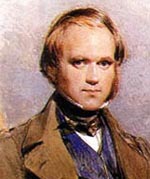 Charles Darwin’s theory of evolution is one of the most significant advancements in our understanding of the natural world, according to the Dean of the Faculty of Science at Charles Sturt University (CSU), Professor Nick Klomp. “This breakthrough in scientific understanding still affects many facets of modern life, despite first being published 150 years ago.” CSU will lead the regional scientific communities in celebrating Darwin’s 200th birthday during the week commencing Monday 9 February. Events will include presentations to visiting high school classes on Tuesday 10 February in Albury and Wagga Wagga and celebrations by scientific communities around the two regional centres on Thursday 12 February, complete with birthday cakes. More public events celebrating the life of Darwin and the theory of evolution will be held later in 2009, including discussion of his seminal work, On the Origins of Species, published in 1859.
Evolution: a significant advance for the modern world
Wednesday, 1 Jan 2003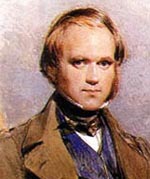 Charles Darwin’s theory of evolution is one of the most significant advancements in our understanding of the natural world, according to the Dean of the Faculty of Science at Charles Sturt University (CSU), Professor Nick Klomp. “This breakthrough in scientific understanding still affects many facets of modern life, despite first being published 150 years ago.” CSU will lead the regional scientific communities in celebrating Darwin’s 200th birthday during the week commencing Monday 9 February. Professor Tom Frame in Canberra can discuss Darwin’s life and travels in Australia, including his visit to Bathurst, and his influence on society, while Professor Ben Bradley in Bathurst can discuss Darwin’s seminal work, On the Origin of Species, which was published in 1859. CSU scientists will also be available on the University’s Bathurst and Orange campuses to discuss how Darwin’s theories have influenced their work and the modern world, including Professor Frank Marino and the role of evolution in being able to run faster and longer and Professor Geoff Gurr on evolution and insect management.