
Archive
Winery recognised at Inland Tourism Awards
Wednesday, 1 Jan 2003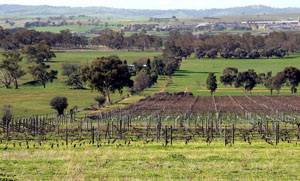 The Charles Sturt University (CSU) Winery Cellar Door at Wagga Wagga has received an Award of Distinction at the 2009 Inland NSW Tourism Awards held in Narrabri, NSW on Saturday 25 July. The Cellar Door sells wine and offers tastings from the University’s own range of premium table, fortified and sparkling wines. “It’s a fantastic achievement to receive this award – one of only five businesses (in addition to the 18 category winners) out of 58 entrants in the state to be commended,” said Cellar Door Manager Mr Richard Lawson. “The award recognises the Winery’s contribution to local and regional tourism, as well as the extensive range of CSU wine, cheese and olive oil products available for tasting and sales. It also recognises the hard work of our dedicated Cellar Door team.” Since its inception in 1977, the CSU Winery has won numerous trophies and medals in national wine shows.
The world is coming
Wednesday, 1 Jan 2003The world is coming to students with Charles Sturt University’s (CSU) School of Community Health this week with the annual Allied Health Job Forum being held in Albury. Over 300 students enrolled in CSU degrees in physiotherapy, speech pathology, podiatry and occupational therapy are able to view job vacancies being offered by over 25 organisations. These organisations come from around Australia, including Tasmania, Queensland, ACT, Melbourne and regional Australia, as well as showcasing the newly merged Albury Wodonga Health. CSU representatives will provide information on jobs in general as well as international job opportunities. Forum coordinator Donna Duncan said the forum was a “fantastic opportunity for potential graduates to become aware of the diversity of employment opportunities available”. The forum will be held from 1.30 to 3pm on Thursday 30 July in St David’s Uniting Church Hall, Wilson St, Albury.
What's the future for farming in southern NSW?
Wednesday, 1 Jan 2003 Once a safe region for mixed farming, the southern NSW district around Wagga Wagga is now enduring an unprecedented period of low rainfall affecting both dryland and irrigated farmers. A public seminar and forum entitled A Dry Argument will be held at Charles Sturt University (CSU) on Wednesday 29 July to examine some of the consequences of drought and the difficulties farmers face in adjusting to dry periods. “Agricultural scientists, agribusiness and policy makers are often swept up in the technology of coping with drought and maintaining production, rather than considering their response to the ‘big picture' travails of farmers. The future of farming is a topic worthy of careful consideration,” said CSU organiser Emeritus Professor Ted Wolfe. “We’re bringing together experts from Victoria and across the Riverina to share their experience and insight.” The EH Graham Centre for Agricultural Innovation (an alliance between CSU and NSW Department of Primary Industries) is hosting the event in conjunction with the Australian Institute of Agricultural Science and Technology and Wagga Wagga City Council.
 Why ‘the wretched of the earth’ kill their own
Wednesday, 1 Jan 2003A visiting community critical psychologist with an international reputation will deliver a public lecture at Charles Sturt University (CSU) at Bathurst on Thursday 30 July that examines ‘Why the wretched of the earth kill’. Professor Mohamed Seedat, from the University of South Africa, is a guest of the CSU School of Social Sciences and Liberal Studies. His lecture will critically examine the viability of explanations for violence such as that in South Africa in May 2008 that primarily targeted foreign nationals and resulted in 69 deaths, thousand of displaced people, and untold psycho-social trauma. “Most prominent among these explanations is the idea that xenophobic violence arises from the interplay of various socio-economic issues - poverty, inequality, joblessness and poor delivery of municipal services,” Professor Seedat said. “In particular, I will examine explanations which have their roots in anti-colonial theory and scholarship focused on understanding the reality and the life-worlds of the colonized. I will argue that while such explanations offer a degree of systemic understanding, they do not explain sufficiently why the ‘wretched of the earth’ - the poor, downtrodden and oppressed - kill their own.”
CSU student seeks smokers
Wednesday, 1 Jan 2003As part of the research for her Honours degree in Pharmacy, Charles Sturt University (CSU) student Sarah Kissiwaa is calling on smokers in Orange to assist her by completing a survey on a ‘quit’ program to be available in pharmacies. “Although there have been enormous declines in the prevalence of smoking over the last decade, smoking is still responsible for too many deaths and there is a lot more we can do to help smokers quit,” Ms Kissiwaa says. The survey will give critical information towards developing the ‘quit smoking’ program. “Quitting is the hardest thing anyone can do, but the consequences of not quitting are much worse.” Ms Kissiwaa recommends the use of nicotine replacement therapy and speaking to a pharmacist or doctor and getting as much support from family and friends as possible. The surveys are available in print and online.
Tree planting at CSU Wagga Wagga
Wednesday, 1 Jan 2003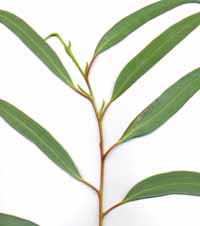 Students and staff at Charles Sturt University (CSU) at Wagga Wagga will come together to plant trees on the University campus starting at 10am on Friday 31 July as a contribution to National Tree Day. The planting will be in the James Hagan Court northern garden area. Grounds Supervisor in the Division of Facilities Management at CSU, Mr Simon Cole, said “Charles Sturt University plants hundreds of trees every year on its campuses, and thousands over the years, but we thought it was important to contribute to this annual national event. We will be planting 100 mixed native trees with water storage granules to help them along, and the ground is already prepared to make it quicker and easier on the day. The planting is also a step towards meeting the University’s targets for biodiversity and carbon reduction as specified in its Institutional Development Plan 2007-2011.” The annual National Tree Day is Australia’s biggest community tree planting event and has seen approximately 13 million native trees and shrubs planted since the event was launched in 1996.
Flexibility in health care for rural and remote Australia
Wednesday, 1 Jan 2003Charles Sturt University (CSU) at Dubbo will host a public lecture examining the difficult questions surrounding the provision of health care services in rural and remote . ‘What Health Services Should Rural Australia Have?’ will be presented by the University’s Professor of Rural and Remote Pharmacy Patrick Ball at 6pm on Wednesday 12 August at CSU at Dubbo. Professor Ball will present his findings from a study of health care services in two similar rural communities in NSW. “Our research provides evidence that what is required is more flexibility in allowing communities to develop approaches that meet their individual needs, based more upon access to services, rather than necessarily their physical presence,” said Professor Ball. The lecture will be held in room 422, lecture theatre, CSU at Dubbo. CSU wines and cheeses will be served after the lecture.
Ambassador of Ireland to inspect CSU's horses
Wednesday, 1 Jan 2003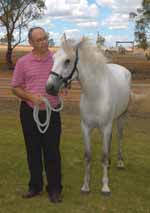 Ties between Charles Sturt University (CSU) and the Connemara Pony’s homeland are set to strengthen when the Ambassador of Ireland, His Excellency Máirtín O'Fainín, visits Wagga Wagga on Friday 7 August to tour the University’s horse breeding and teaching facilities. Also attending is Mr John Dawkins, former federal Treasurer and President of The Connemara Breeder’s Society of Australia, which is collaborating with CSU in a program to improve the breed. CSU is the only university undertaking a program involving the Irish native Connemara Pony. Veterinary science, animal science and equine students learn to handle, train and manage horses as part of their courses, and the Connemara Pony, which is smaller and not as intimidating as larger horses, has proven ideal. “The visit by the Ambassador is a wonderful opportunity to explain our program and to forge a closer relationship with the government of Ireland,” said Head of the School of Veterinary Science at CSU, Professor Kym Abbott. CSU’s Equine Centre is currently leasing four mares and one stallion and the School plans to continue working with The Connemara Breeder’s Society for the benefit of both the students and the breed.
Conservation on the market
Wednesday, 1 Jan 2003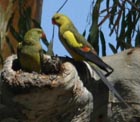 The emerging market of conservation real estate will be in focus at a free public lecture at Charles Sturt University (CSU) at Orange next week. Local residents are encouraged to attend the lecture where Nature Conservation Trust of NSW chief executive officer Mr Rob Dunn will explain the work of the Trust, outline how it is helping to protect private properties with high conservation values, and examine the emerging market of conservation real estate. The Nature Conservation Trust is a non-profit organisation that aims to protect rare plants and animals on private land. Many of the state’s unique plant and animal species survive outside National Parks on unprotected private land. However, many of these sites are under increasing threat from factors such as climate change, drought and general neglect. The properties protected by the Trust include small lifestyle blocks, major wilderness properties and large agricultural properties in the Riverina and Central West.
Photo exhibition at CSU at Dubbo
Wednesday, 1 Jan 2003 Charles Sturt University (CSU) at Dubbo is hosting the twenty-second annual Western Districts National Exhibition of Photography during the month of August. Coordinator of the competition and exhibition, Ms Lorna White from Dubbo said, “This event grows in quantity and quality of entries every year, with entries from most states in Australia. We’re delighted it is again displayed at Charles Sturt University, and visitors to the exhibition will be impressed by the range of subjects and approaches taken by individual photographers.” The exhibition received 292 film print entries from which 100 prints from 33 entrants were selected for display in five sections - Open Colour, Open Monochrome, People, Nature and Photo Journalism. There is also a digital images category which received 964 submissions from which 293 images were selected from 96 entrants in the sections Open, Nature, People, Photo Journalism and Photo Travel. The exhibition opened at the Interactive Learning Centre at CSU on Monday 3 August and ends on 28 August.