
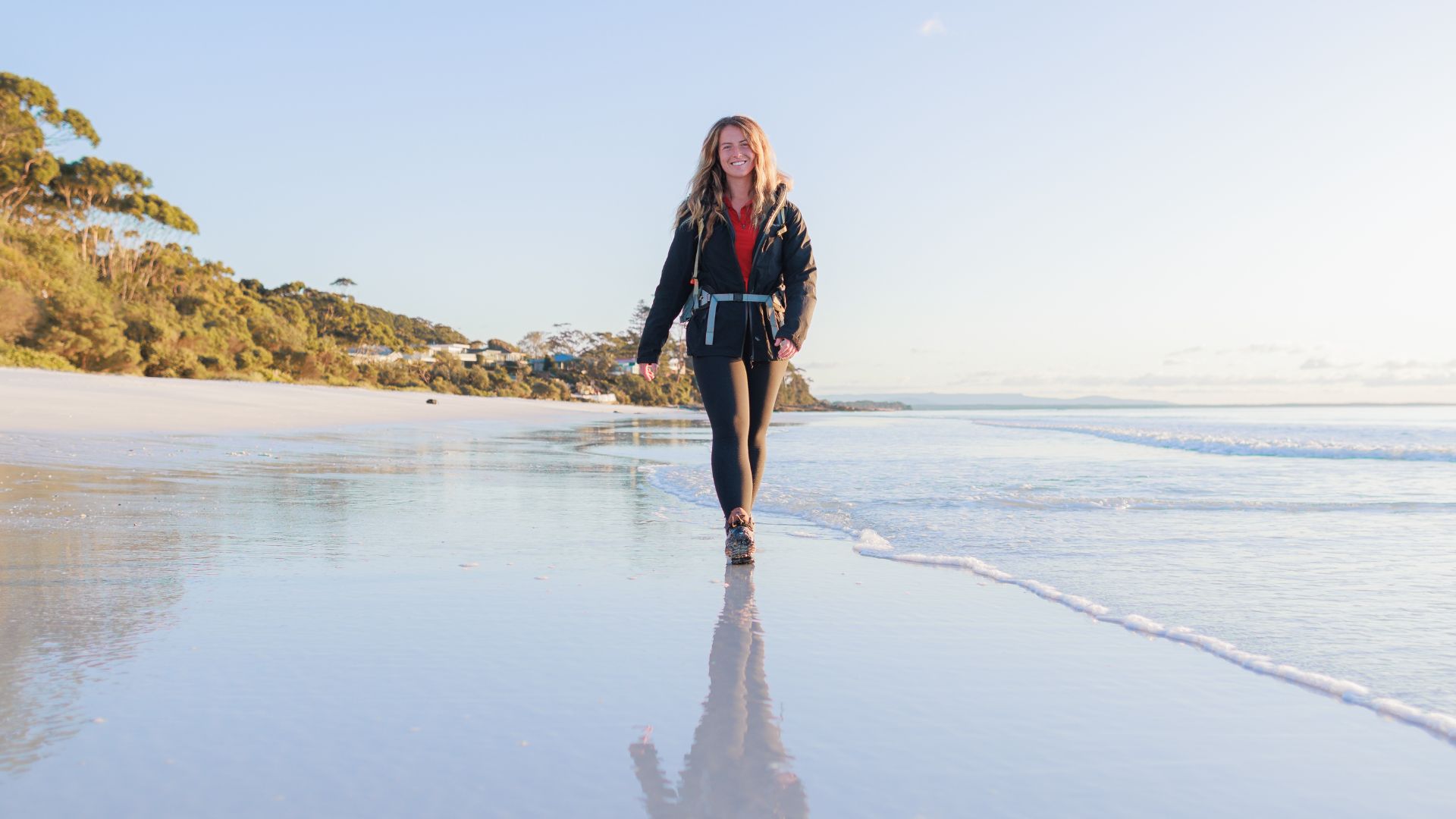
Ms Bailey Seamer was young when she received a diagnosis of bipolar disorder. She was shocked at the depths of her disease but chose to turn her attention to proving that there was life worth living after a mental illness diagnosis.
The 26-year-old from Caves Beach in NSW has inspired hundreds of people so far, raising awareness along the east coast of Australia, and she is preparing to take her inspiring story to the other side of the country in July.
Bailey is studying a Bachelor of Nursing part-time with Charles Sturt’s School of Nursing, Paramedicine and Healthcare Sciences with the long-term goal of working in international humanitarian aid, emergency nursing and disaster relief.
She travelled with her family extensively as a child and noticed the lack of access to healthcare, sanitation and basic resources in countries, such as Indonesia and in South America.
“Even at a young age, that awareness stayed with me,” she said.
“I have always felt drawn toward environments where care is needed most, particularly in high pressure or crisis settings where calm, skilled support can make a critical difference.”
Both her parents retrained for different careers later in life, which taught Bailey that education was a powerful tool for service and impact.
 “They consistently reinforced the belief that I could pursue ambitious goals and that meaningful work requires both heart and discipline,” she said.
“Nursing feels like the intersection of both.”
After Bailey received a diagnosis of bipolar disorder, she lived in extremes – periods of energy and ideas at an unstoppable pace to phases with little sleep and great sadness, where basic tasks like showering felt overwhelming.
Her diagnosis was confronting, full of grief and confusion. But with the fear came relief that there was a name for what she was experiencing and resources available to treat it.
The adjustment period after diagnosis involved learning about sleep, routine, boundaries, medication management and emotional regulation. But it also taught Bailey about accountability and humility and afforded her a fantastic sense of humour.
“Over time, it has also shaped my purpose,” she said.
“Living with bipolar disorder has given me insight into the realities of mental illness beyond theory. It has taught me empathy, resilience and the importance of early intervention and honest conversation.
“It changed the trajectory of my life, but not in a way that diminished it.”
During her time in a self-admitted psychiatric hospital, Bailey started walking long distances to give herself space and clarity. It became part of her healing process.
 Bailey thought of Wandering Minds while in a surgical waiting room. Bailey’s depression had worsened and she was shocked at how unwell she had become. She was waiting for her first round of electroconvulsive therapy (ECT).
“As they wheeled me into theatre, something shifted,” she said.
“I realised I had a responsibility. Not just to myself, but to the people in that ward (waiting for the same treatment).
“As the anaesthetist began putting me under, I told him that when I got better, I was going to walk the east coast of Australia and talk about mental health.
“Wandering Minds came from that decision. It was about challenging the narrative and about honouring the injustice of watching brilliant people suffer and deciding that the story needed to change.”
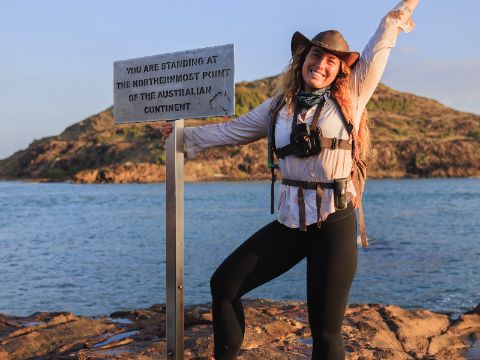
Bailey’s first solo hike was a 14-month 5,500 kilometre walk down the east coast of Australia in 2022. She describes is as ‘the most beautiful and the most brutal thing I had ever done’.
She encountered Australian wildlife face-to-face and met countless individuals affected by mental health issues that reminded her of why she was doing this walk.
“It was beautiful and horrendous all at once, physically punishing and emotionally evolutionary,” she said.
“It changed me completely and it proved that something born in the darkest chapter of my life could become something that brought light to others.”
And she plans to do it again in July.
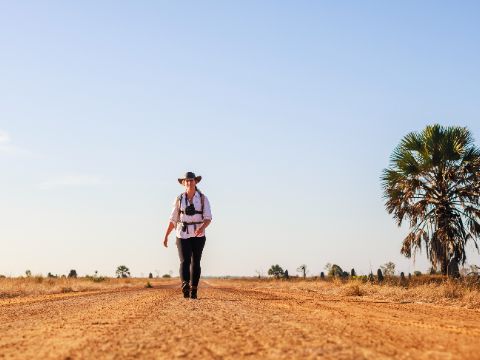
Bailey will embark on a 5,000-kilometre solo walk down the west coast of Australia, starting in the Kimberley region and finishing in Albany. The journey is expected to take seven months.
Along the way, Bailey will deliver 100 school talks and 100 community presentations while aiming to raise $100,000 for the Black Dog Institute.
“The goal is sustained presence rather than simply passing through,” she said.
“I want to take the conversation directly to places where access to services can be limited.”
Bailey will share her journey in real time on Instagram and her website, documenting her daily kilometres, the landscapes she crosses, people she meets and weather conditions.
Her psychiatric assistance dog in training, Rusty, will also be by her side for every kilometre. Rusty is a 14-month-old Australian Shepherd cross Standard Poodle and is trained to recognise early signs of dysregulation.
Bailey will continue her part-time studies while on her hike, an endeavour that holds as much importance.
“There were times when I was told becoming a nurse was unrealistic,” she said.
“I was 19 when a psychologist suggested that tertiary study would likely be beyond my capacity because stress worsened my symptoms.”
But Bailey said mental health issues do not make you weak, they mean you need to be more intentional about how you care for yourself while navigating higher education.
A combination of academic support, Study Access Plans, extensions when needed and kindness from lecturers has allowed her to continue to move forward in her degree.
“Navigating higher education while managing bipolar disorder has not always been straightforward for me,” she said.
“But progress is possible with the right systems around you. With accountability, transparency and support, you can build a life that once felt out of reach.”


Social
Explore the world of social