
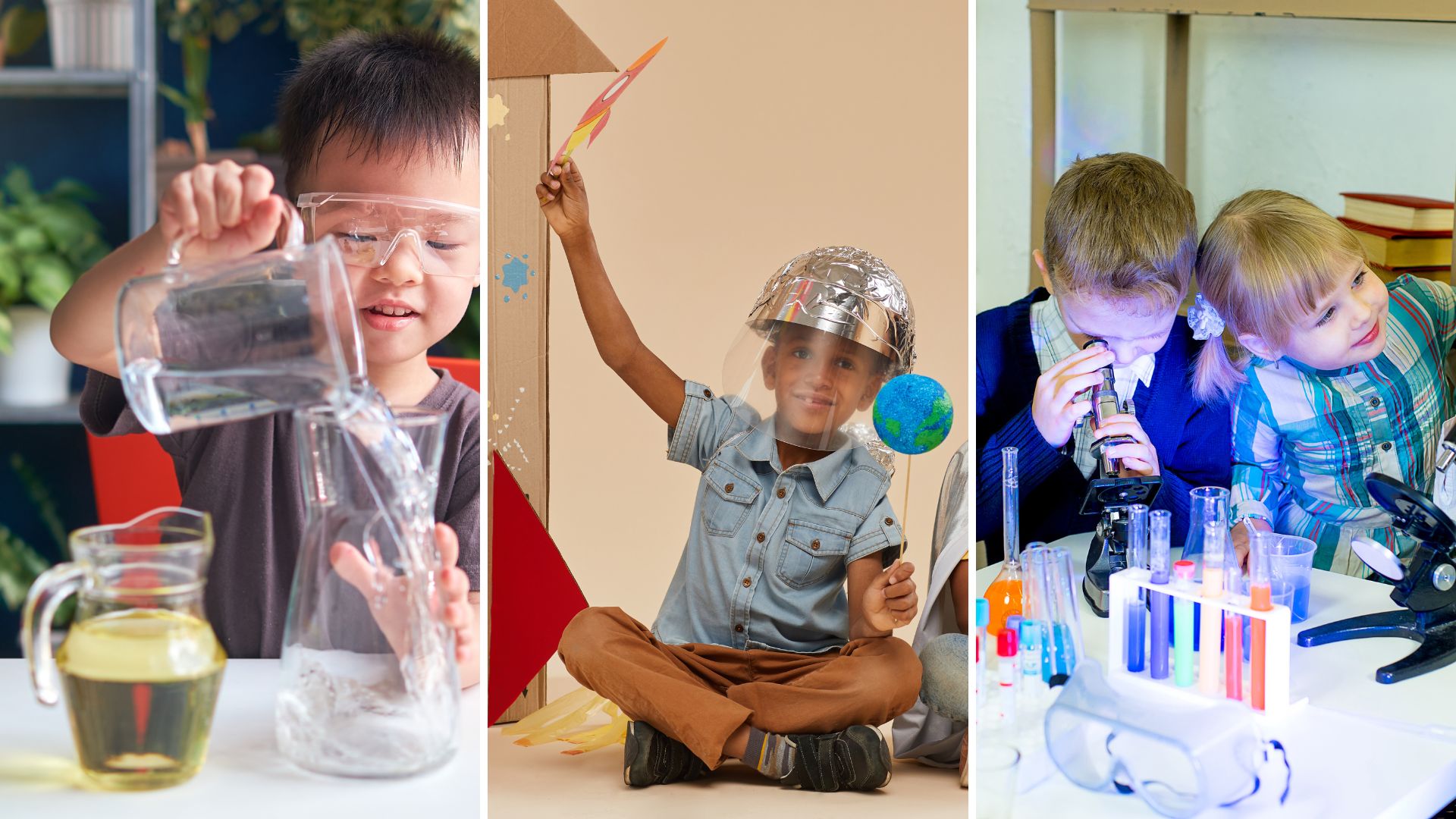
- Research finds a three-stage continuum ─ planning, play-based action and production phases, and pedagogical reflection ─ demonstrates how intentional educator planning is vital for developing science concepts
Charles Sturt University researchers have published a study investigating how children’s scientific literacy development can progress in the early years through play and intentional planning by educators.
The article, ‘Understanding the Process of Scientific Literacy Development among Children in the Early Years Through Play and Intentionality’ is published online in Research in Science Education (Springer Nature Link, 2025).
PhD candidate in the Charles Sturt School of Education and this study’s lead researcher Mr Goutam Roy said children’s scientific literacy development in the early years helps them progress their science concept knowledge by relating and applying it in play activities.
The research article illustrates a three-stage continuum ─ planning, play-based action and production phases, and pedagogical reflection ─ that demonstrates how intentional educator planning is vital for developing science concepts.
“These concepts are related and, when applied during science play activities, they promote scientific literacy,” Mr Roy said.
“Across three play experiences, children engaged with a combination of science concepts and knowledge, applying them in their activities.
“This process highlights the role of educators in sustaining and progressing scientific literacy through continuous, interconnected science play.”
Mr Roy noted that while studies have addressed several areas of scientific literacy in early years education, there remained a significant knowledge gap in understanding the process of this development through play and educator intentionality.
This research with Charles Sturt colleagues Dr Shukla Sikder and Associate Professor Will Letts explored how children develop their scientific literacy through their science play experiences with the help of educators’ intentionality.
“The study recommends continuing interrelated and interconnected science play activities to progress children’s higher learning development and scientific literacy in their early years,” he said.
“Our research contributes to early years education by offering a practical framework for educators and insights for academics and practitioners into how scientific literacy can be promoted and understood in early childhood.”
Mr Roy emphasised that while the findings provide valuable guidance, they are based on data from a single preschool and further research across diverse early learning settings is recommended to deepen understanding of this developmental process.


Social
Explore the world of social