
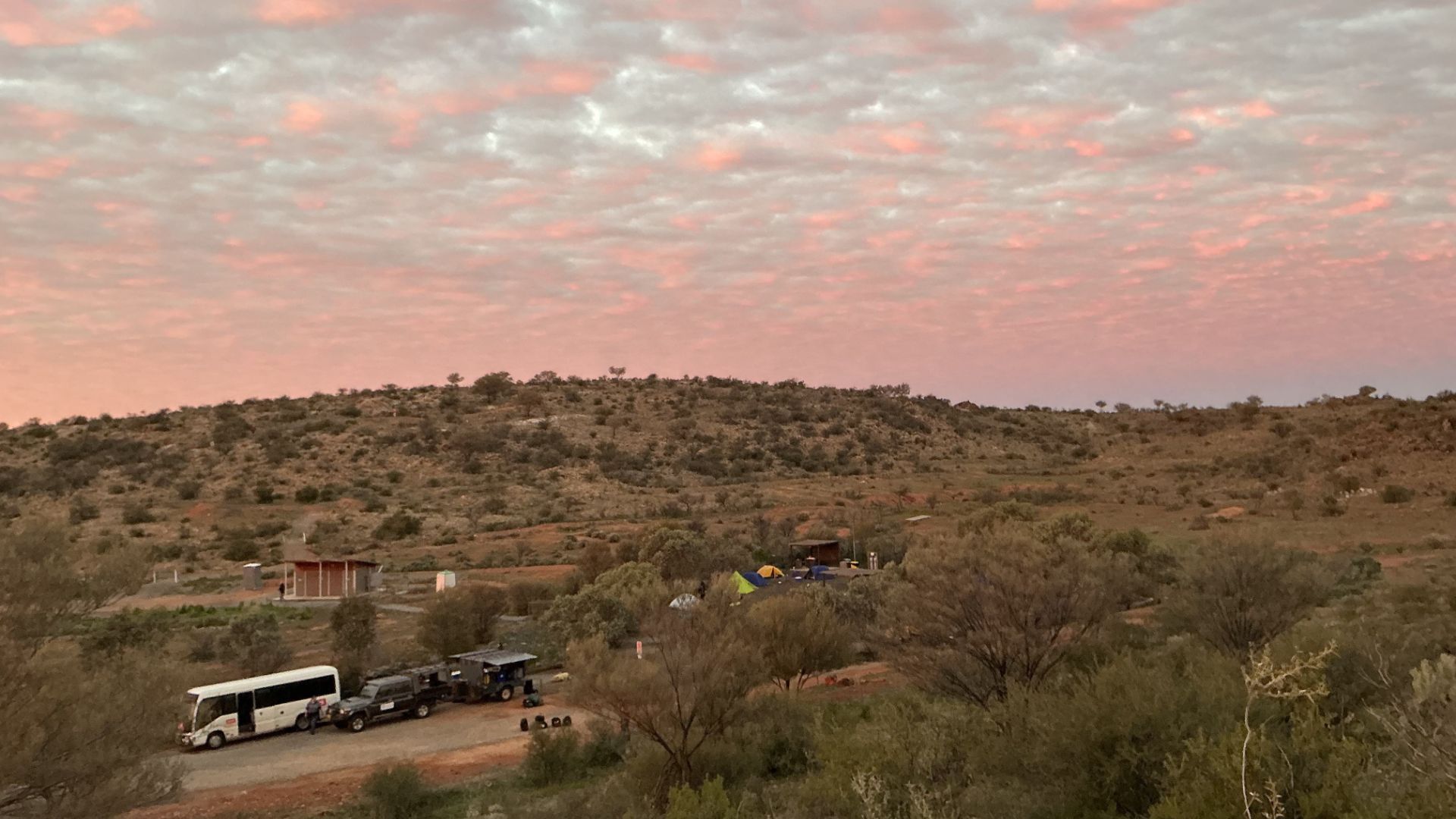
- Twenty-two science students have returned from an annual 18-day environmental research field trip to north-western NSW arid zone to learn the practical application of field techniques
- Students have created and contributed profiles of more than 400 endemic plant and animal species to Wikipedia since the research project began in 2002
A Charles Sturt University academic led his first student field trip to western NSW in 2002 and has recently returned with 22 students from the annual 18-day research expedition to Cameron Corner in the remote northwest of NSW.
Award-winning Professor in Ecology David Watson in the Charles Sturt School of Environmental, Agricultural and Veterinary Sciences, and the Charles Sturt Gulbali Institute for Agriculture, Water and Environment, led the Charles Sturt field trip contingent.
This was his 24th annual environmental research trip in which participating students are required to identify a plant or animal species and to write and contribute an enhanced species profile on Wikipedia.
Professor Watson said many students comment that this is the best assignment they have ever encountered, investing extra effort in the knowledge that their work will be publicly available and help raise awareness about the unique flora and fauna of Australia’s arid zone.
“In the 24 years of the research project, more than 400 species profiles of plants and animals have been written up and published online by students, with inland Australia one of the best covered regions of the world for Wikipedia,” Professor Watson said.
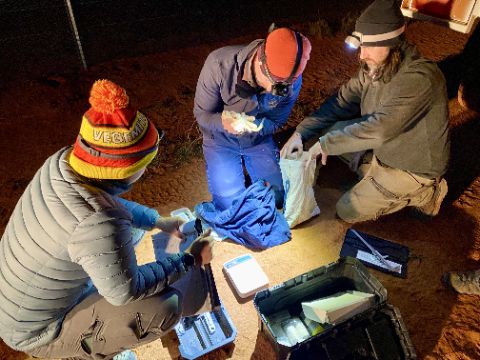 “The field trip was rich with shared highlights, not least being the potential to contribute new scientific knowledge to Wikipedia about endemic plant and animal species in arid outback Australia.
“At a total of 432 days, these trips represent more than a year of my life, and the 24-year span is longer than the ages of some of the current participating students. This includes the son of a former student who participated on one of the first desert trips and later did Honours with me, so the field trip is now a multi-generational affair.”
Professor Watson developed the hands-on research experience into a formal eight-point academic subject (The Principles and Practice of Field Ecology), conducted all in-field, where students are immersed in the desert environment.
Numerous student projects have resulted from this subject, as well as larger-scale collaborations.
“The field trip is a hands-on primer of conventional and next-generation ecological methods wherein daily activities rapidly build competencies and confidence,” Professor Watson said.
“After-dinner discussions facilitate peer-to-peer learning, giving students opportunities to explore ideas and consider diverse perspectives.”
 The recent 2026 field trip began in the far northwest corner of Sturt National Park, known as Cameron Corner, where the borders of Queensland, New South Wales and South Australia meet.
There, a research group from University of NSW has established two four- by five-kilometre predator-proof ‘exclosures’ (which exclude predator species) where wildlife species extinct in the state have been reintroduced.
“On the second night of the trip, we were trapping bilbies, moving them to the ‘wild training area’ outside of these ‘exclosures’, representing the first ‘free living’ bilbies in the state,” he said.
The research group left ‘the Corner’ early to avoid a storm but were subsequently rained-in at Mount Wood near Tibooburra.
Professor Watson said all the main learning activities occurred within walking distance of the shearer’s quarters there, with the rain illustrating exactly how boom-bust dynamics operate in arid ecosystems.
“The creek line beside the quarters went from dry to three metres high within a 12-hour period, with crabs, spangled perch and desert rainbowfish swimming across the main road through the national park,” he said.
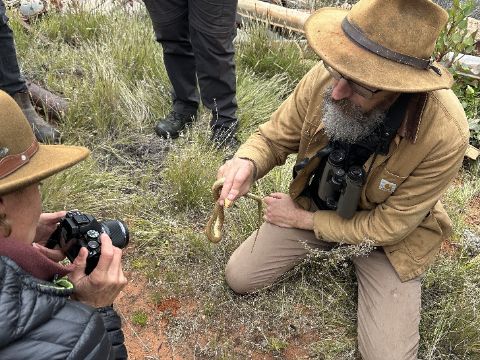
“Despite the wet weather, we were able to include mist-netting for birds, bat-trapping, small mammal trapping and active searches for reptiles and amphibians, with students perfecting their handling and ID skills with no unforeseen welfare issues.”
Professor Watson emphasised that it was the very hands-on nature of this learning experience that set Charles Sturt University apart from other universities.
“The students are a cohort of friends who are just like them, being taught by hands-on lecturers, learning real-world skills that will make their community a better place and accelerate their careers,” he said.
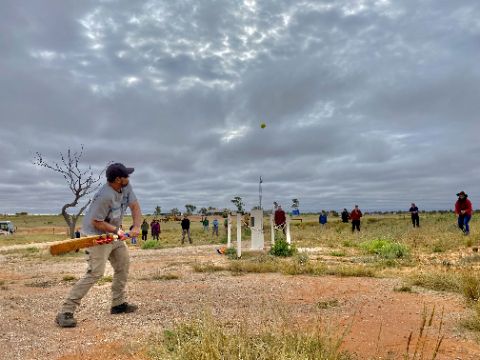 “Student testimonials are a reminder of just how important that is, from both a learning perspective and in forging friendships and collaborations that last a lifetime.”
The 2026 field trip reminded student Zahra Bourne why she is studying environmental science.
“I came away from the desert trip feeling very fulfilled after connecting with like-minded people and spending time reconnecting with my desire to learn more about our natural world,” Zahra said.
All animal handling was conducted under an Animal Research Authority in accordance with protocols approved by the Charles Sturt University Animal Ethics Committee.



Social
Explore the world of social