
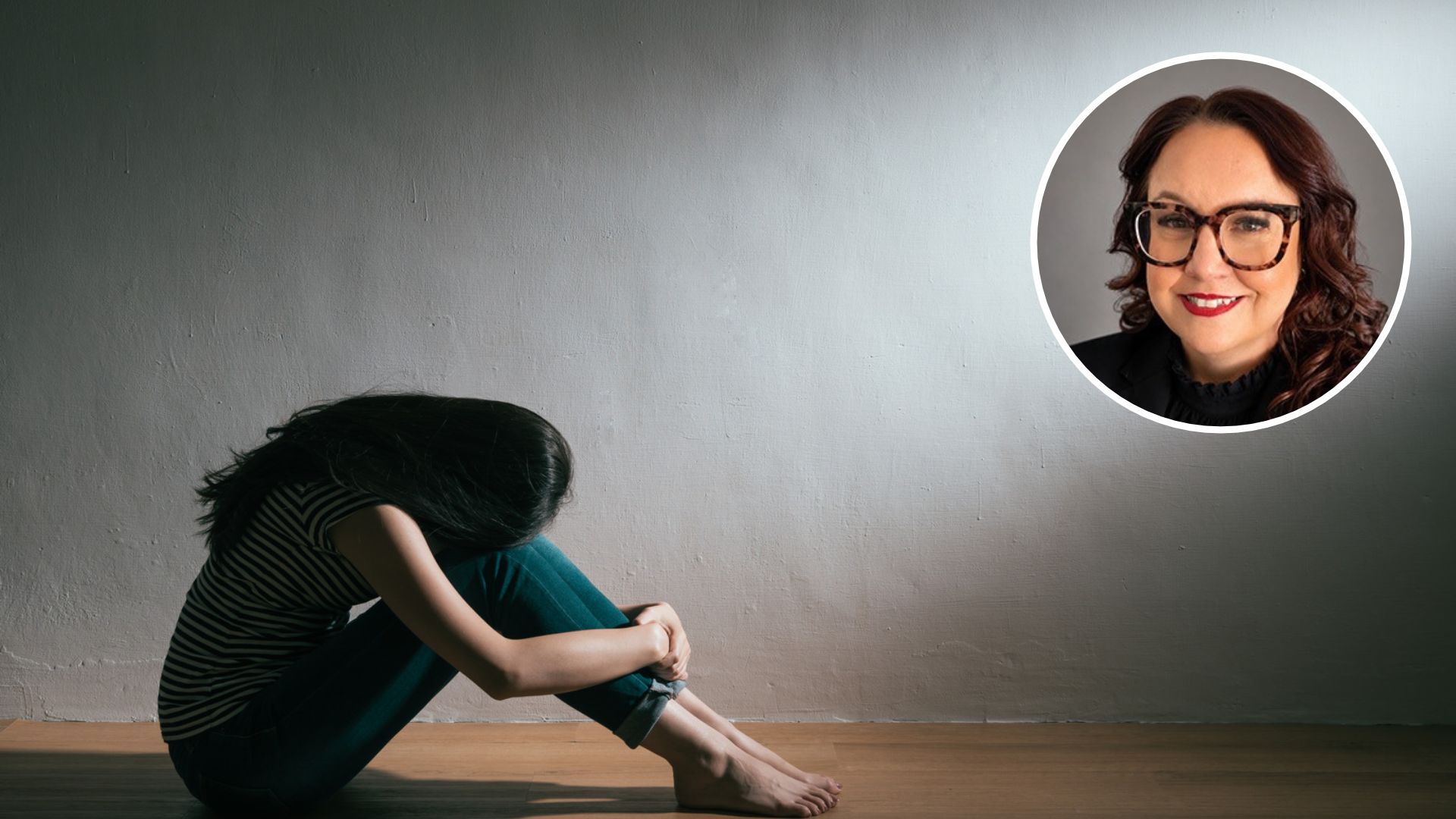
- A Charles Sturt University alumna acknowledged for her services advising on suicide prevention, trauma and mental health in rural and remote areas
- Approximately 3,000
Australians end their lives each year and instances of suicide and self-harm
hospitalisations are proportionally higher in regional, rural and remote
Australia
As a then-21-year-old Dr Annie Fardell Hartley (pictured inset) was working as an intern psychologist in Dubbo, an experience that shaped a career spanning more than two decades committed to suicide prevention, mental health and community connection.
Today, Annie is one of Australia’s most respected voices in youth and rural and remote suicide prevention and mental health, balancing leadership roles in research, policy, clinical practice and community advocacy.
For this, Annie was awarded the Charles Sturt University 2026 Distinguished Alumna of the Year – Social Impact.
Yet despite the breadth of her work, she remains focused on a simple principle: helping people feel seen, heard and connected.
“The most fulfilling aspect of my work is witnessing the moment someone feels seen and heard, often after believing they were invisible or a burden,” Annie says.
According to the Australian Government’s Department of Health, Disability and Ageing:
- Approximately 3,000 Australians end their lives each year – about eight people a day
- Suicide is the leading cause of death for Australians aged 15 to 49 years
- It is the third leading cause of premature death from injury or disease
- About 1 in 8 Australians has seriously considered suicide at some stage in their life
The Australian Institute of Health and Welfare reports that instances of suicide and self-harm hospitalisations are proportionally higher in regional, rural and remote Australia.
Annie is a Charles Sturt University graduate who completed a Bachelor of Social Science (Psychology), followed later by a Master’s degree and PhD, and has spent her career working across government, not-for-profit and private sectors.
Her expertise spans trauma, suicidality and emergency service youth mental health, with a particular focus on rural and regional communities.
“Witnessing people return from profound distress and rebuild their lives became the driving inspiration behind my work,” she says.
That inspiration has led Annie into diverse and influential roles. As Principal Psychologist (Systems), she advises on suicide prevention, trauma and mental health across one of Australia’s largest emergency service organisations.
Her days can include responding to critical incidents, supporting teams, conducting research, advising government and providing care to people in crisis.
Alongside her professional roles, Annie has remained deeply committed to community-led initiatives.
She has helped establish projects including Connected Communities Project Inc., the Central West LGBTIQA+ Rainbow Alliance and local Walk Toward Hope events for World Suicide Prevention Day.
For Annie, meaningful change does not happen through systems alone; it starts with communities having the confidence and support to care for one another.
Her research has also contributed to a deeper understanding of suicide prevention in regional Australia.
Through her doctoral studies at Charles Sturt, Annie explored how rural young people experiencing suicidal distress engage with social media, identifying opportunities to recognise warning signs and intervene earlier.
The research reflected a theme that has remained consistent throughout her career: listening closely to the lived experiences of others.
Being able to pursue that work while balancing full-time employment and raising a family remains one of her proudest achievements.
Seeing her finished PhD bound and complete was a moment she describes as a significant personal accomplishment.
Her commitment to helping others has also been shaped by personal experience. Losing her father to cancer when she was 14 taught her an enduring lesson about resilience and hope, one she continues to carry into every aspect of her work.
“I think of it as lending people some of my hope until they find their own again,” she says.
Her work continues to demonstrate the power of human connection and the difference one person can make when they choose to help others find a way forward.
If you, or someone you know needs assistance, contact:
- Lifeline – 13 11 14
- Open Arms – 1800 011 046
- Beyond Blue – 1300 22 4636
- 1800RESPECT (National domestic, family, and sexual violence counselling service) – 1800 737 732
- MensLine Australia – 1300 78 99 78
- Kids Help Line – 1800 55 1800
- 13 YARN (service run by Aboriginal and Torres Strait Islander people) – 13 92 76
-
Q Life (LGBTI support and referral) – 1800 184 527

Social
Explore the world of social