
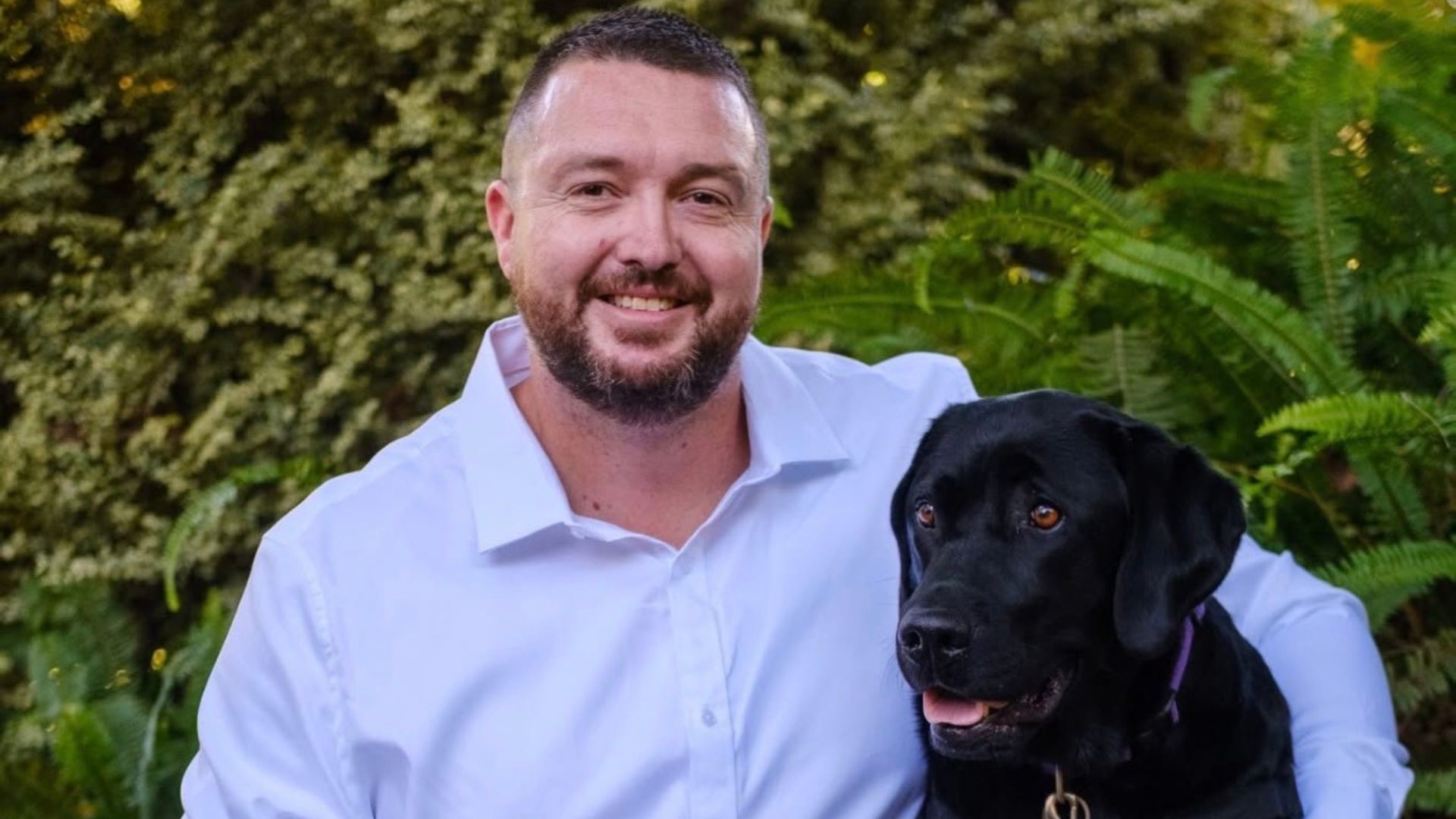
Richard Hendrie walked into the student administration building at Charles Sturt University in Wagga Wagga in 2007 and enrolled to study. This simple move was one that changed the course of his life.
Richard did not receive an ATAR in Year 12 and joined the military in 2004. When he was discharged, he was homeless and suicidal.
“What followed was a long and significant battle with complex mental illness, homelessness, alcohol misuse and substance addiction,” he said.
These issues are all-too common in Australian men. According to Beyond Blue, death from suicide amongst Australian men is nearly double the national road toll, while 43 per cent will experience anxiety or depression at some stage in their lives.
Richard’s dad told him he either needed to start working or study. He went to Wagga Wagga campus and enrolled in-person to study a Bachelor of Arts, majoring in History and Sociology. It was not a good start for Richard – he failed his first semester, did not know how to reference correctly and forgot to attend classes.
Things began to change when he met several incredible History and English lecturers.
“Back then, the campus classes were small and staff genuinely knew their students,” he said.
“They spent time with me, encouraged me and saw something in me before I could see it myself.”
Despite experiencing two acute mental health admissions, Richard obtained credits and passes and received his first high distinction.
Richard graduated in 2011 with an overall 5.5 grade point average (GPA), with a 6.5 GPA in his History major, which means he achieved an average of credits, distinctions or high distinctions in all subjects.
“Initially, studying was about survival,” he said.
“It gave me structure, purpose and something to hold onto when life felt chaotic. Charles Sturt gave me stability during a period where I could easily have gone the other way.
“Education became something much bigger than a qualification for me - it became part of rebuilding a life.”
Richard enjoyed the strong sense of community at Charles Sturt and the easy accessibility of the academic staff.
“Many universities talk about student support but at Charles Sturt University it often felt genuine and practical,” he said.
He also valued how Charles Sturt gave students a voice and how that shaped his later work in advocacy, health governance and public policy.
“Being a regional university also mattered,” he said.
“Many students, including myself, were first-in-family students or came from non-traditional educational backgrounds.
“Charles Sturt recognised that reality and built strong academic and welfare supports around students, not simply to help them pass, but to help them become capable professionals.”
Study did more than give Richard career options. It gave him a chance to rebuild his identity.
And he believes that by developing that identity in regional Australia, it enables him to better advocate for the people in those regions.
“I think regional universities like Charles Sturt play a vital role because they create opportunities for people who may otherwise never see themselves as belonging in higher education,” he said.
“Regional Australia often produces people with a very grounded understanding of community, hardship, resilience, and practical reality,” he said.
“When you study and work regionally, you are constantly reminded that policy, health care, education, and economics are not abstract ideas — they directly affect people you know.
“That is why it is so important to have skilled professionals, researchers, clinicians and leaders who live and work in these communities.”
Since studying a Bachelor degree at Charle Sturt, Richard graduated with a Master of Social Work (Professional Qualifying) from Charles Sturt in 2016 and has completed postgraduate studies in law and forensic psychology at other universities. He is currently studying health economics.
Men’s Health Week this year is from Monday 15 to Sunday 21 June and Richard said this is the right time to start creating spaces where people feel heard without immediately being judged, categorised or fixed.
“There is nothing dignified or empowering about being invisible, poor, unwell, and disconnected from society,” he said.
Richard was recently appointed to the new NSW Suicide Prevention Council and is the Chair of the NSW Ministry of Health’s Consumer, Carer and Community Advisory Council.
During Men’s Health Week, Richard wants to see more people having conversations and creating safe spaces for men to talk, and to recognise the different ways men indicate they need help.
“Men may talk through anger, humour, withdrawal, risk-taking, silence, work, sport, or self-destruction. We need to become better at recognising distress in all its forms,” he said.
“The most important thing we can do is create spaces where people feel heard without immediately being judged, categorised, or fixed.”
If you or someone you know needs help, contact:
- Lifeline – 13 11 14
- Beyond Blue – 1300 22 4636
- MensLine Australia – 1300 78 99 78
- Q Life (LGBTIQA+ support and referral) - 1800 184 527


Social
Explore the world of social