
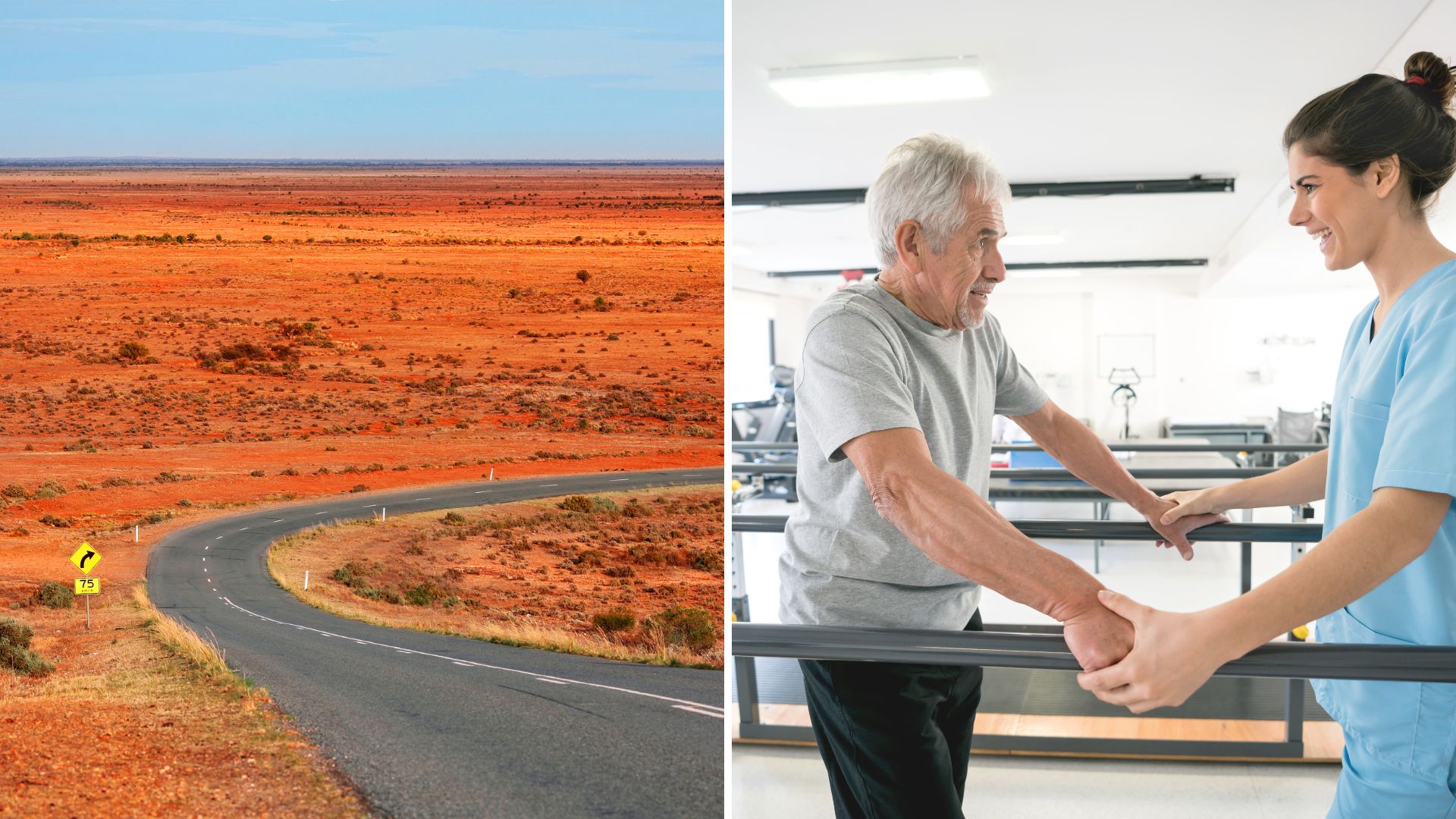
- Charles Sturt University researchers and colleagues identified limits of old health accessibility modelling and devised a novel solution applicable Australia-wide
- A report and the related dashboard tool reveals health service access disparities, supports evidence-based workforce planning, policy development and investment decisions, particularly in rural and regional Australia
A project developed by Charles Sturt University researchers and partners provides a national-scale, spatial accessibility model showing real public access to health professionals across Australia.
The Health Workforce Accessibility Dashboard was developed in conjunction with the new national report Outreach or Out-of-Reach? Access to Occupational Therapy Services in Australia commissioned by Services for Australian Rural and Remote Allied Health (SARRAH).
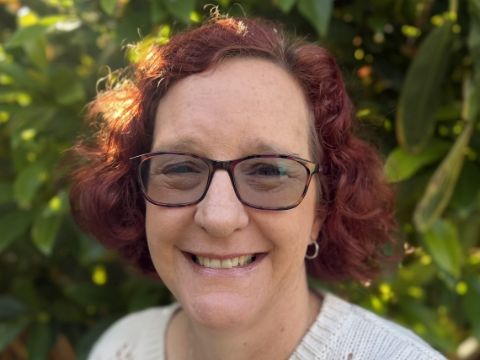 Both the dashboard and the report were developed by Lecturer in Occupational Therapy Ms Karen Hayes (pictured left) in the Charles Sturt School of Allied
Health, Exercise and Sports Sciences and Spatial Analysis Officer Mr Simon McDonald in the Charles Sturt Spatial Data Analysis
Network, in partnership with SARRAH and colleagues at Western Sydney University.
Both the dashboard and the report were developed by Lecturer in Occupational Therapy Ms Karen Hayes (pictured left) in the Charles Sturt School of Allied
Health, Exercise and Sports Sciences and Spatial Analysis Officer Mr Simon McDonald in the Charles Sturt Spatial Data Analysis
Network, in partnership with SARRAH and colleagues at Western Sydney University.
The Outreach or Out-of-Reach? Access to Occupational Therapy Services in Australia report and the Health Workforce Accessibility Dashboard will be launched at a public webinar at 7.30pm on Thursday 29 April.
The report found that:
- More than 550,000 people live more than 30 minutes’ drive from an occupational therapist, with the vast majority living in rural, remote and very remote communities
- Children, older Australians, people with chronic conditions, unpaid carers and First Nations communities are among those most affected
- In very remote areas, nearly two‑thirds of residents have no access to an occupational therapist within a reasonable travel distance.
Ms Hayes said this research initiative demonstrates and adds to Charles Sturt University’s regional impact by contributing to rural health workforce policy through evidence-based planning to assist government and industry to improve access and equity.
“Access to health professionals is critical for equitable healthcare delivery and workforce planning, yet traditional methods of measuring accessibility are often inadequate,” Ms Hayes said.
“Current approaches typically rely on artificial borders, such as Modified Monash (MM) classifications or health service boundaries, which can misrepresent real-world access.
“For example, clinicians located just across a boundary may be excluded, even if they are closer and more accessible to patients.”
Ms Hayes and Mr McDonald realised that advanced spatial accessibility models like the Two-Step Floating Catchment Area (2SFCA) method provide a more accurate picture by considering both provider supply and population demand without these boundaries.
“However, applying 2SFCA at a national scale has previously required supercomputing resources to process millions of population and provider points, leaving policymakers and industry without the granular insights they need,” Ms Hayes said.
Their solution was to devise a novel application of the 2SFCA method across the entire Australian continent, reported through a searchable online dashboard.
“Using innovative data handling and optimisation, we provide accurate, high-resolution accessibility indexes for census areas of 200 to 800 people which provides a national-scale, spatial accessibility model showing real access to health professionals across Australia,” she said.
“Unlike Modified Monash or service boundary measures, it uses advanced spatial modelling to identify where communities can actually reach care, producing high-resolution accessibility indices for small population areas.
“The dashboard provides detailed maps and charts to reveal health service access disparities. This supports evidence-based workforce planning, policy development and investment decisions, particularly in rural and regional Australia.”
See more about the Health Workforce Accessibility Dashboard - Research and please register to attend the free public webinar at 7.30pm on Thursday 29 April.




Social
Explore the world of social