
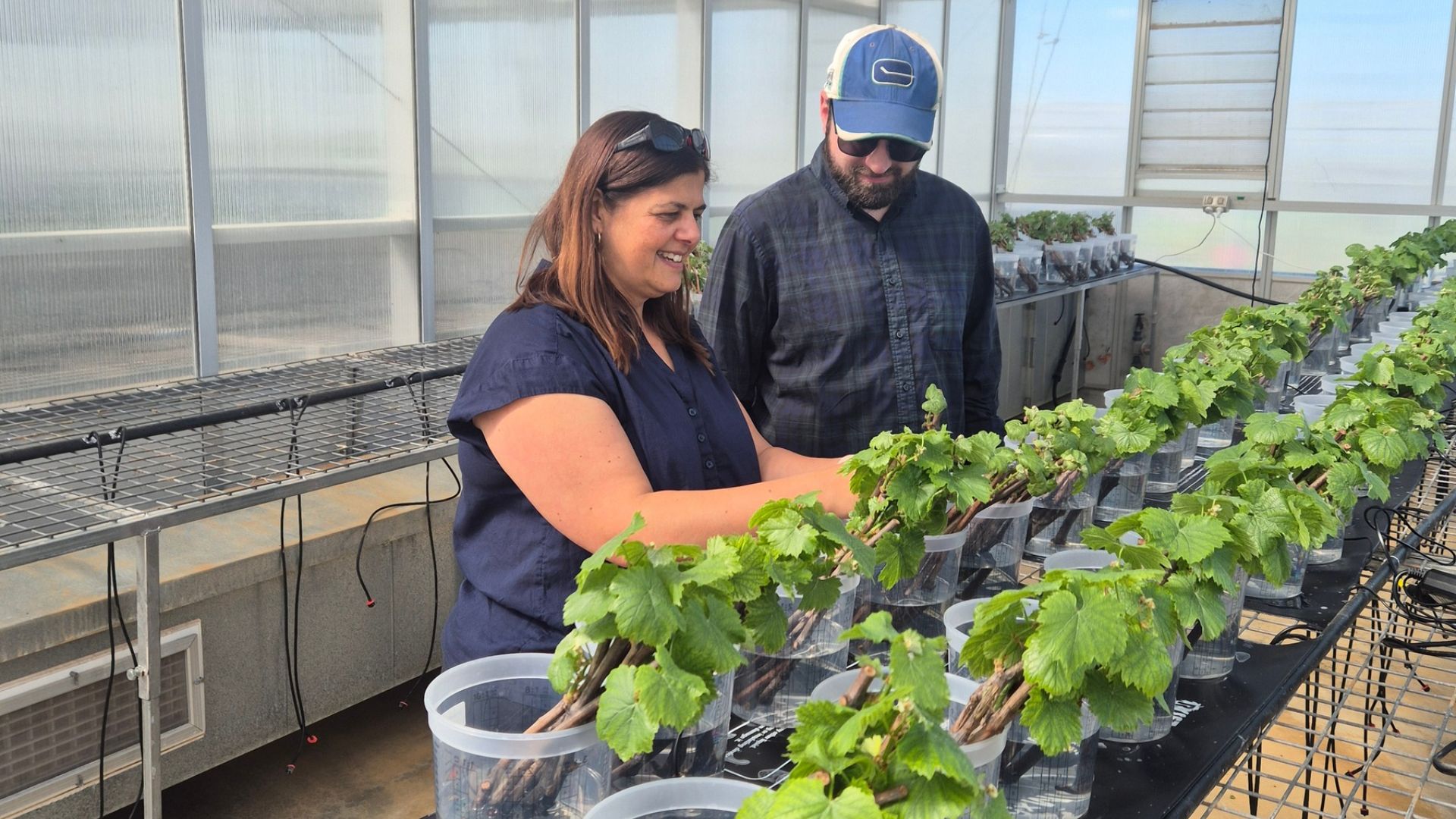
- New training centre aims to reduce Australia’s pesticide reliance while boosting sustainable crop production nationwide
- Australia spends an estimated $4.5 billion annually on standard pesticides, totalling 59,634 tonnes of active ingredients
Charles Sturt University will help lead a major new national research and training centre aimed at developing safer, more sustainable ways to protect Australian crops and strengthen the future of the agriculture industry.
The ARC Training Centre for Advancing Capability in Biopesticides for Crops (Adv-BioCrop Centre) will bring together universities, industry and government partners to accelerate the development and adoption of alternatives to traditional chemical pesticides.
The Adv-BioCrop Centre is one of five national research hubs and training centres, led by the University of Queensland, which will address future workforce and technology needs, supported by $24.6 million from the Australian Research Council’s Industrial Transformation Research Program.
The University of Queensland (northern node) will focus on tropical and subtropical crops while Charles Sturt University (southern node) will focus on subtropical and temperate crops.
Researchers from Charles Sturt will contribute expertise in plant pathology and crop protection while working closely with industry to test new biopesticide technologies in real-world farming environments.
The research is expected to benefit a wide range of agriculture industries, including grains, horticulture, viticulture, sugarcane and tree crops.
Charles Sturt researcher Professor Sandra Savocchia has been appointed as Deputy-Director and Southern Node Leader. The Adv-BioCrop Centre will be led by UQ’s Professor Femi Akinsanmi.
Professor Savocchia said the project would help address some of the biggest challenges facing Australian agriculture.
“Australian farmers are under increasing pressure from climate change, fungicide resistance and changing market requirements," Professor Savocchia said.
"This Centre will help deliver practical, science-based solutions that support productivity while reducing reliance on traditional pesticides."
Australia spends an estimated $4.5 billion annually on standard pesticides, totalling 59,634 tonnes of active ingredients.
As well as research, the ITTC will train the next generation of specialists in biopesticides, helping build Australia's future workforce and innovation capability in agricultural science.
Charles Sturt's Deputy Vice-Chancellor (Research), Professor Neena Mitter, has worked on transformational crop protection approaches for more than a decade.
“Sustainable crop protection, underpinned by integrated pest and disease management, can support the long-term sustainability of Australia's cropping sector, and parterships and initiatives like this are needed to make that a reality and train the next generation of researchers," Professor Mitter said.
The ARC Training Centre for Advancing Capability in Biopesticides for Crops (Adv-BioCrop Centre) will be led by The University of Queensland with partner organisations listed on the ARC website.


Social
Explore the world of social