
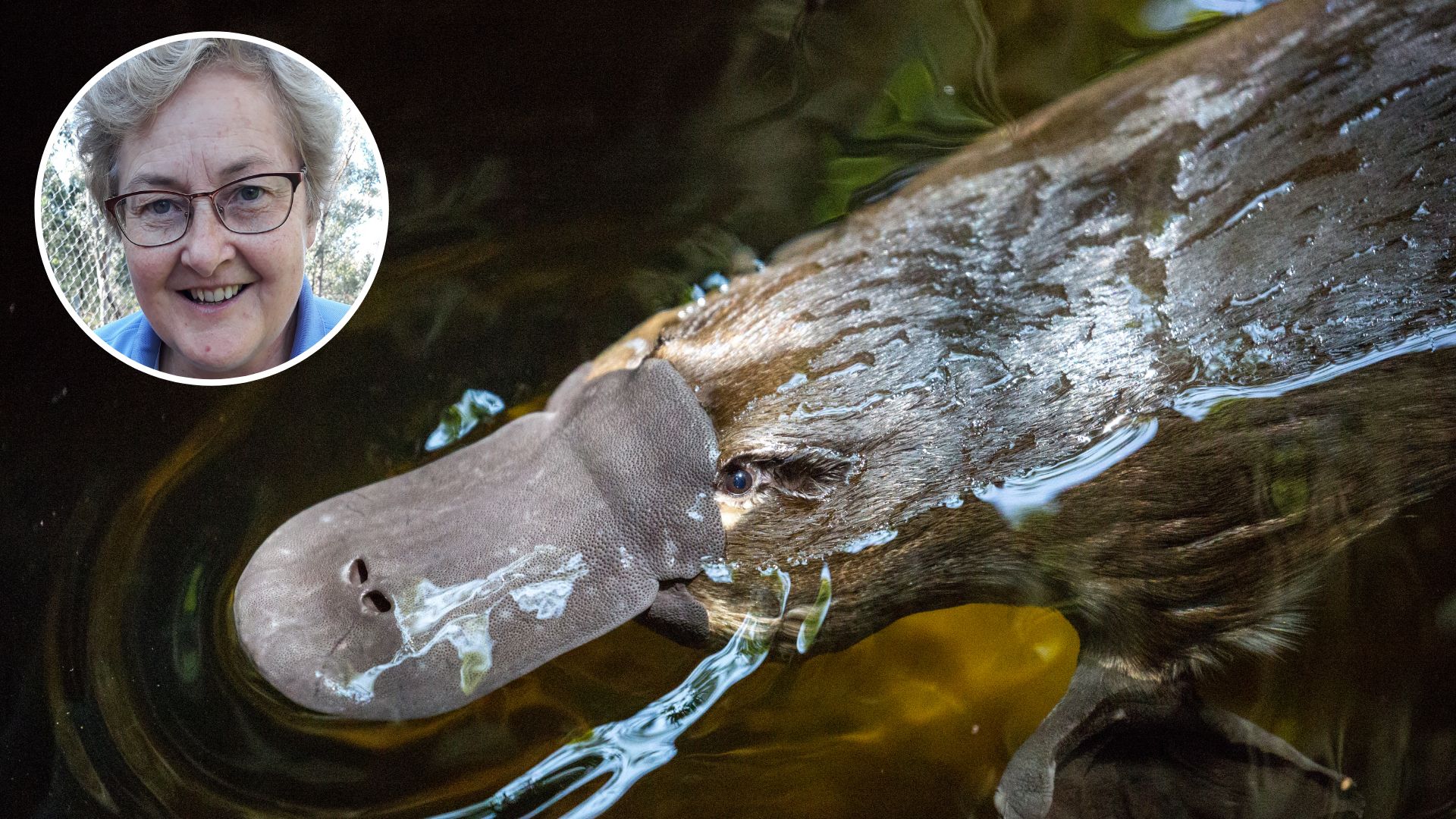
- A Charles Sturt researcher is helping investigate the first case of a fungal infection found in a platypus on the Australian mainland
- The disease was previously contained in platypuses in Tasmania and the emergence in mainland platypuses could be detrimental to the near-threatened species
The detection of a fungal disease in platypuses has researchers worried that the disease, which was previously restricted to Tasmania, poses threats to animals on mainland Australia.
In 2016, the International Union for Conservation of Nature updated their status for platypuses in Australia to near threatened, based on research at the time that showed up to 30 per cent of their population had declined over three generations.
Mucormycosis is a skin disease affecting platypuses that causes painful ulcers on their limbs, tail, back and head that impact underlying muscle and sometimes their lungs.
The disease can be fatal and is widespread in rivers in Tasmania. According to the Tasmanian Department of Natural Resources and Environment Tasmania, it represents 'one of the most significant threats' to the species.
In 2024, a platypus with ulcers on its bill and left front foot was treated in Brisbane, and died three days later.
Researcher with the Charles Sturt University School of Agricultural, Environmental and Veterinary Sciences Dr Joanne Connolly was contacted for her expertise with this disease.
Testing of the platypus at the time revealed the cause as Mucor amphibiroum.
Dr Connolly recently published then presented these findings at the Platypus Conference 2026: Collaborative Approaches to Platypus Conservation and Biology in Sydney, which is held every three years, and warned that because of the illnesses and deaths that have occurrred in Tasmania, it is a worry the disease has appeared on the mainland.
"The sudden emergence of mucormycosis in Queensland platypuses, and the continuing sporadic disease in Tasmanian platypuses, is a huge concern," Dr Connolly said.
"The emergence of this disease on the Australian mainland could have grave consequences for this near-threatened species."
In Australia, platypuses are classified as 'near-threatened'. Population estimates may number 300,000 but they are extremely difficult to count because they are nocturnal, elusive and live in complex river systems.
Disease transmission is believed to be via skin wounds resulting from spurring, ticks or injuries, although inhalation and ingestion are also possible routes of infection.
The disease has previously been found in frogs and toads on the mainland but the Brisbane case was the first known detection in a platypus outside of Tasmania.
Dr Connolly said veterinarians and wildlife researchers should be aware of this infection and its detection on the Australian mainland, despite decades of previous literature describing the geographical restriction of this disease to Tasmania.
Mucormycosis has been a significant cause of illness and death in Tasmanian platypuses and Dr Connolly said more research is needed to determine how quickly the disease is spreading.
Ongoing surveillance is essential for the detection of outbreaks and to prevent the spread to new sites. General hygiene and disinfection (Phytoclean, bleach etc) of equipment and footwear is recommended when moving from diseased to disease-free zones.
Dr Connolly said people should watch out for platypuses with skin conditions (ulcers or lumps, etc.). If found, photograph the animal and report the location and date to the local wildlife authorities.
Suspected cases of mucormycosis should be reported to Wildlife Health Australia or Dr Joanne Connolly at jconnolly@csu.edu.au.




Social
Explore the world of social