
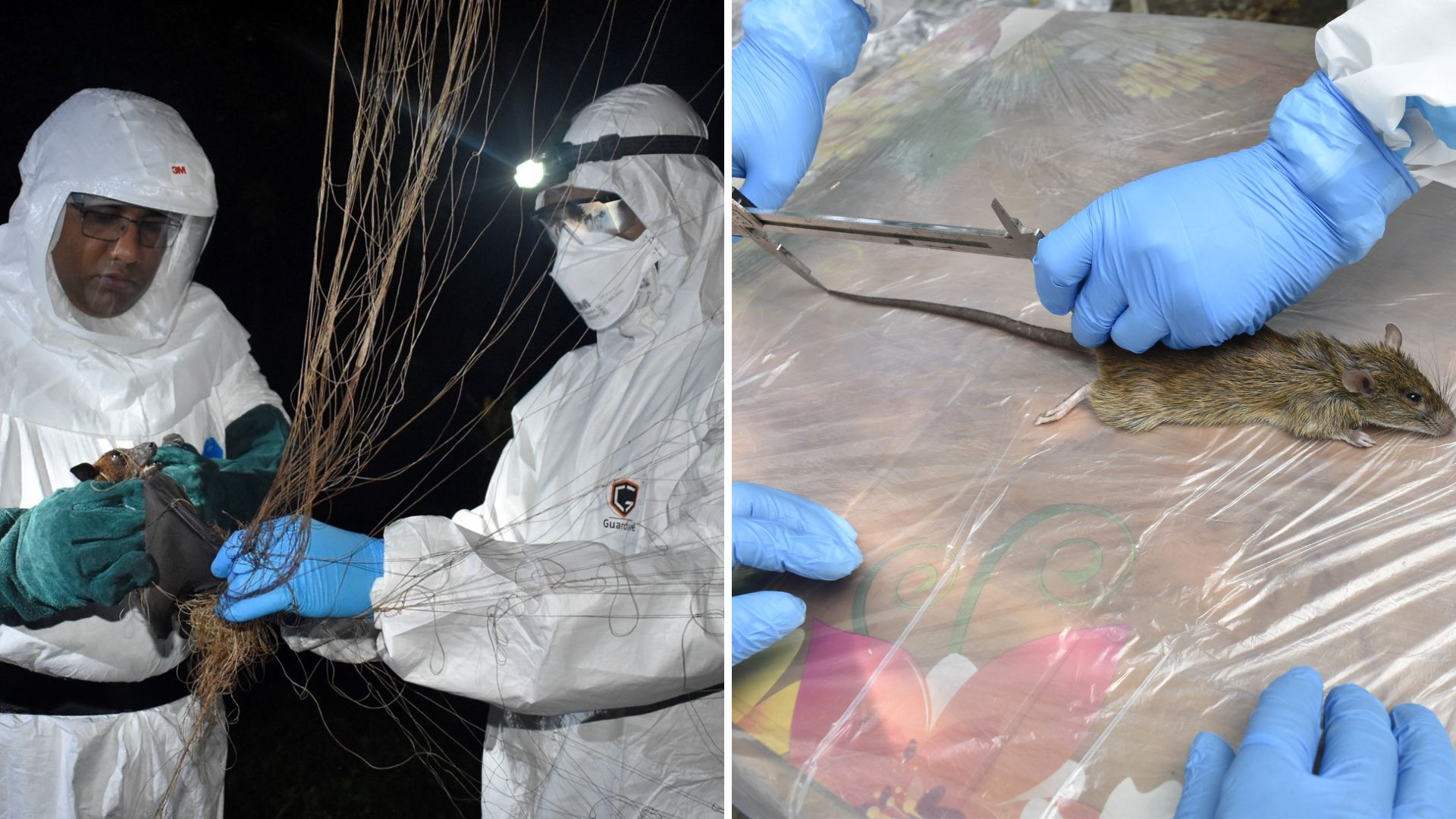
- A Charles Sturt University researcher and colleagues are investigating how highly virulent diseases, such as hantavirus, Nipah virus and avian influenza, transmit between wildlife, livestock and humans
- They are helping to protect the nation against potential pandemic diseases
- The researchers at the Gulbali Institute have strengthened regional capacity in surveillance, disease ecology and modelling, field ecology and biosecurity research
A Charles Sturt University researcher is at the forefront of research into exotic disease surveillance and mitigation in Australia and overseas including for the now controversial hantavirus.
Epidemiologist Dr Ariful (Arif) Islam (pictured top, at left) in the Charles Sturt Gulbali Institute for Agriculture, Water and Environment specialises in biosecurity and pandemic science.
Specifically, he is investigating how highly virulent diseases, such as hantavirus, Nipah virus and avian influenza, transmit between wildlife, livestock and humans.
These diseases are recognised by the World Health Organisation (WHO) as potential pandemic diseases.
Dr Islam is currently leading collaborative One Health surveillance of high-risk zoonotic viruses in Bangladesh in partnership with the Institute of Epidemiology, Disease Control and Research (IEDCR), Columbia University, CSIRO’s Australian Centre for Disease Preparedness (ACDP)
and the United States Department of Agriculture (USDA).
The project investigates the ecological and behavioural drivers of emerging zoonotic viruses and spillover to humans at high risk interfaces through integrated sampling of bats, rodents and humans.
The research includes viral discovery and surveillance activities focused on the detection and characterization of high-risk zoonotic pathogens, including hantaviruses and henipaviruses.
Dr Islam said while people’s memories of the relatively recent COVID-19 pandemic have dimmed, it is not unrealistic to be mindful that the next pandemic could be just around the corner.
In a timely parallel, Dr Islam and his PhD student are currently investigating the epidemiology and ecology of hantavirus, mapping its genetic diversity and working to assess the spillover risk to humans.
He notes that recent events serve as a stark reminder of how quickly inter-species disease transmission can escalate into a public health emergency and illustrates precisely the kind of cross-species transmission risk that underpins his research.
“The current news of passenger deaths aboard a cruise ship in the Atlantic Ocean and further cases due to hantavirus infection caused by rodents is an example of inter-species disease transmission, which has put health and government authorities on alert,” he said.
Dr Islam investigates the ecological, virological and human behavioural drivers that facilitate the spillover of these diseases between species, and ways to prevent and control these threats locally, regionally and globally.
He said the Gulbali Institute’s strengths lie in field-based surveillance, disease ecology and the World Health Organisation’s (WHO) One Health biosecurity research, which are further strengthened through strong international collaborations and multidisciplinary partnerships.
“In this way Charles Sturt University makes a huge contribution to food security, pandemic preparedness, sustainable agriculture, the environment, water security and regional health,” Dr Islam said.
“Our work is vitally important for the health, safety and prosperity of the nation and particularly regional Australia, as well as countries in the wider Indo-Pacific.”
Dr Islam and colleagues use the globally-recognised One Health approach to assess transmission risks, implement mitigation measures and rapidly contain outbreaks of Nipah virus.
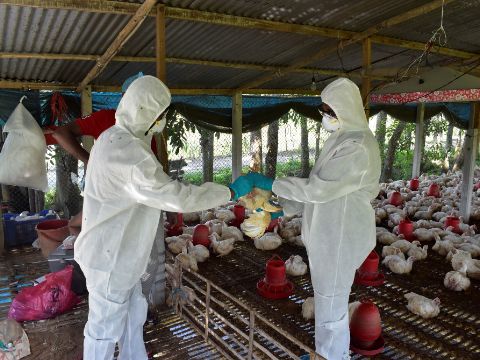 They use surveillance, genetics and risk-reduction strategies which are mainly based on detailed investigations of bats and their interaction with humans in South Asia.
Dr Islam also investigates the epidemiology and ecology of high pathogenicity avian influenza and its transmission between wild birds and commercial poultry.
He studied the role of vaccination and environmental factors on outbreaks of high pathogenicity avian influenza H5N1 in poultry farms, how failing biosecurity is affecting influenza epidemiology in poultry production and marketing systems, and investigated the role of migratory birds introducing and spreading the virus.
Dr Islam will present a research study at the International Pandemic Sciences Conference 2026 in Singapore in July on his henipavirus research, and the 9th World One Health Congress in Lisbon, Portugal, in early September on the topic, ‘High pathogenicity avian influenza (H5N1)’. Dr Islam has been awarded highly-contested full travel grants to both conferences.




Social
Explore the world of social