
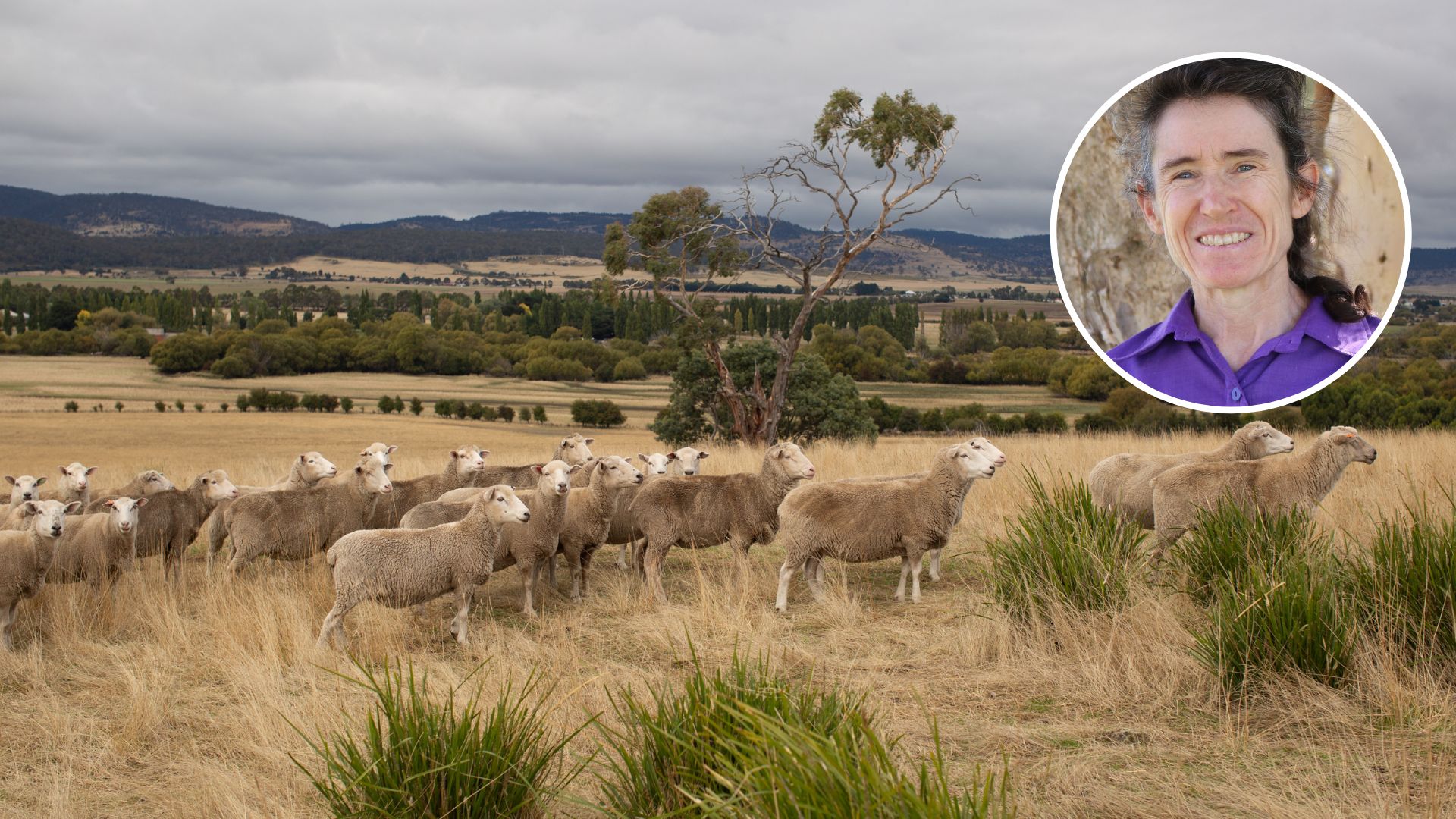
- Charles Sturt University research gives drought-hit sheep producers answers to four critical management decisions
- Podcast series reveals which drought feeding and confinement strategies improve productivity and profitability
Sheep producers across Australia are making tough decisions as dry conditions continue to put pressure on pastures, feed supplies and farm budgets.
New research from Charles Sturt University is helping take some of the guesswork out of those decisions.
A new four-part podcast series from experts at Charles Sturt’s Gulbali Institute for Agriculture, Water and Environment shares the results of trials conducted in the NSW Riverina, examining four questions sheep producers ask during drought:
- Do supplements improve ewe performance?
- What feed additives are worth using in feedlots?
- How should ewes be joined in confinement?
- Can ewes successfully lamb in confinement?
Podcast host, Dr Susan Robertson, said the answers to these questions might not always please sheep farmers but they would prove helpful.
“There’s not a lot of comparative data around to tell farmers what might be best practice,” Dr Robertson said.
“You ask 10 farmers and they’re all doing something different in regards to managing these issues.”
In a trial involving 900 ewes, researchers found that the seaweed supplement Algimun did not improve pregnancy rates, foetal numbers or lamb survival compared with standard mineral supplements or no supplements. The finding could help producers avoid spending money on products that do not deliver a return under similar conditions.
The results were different in feedlots. Researchers found that lambs fed grain with lick supplements gained six to seven kilograms more liveweight over 70 days than lambs fed grain with only lime and salt. For producers finishing lambs during summer, those extra kilograms can make a significant difference to profitability.
Trials looking at joining ewes in confinement also delivered clear guidance. Adding more roughage to rations increased feed costs but did not improve fertility. However, a short, well-timed lupin flush increased foetal numbers by seven per cent, giving producers a practical way to lift reproductive performance.
Researchers also examined whether ewes can successfully lamb in confinement. Single-bearing ewes achieved lamb survival rates similar to those lambing in paddocks, with more than 92 per cent of lambs marked in both systems. The findings also highlighted the extra management needed for twin-bearing ewes, particularly around hygiene, health and stocking rates.
Based on the latest official long-range outlook from the Australian Bureau of Meteorology (BoM), Australia is likely to experience a warmer-than-average summer in 2026-27, with below-average rainfall across parts of south-eastern Australia and some areas of Queensland.
The BoM predicts that droughts are likely to increase across much of Australia over coming decades, particularly in southern and eastern regions.
All four episodes of Sheep Confinement During Drought podcast can be found here.
This research project is supported by the Australian Government through funding from the Climate-Smart Agriculture Program under the Natural Heritage Trust.


Social
Explore the world of social