
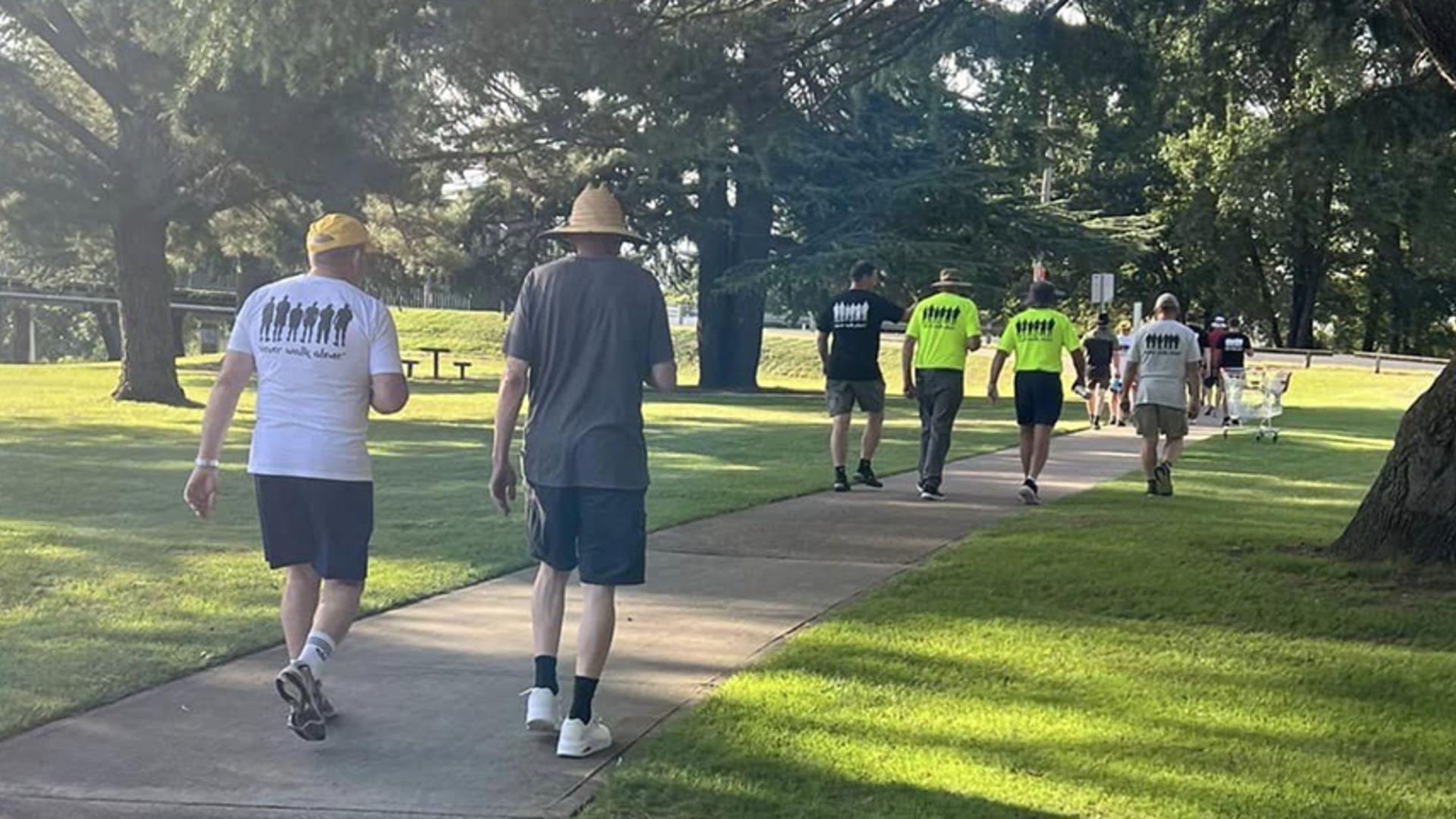
- A study of the Bathurst Men’s Walk and Talk (BMWT) defines it as a rural Third Place, a space where men can move, talk, connect and maintain or regain a sense of wellbeing
- The researchers argue that for communities, funders and policymakers looking for practical ways to support men’s mental health, the lesson is clear: start with something simple, affordable, regular and welcoming
- The BMWT model is low‑cost, scalable, and readily adaptable by any rural town or community
A study by a Charles Sturt University researcher and colleagues has shown that you don’t need a building, a budget, or a professional workforce to create a meaningful ‘Third Place’ for men to improve their physical and mental heath.
The study, ‘Walk for Mental Well-Being as a Third Place: A Qualitative Study of the Bathurst Men’s Walk and Talk’, published in the Australian Journal of Rural Health, was led by Adjunct Associate Professor Peter Simmons in the Charles Sturt Rural Health Research Institute and the Charles Sturt Gulbali Institute for Agriculture, Water and the Environment.
The Bathurst Men’s Walk and Talk (BMWT) is an inclusive volunteer-run program balancing a culture that provides connection and enjoyment in the manner of Third Place, a framework for understanding and planning for rural men’s participation in community well-being programs.
“Bathurst Men’s Walk and Talk is a rural Third Place, a space where men can move, talk, connect and maintain or regain a sense of wellbeing,” Professor Simmons said.
"It lifts mood, builds belonging, supports men through difficult times and strengthens the social fabric of the community. In regional areas where services are stretched, programs like this can complement – and sometimes compensate for – the gaps.
“For communities, funders and policymakers looking for practical ways to support men’s mental health, the lesson is clear: start with something simple, affordable, regular and welcoming.”
The BMWT was formed in 2019 when six friends in Bathurst, New South Wales, met to discuss what might be done to support men’s wellbeing.
Their meeting followed the suicide of men known to them and the formation of a men’s walking group in Penrith in outer western Sydney. They decided to try something similar in Bathurst.
Seven years later, about 20 men join the Bathurst Men’s Walk and Talk group every Thursday evening, and they recently established another men’s walk on the second Saturday of each month.
Professor Simmons, now a participating walker in the BMWT group, said men face higher rates of mental ill health and suicide across rural Australia yet often struggle to access support.
“Services can be scarce, stigma remains strong, and many men avoid clinical settings. At the same time, we know that exercise, routine and social connection are powerful protectors of wellbeing,” he said.
“Less understood is how community‑led, volunteer‑run activities can and do play a role in wellbeing, especially for rural men.
“Community programs are rarely evaluated, and we have limited understanding of identifiable and replicable features that contribute to success.”
The BMWT includes rituals such as free coffee, pre-walk briefing and half-way photo-stop that repeatedly bring the group together and facilitate conversation, increasing social interaction and feelings of belonging.
Professor Simmons said in rural areas, where men in need often miss out on mental well-being support, Third Place provides a framework to guide planning for individual groups and communities.
“Analysis of Bathurst Men’s Walk and Talk showed structures that promote engagement and health-giving feelings of belonging, a rural Third Place for men,” he said.
“Bathurst Men’s Walk and Talk shows that you don’t need a building, a budget, or a professional workforce to create a meaningful Third Place for men. The model is low‑cost, scalable, and readily adaptable by any rural town or community.”
What organisers need is:
- visible and committed leadership
- a welcoming culture
- a simple, repeatable weekly ritual
- light‑touch structure
- community credibility
- a safe, outdoor space
- a commitment to inclusion.
“As a group of men regularly walking together by a river, organised by volunteers and requiring relatively few resources, the BMWT highlights an important overlap - that social and group factors influence feelings of enjoyment and belonging, and that social interaction and belonging are important aids to mental well-being,” Professor Simmons said.
“For this group of rural men, BMWT effectively uses culture and rituals to accentuate feelings of safety and inclusion, facilitate multiple conversations, and reinforce the group to increase health-giving social interaction and feelings of belonging.”
For further assistance, see Australian mental health and suicide prevention information and contacts.
Charles Sturt University is the leading university educating students in regional Australia, with more than 70 per cent of our graduates going on to live and work in the regions after graduation. We pioneer practical innovations in areas like agriculture, health and environmental management to drive regional prosperity.




Social
Explore the world of social