
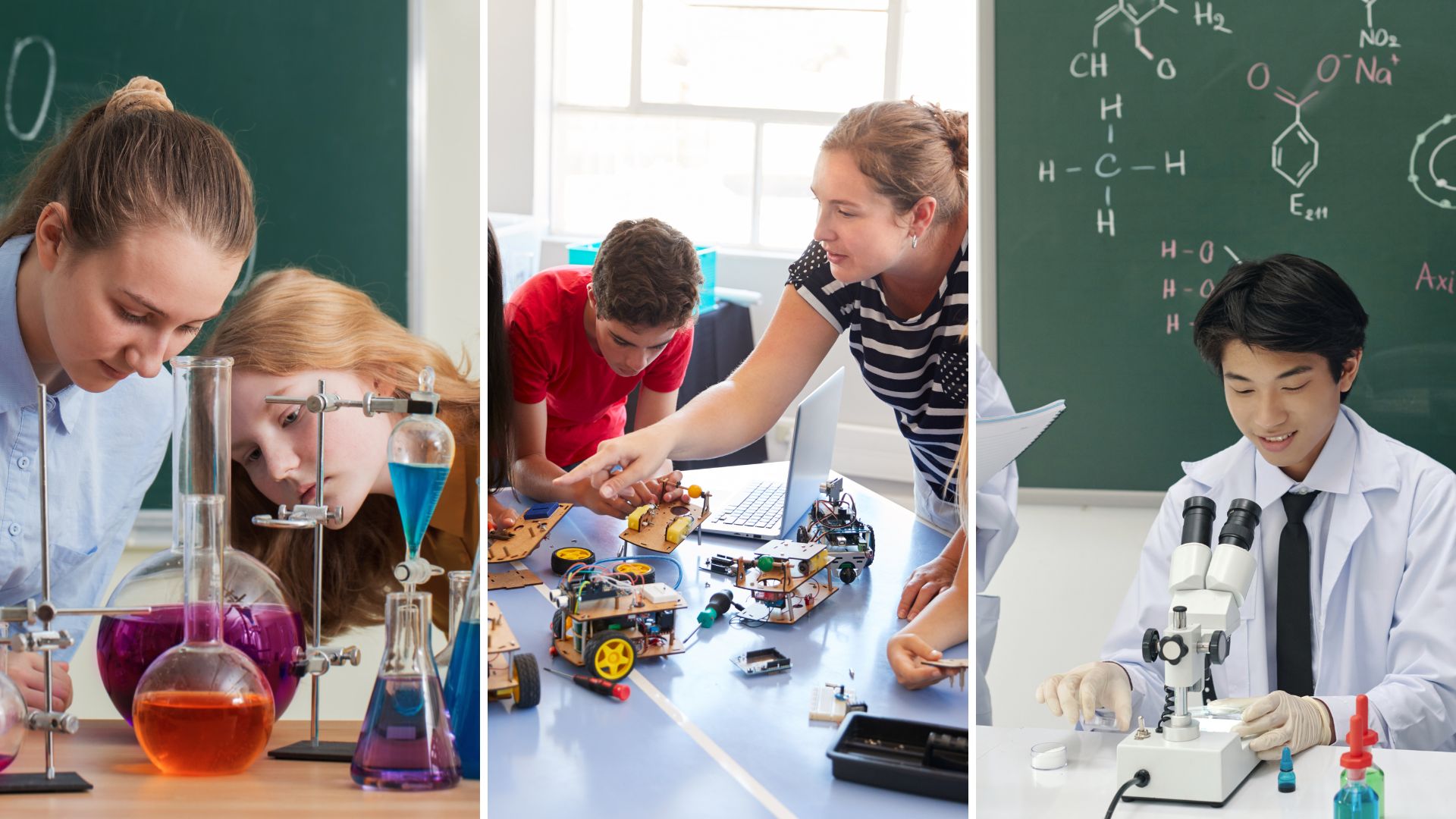
- Charles Sturt University research shows broad consensus regarding the importance of STEM learning and the urgency and promise of strengthening STEM education in regional, rural and remote NSW (RRR NSW)
- The study shows that non-metropolitan communities are eager for high-quality and real-world applicable STEM learning
- It suggests NSW can lead nationally by demonstrating how evidence-driven, place-responsive policy can close equity gaps and prepare young people for the future
Charles Sturt University research finds science, technology, engineering and mathematics (STEM) education in regional NSW schools offers actionable policy opportunities that recognise and leverage the unique strengths of non-metropolitan NSW.
The research for the Australian Public Policy Institute (APPI) aims to reduce longstanding equity gaps and strengthen pathways into future study, work and lifelong learning in RRR NSW.
The research was conducted by Dr James Deehan and colleagues Dr Sarah Redshaw and Professor Lena Danaia in the Charles Sturt School of Education in Bathurst.
The research report, Building on strength: Advancing STEM education in regional, rural and remote NSW, outlines seven place-based, student-centred policy opportunities to fast-track progress.
Dr Deehan said the team’s research shows both the urgency and promise of strengthening STEM education in RRR NSW.
“This study shows that non-metropolitan communities are eager for, and in many cases already engaging in, high-quality and real-world applicable STEM learning that reflects the needs and cultures of their unique locales,” he said.
“Most importantly, the research shows broad consensus regarding the importance of STEM learning.
“At the same time, there are a myriad of local, national and international examples of effective STEM learning practices that can be scaled and sustained for equitable impact in young people’s STEM learning trajectories.”
Dr Deehan said the policy opportunities identified are centred on supporting and enacting STEM learning that directly reflects RRR communities in NSW with meaningful collaboration across stakeholder groups, including government, schools, industry, TAFE, universities and wider communities.
“The needs of students and teachers remain central as we recommend improved resourcing and support that take advantage of digital technologies for wider accessibility,” he said.
“It is also imperative that we redefine what STEM means to reflect the often overlooked yet vital role that it plays outside the cities. It is also important that we co-design data and evidence that is meaningful to key stakeholders and aligns with RRR NSW STEM objectives.
“Importantly, this agenda is not about replicating metropolitan models in regional areas. It is about designing with place and community at the centre, celebrating local industries and knowledge and creating pathways that are relevant and inspiring for students’ futures.”
Dr Deehan said by adopting a strengths-based collaborative approach, NSW can ensure that non-metropolitan schools are not positioned as sites of deficit, but as engines of innovation and opportunity.
“NSW has the chance to lead nationally by demonstrating how evidence-driven, place-responsive policy can close longstanding equity gaps and prepare all young people for the future of work and lifelong learning,” he said.
“With commitment and collaboration, the vision of a vibrant, inclusive and world-class non-metropolitan STEM education system can be realised.”


Social
Explore the world of social