
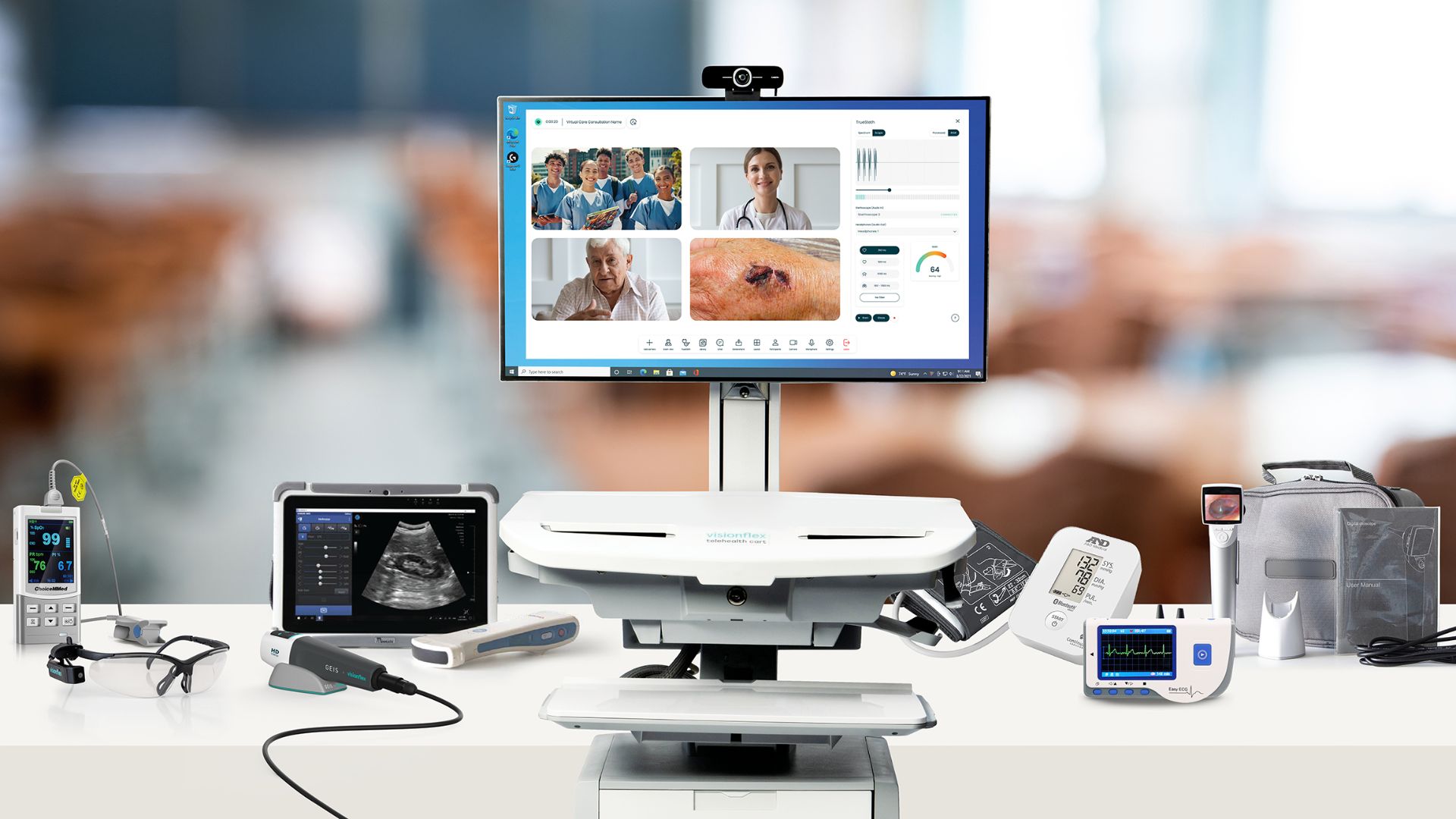
- Charles Sturt University investing in cutting-edge telehealth imaging technology
- Seven million Australians live in regional, rural and remote areas and have poorer access to healthcare services and health outcomes
Charles Sturt University’s medical students and future doctors will soon be able to better help people in regional communities who struggle to access healthcare services.
The University’s School of Rural Medicine is strengthening regional NSW’s digital healthcare capability through the purchase and pilot of Visionflex technology at the Central West Clinical School in Parkes.
Visionflex devices capture high-quality images, videos and patient vital data, and connects with specialists via video conference. This data and ability to collaborate results in a more accurate and timely diagnosis for patients.
According to the Australian Institute for Health and Welfare, approximately seven million people ─ or 27 per cent of the Australian population – live in regional, rural and remote areas.
Data shows that people living in these areas have higher rates of hospitalisations, deaths and injury, and have poorer access to primary health care services.
The technology will also be embedded into the Charles Sturt Bachelor of Clinical Science (Medicine) / Doctor of Medicine to help ensure future doctors are clinically capable and confident using technology to improve access, continuity and quality of care to patients.
Staff at the Central West Clinical School will examine how the telehealth technology can support teaching, assessment and supervision during medical student placements.
They will also explore how this approach could extend across other clinical schools and health disciplines, including a qualitative study of Visionflex use by clinicians in NSW.
Clinical Lead for the project Associate Professor Kerrie Stewart in the Charles Sturt School of Rural Medicine said the work builds on the School’s commitment to preparing future doctors for rural, regional and remote practice.
“Visionflex technology is already being used in Western NSW Local Health District facilities and residential aged care settings,” Professor Stewart said.
“However, there is limited local evidence about how clinicians use the equipment, what support they need, and how it fits within everyday rural workflows.
“Early discussions with health and aged care partners have identified an opportunity for Charles Sturt University to contribute to this knowledge base through collaborative evaluation.”
Professor Stewart said the project’s unique strength lies in connecting student learning and research, clinician experience and rural health service improvement.
“The evaluation can generate locally relevant insights into workforce training, quality improvement and service design,” she said.
“For students, it offers direct engagement with virtual care technology and providers, strengthening their readiness to practise in digitally enabled rural healthcare environments.”
The initiative aligns Charles Sturt University’s rural research priorities and the School of Rural Medicine’s focus on producing graduates who can meet the needs of rural communities.
“As digital health becomes an increasingly important part of modern care, the project positions Charles Sturt University as an active contributor to innovation in rural health education and research,” Professor Stewart said.
“Most importantly, it reflects a practical commitment to improving rural health outcomes by helping shape a workforce equipped for the future of rural practice.”


Social
Explore the world of social