
Archive
Spreading the word about chemistry
Wednesday, 1 Jan 2003Japanese educators learn from local schools
Wednesday, 1 Jan 2003CSU health students feature in Tour de Timor
Wednesday, 1 Jan 2003V-C's Research Excellence Award to Professor Frank Marino
Wednesday, 1 Jan 2003 One of the top five researchers at Charles Sturt University (CSU), Professor Frank Marino, will be honoured with the Vice-Chancellor’s Award for Research Excellence (Individual Award) for his exceptional body of work at a ceremony in Bathurst on Monday 5 September. Professor Frank Marino’s publications, as ranked by the ISI Web of Science, place him in CSU’s top five, and his work has been cited over 900 times in high impact journals (average IF=2.8). This achievement is amplified by the fact that Professor Marino has an added administrative load as Head of the School of Human Movement Studies, with a full teaching load between 2003 and 2009, and a 60 per cent teaching load in 2010. He is presently Associate Dean of Research at the Faculty of Education. Professor Marino’s seminal work, which challenges the classical theory and popular belief that the heart is the regulating mechanism limiting exercise, is perhaps the most significant contribution to his award. His contributions to the area of exercise and human fatigue have caused some controversy with scholars in the field, which reflects the significance of this novel understanding of physiology. This understanding of physiology is making its way into university curriculum.
Psychology academic awarded by CSU Vice-Chancellor
Wednesday, 1 Jan 2003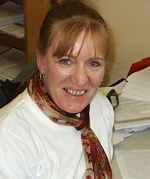 Contributions to university administration, research, and community engagement by a psychology academic at Charles Sturt University (CSU) in Bathurst will be acknowledged with the Vice-Chancellor’s Award for Leadership Excellence (Individual Award) at a presentation ceremony at CSU on Monday 5 September. Dr Rhonda Shaw, lecturer and researcher at the School of Psychology in Bathurst, has a research record that has seen her invited to be a reviewer of a textbook for first-year students, and for a number of high ranking journals, such as the Journal of Health Psychology and Child Neuropsychology. She has also conducted CSU Foundation Scholarship interviews, and convened and facilitated a faculty-wide working party to revise current Honours theses marking guidelines, which resulted in the establishment of benchmarks against other universities. Dr Shaw also organised and co-chaired a CSU staff workshop on Enhancing Staff / Student Interaction: Dealing with ‘Difficult Students’. In addition, Dr Shaw has made significant administrative contributions through her membership of the Faculty of Arts Honours Committee and the School of Psychology Board. Dr Shaw’s community engagement on ageing issues resulted in her being invited by Bathurst Regional Council to participate in the development of the older person’s section of Council’s Social and Community Plan.
Splashes of colour for cancer research
Wednesday, 1 Jan 2003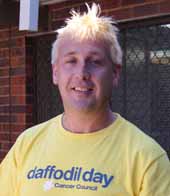 Hair, eyebrows and beards were bleached and coloured at Charles Sturt University (CSU) in Albury-Wodonga, Bathurst, Orange and Wagga Wagga on Friday 26 August all in the name of raising money for cancer research and patient support. The activities, held at CSU in support of Daffodil Day, raised nearly $2 400 for the NSW Cancer Council. The fundraising was organised by Charles Sturt Campus Services and the Residential Support Scheme at CSU. “There is a competitive streak between staff across the University so we organised a ‘fund-off’ to raise money for the Cancer Council. A total of $510.25 was raised at CSU in Albury-Wodonga, $841.65 in Bathurst and $1 030.70 was raised in Wagga Wagga,” said Ms Vanessa Conlin, a Residential Operations Officer. In addition to the temporary ‘hair salons’ for the bleaching and colourings, staff also sold daffodils and pins in support of the annual Daffodil Day event.
CSU teams acknowledged for top service
Wednesday, 1 Jan 2003Program to help young Tumut people
Wednesday, 1 Jan 2003Biotechnology in the Canadian spotlight
Wednesday, 1 Jan 2003 In the rapidly changing field of biotechnology, education is crucial to keep up with cutting edge technology, says Australian scientist and Charles Sturt University (CSU) academic Dr Thiru Vanniasinkam. Dr Vanniasinkam, who works in the School of Biomedical Sciences at CSU in Wagga Wagga, Australia, will visit a number of colleges in Ontario to outline the Bachelor of Science (Forensic Biotechnology). This internationally recognised program is offered through CSU in Ontario and allows graduates with an Ontario Biotechnology, Health Biotechnology Diploma or equivalent to upgrade their qualifications to degree level. “The program can improve job prospects for graduates and open avenues for further education,” Dr Vanniasinkam said. “Students can also undertake short-term study tours in laboratories in countries including Korea, Switzerland and USA.” The program has been developed with industry bodies to address the rapid technological changes and growth in the biotechnology and forensic industries worldwide.
Hollywood for homework
Wednesday, 1 Jan 2003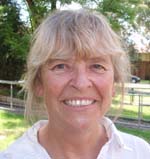 Charles Sturt University (CSU) academic Dr Jane Mills will challenge current education methods with her public talk on Friday 9 September. Titled “Hollywood for Homework: you must be joking! The place of popular cinema in the classroom”, Dr Mills’ lecture will argue that the opportunity to learn how to be ‘screen literate’ is as much a democratic right as is learning how to read and write. For some years now the associate professor at CSU’s School of Communication and Creative Industries has been encouraging schools to include screen literacy in the classroom and this means encouraging students to look at Hollywood films for homework. In this lecture she explores if there’s a conflict between classroom practice and official definitions of literacy. “The current literacy testing system promotes the denigration of the image and the idealisation of the word, which creates problems for teachers and students when the image, especially the moving image, is used for teaching,” Dr Mills said.