
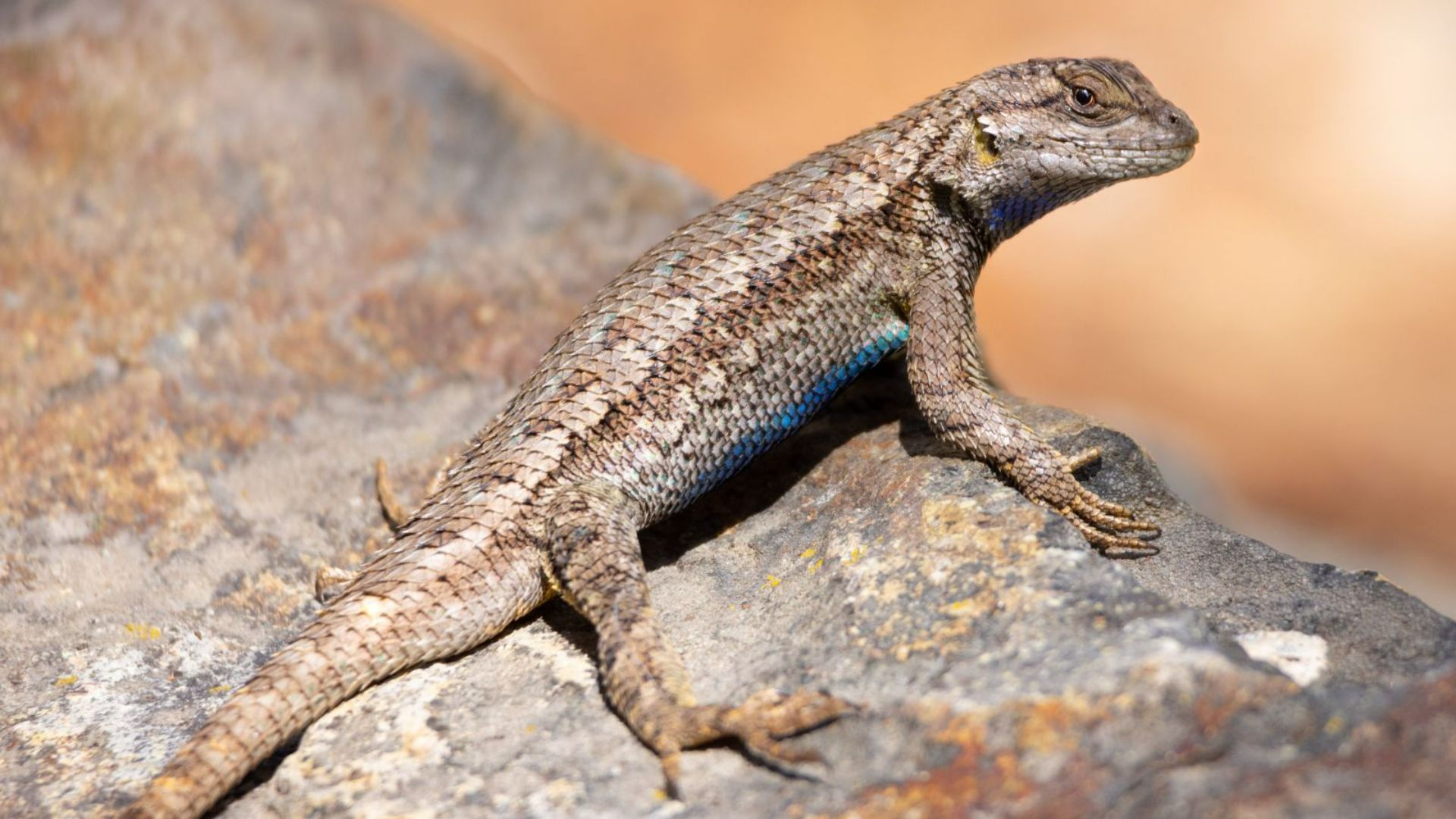
- More than 1,000 reptile species rely entirely on rocky habitats yet these biodiversity hotspots remain largely overlooked and unprotected
- A global study reveals rock-dependent reptiles are more likely to be endangered, highlighting an urgent conservation challenge
By Charles Sturt University Senior Research Fellow in Ecology and Herpetology Damian R. Michael with Jackie O'Sullivan, CSIRO Research Scientist in Terrestrial and Freshwater Ecosystems; Claire Foster, Australian National University Research Fellow in Ecology and Conservation; and David Lindenmayer, Australian National University Distinguished Professor of Ecology.
Ask any reptile lover where to find a cold-blooded creature and chances are they will point to a rocky outcrop.
Look closely and you might find a snake or lizard basking on a sun-warmed boulder, sheltering in a narrow crevice or even living under a loose surface rock.
For reptiles, these rocks are not simply somewhere to hang out. Rocky habitats help reptiles control their body temperature, escape predators and survive harsh winters. They are also a refuge where reptiles can socialise, lay eggs and find food.
Without rocky habitats, many reptile species would struggle to survive, putting wider ecosystems at risk of collapse. But how many reptile species actually depend on rocky habitats?
Our new study aimed both to answer this question and identify what threats rock-dwelling species face.
Rocky habitats are found on every continent, ranging from cliff faces to outcrops and even areas covered with loose, scattered rocks.
Rocky habitats may seem relatively indestructible compared to forests or other living habitats. In reality, they are easily damaged or destroyed and, once lost, may take centuries or even millennia to reform.
Today, one in five reptile species is at risk of extinction. Habitat loss is the most pressing threat to reptile populations worldwide.
Rocky areas are under pressure from threats such as mining, quarrying and urbanisation. In the United Arab Emirates, for instance, rapid urban development threatens the last isolated rock formation known to support the critically endangered Emirati leaf-toed gecko (Asaccus caudivolvulus).
Rock crushing is another problem. It involves using specialised machinery to turn boulderfields and other rocky habitats into farmland. In Australia, new rock crushing machinery can clear and crush surface rocks at rates of up to one hectare per hour. These methods are increasingly being used in agricultural areas in Western Australia, South Australia and western Victoria, threatening the habitat of several threatened reptile species.
Despite their importance, rocky habitats are often overlooked in conservation plans and initiatives, such as the International Union for Conservation of Nature’s (IUCN) habitat classification system.
Our research team led the first-ever study to measure the global importance of rocky habitats for reptiles.
We reviewed IUCN data and found over a quarter of the world’s terrestrial snakes, lizards and worm-lizards like the pink-tailed worm-lizard (Aprasia parapulchella) use rock habitats. More than 1,000 species – roughly 10 per cent of the world’s reptile species – completely depend on rocky habitats for their survival.
We found rock-dependent species had geographic ranges that were 68 per cent smaller, on average, than species that don’t rely on rocky habitats. They were also 51 per cent more likely to be classified as critically endangered.
From an evolutionary perspective, these species are also unique. Species across the reptile family tree, from worm-lizards to geckos and snakes, have independently adapted to rocky environments. But many rock-dependent reptiles are restricted to extremely isolated habitats so, if these areas are damaged or destroyed, they have few places to go.
Importantly, we found more than twice as many reptiles live in rocky areas than is captured under current classifications. This matters because without proper recognition, these habitats are less likely to be prioritised for conservation.
Rocky areas are biodiversity hotspots that will only become more important as the world warms, serving as crucial climate refuges that protect animals from drought and extreme temperatures.
Yet, rocky areas are often undervalued as habitat and are rarely protected or managed. As a result, scientists don’t know how quickly these habitats are disappearing. Without greater recognition and action, we risk losing both these habitats and the species that depend on them.
But not all hope is lost. Our earlier research on Australian farms found that adding surface rocks back into cleared landscapes immediately benefits local wildlife. Within a year, restored rocky areas supported more reptiles and a greater diversity of species, compared to areas without added rock.
We still know very little about rocky habitats and the life they sustain. In fact, new rock-dependent species are constantly being unearthed. So protecting these rich and rugged landscapes is vital to protecting not only species we know, but those yet to be discovered.
Article originally published in The Conversation.



Social
Explore the world of social