
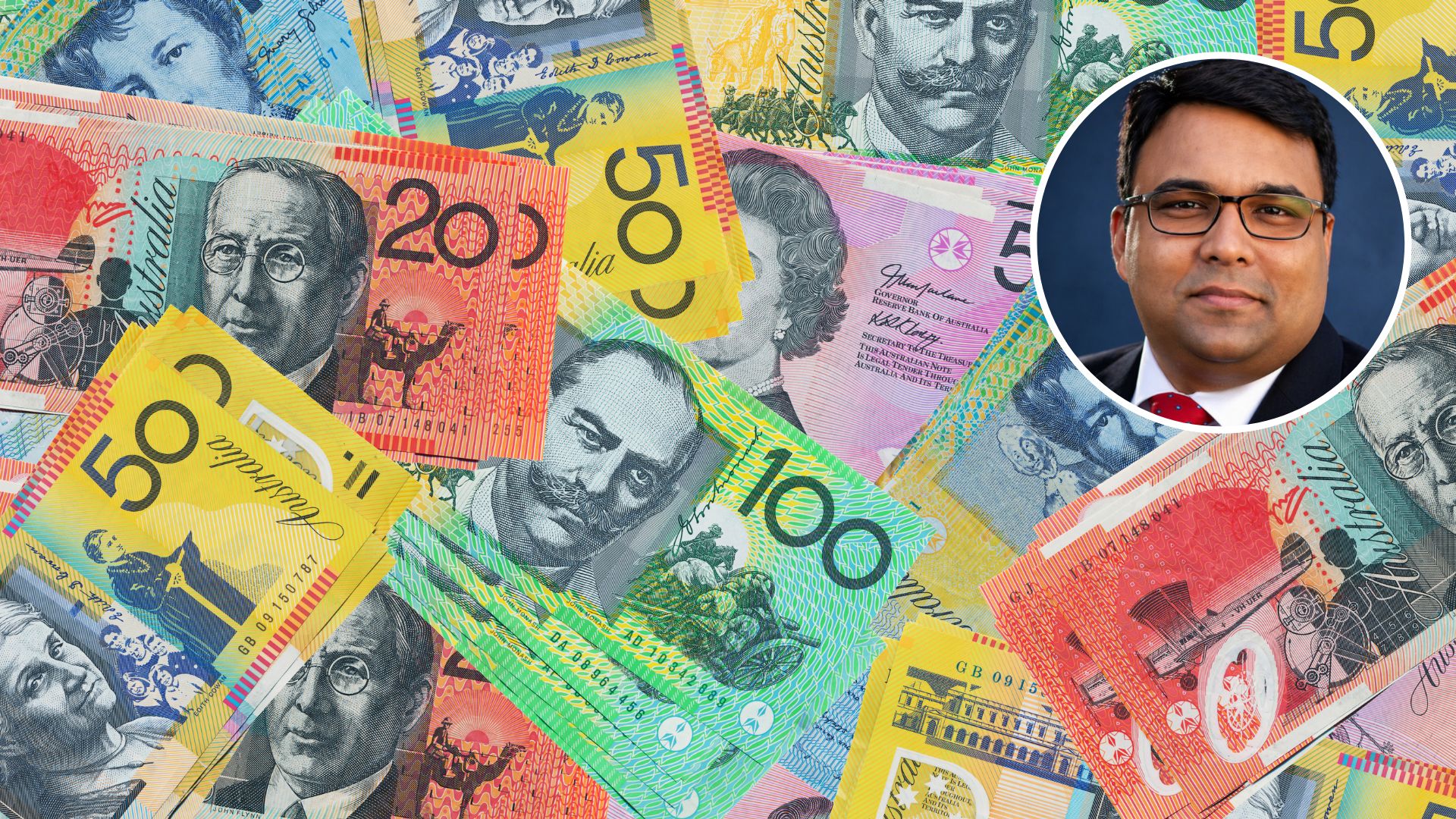
A Charles Sturt University academic cautions that Australia is not facing a collapse in wages but is undergoing a recalibration as global tensions continue to feed into local prices, creating a challenge that is unlikely to ease soon.
By Lecturer in Human Resource Management in the Charles Sturt School of Business in Bathurst Dr Ezaz Ahmed (pictured, inset).
Australians are earning more than they were a few years ago, but many feel poorer. The reason is simple; wages are rising, but the cost of living is rising faster.
For much of the past decade, the wage debate in Australia has centred on growth. Policymakers, unions and employers have focused on lifting wages in line with productivity and living standards.
That conversation is now shifting. In 2026, the issue is no longer wage growth, but wage survival.
Recent inflation pressures have reshaped how wages are experienced. Even where nominal wages are rising, many households are seeing their purchasing power decline.
Inflation has climbed again to 4.6 per cent in March 2026, reversing earlier moderation. The drivers are familiar – fuel, housing, electricity and essential goods. These are unavoidable costs.
Also, the Middle East conflict is no longer a distant geopolitical issue for Australia. It is showing up directly in petrol prices, freight costs, electricity bills, grocery prices and household confidence.
If the USA–Iran conflict continues through 2026, Australia is likely to face a difficult mix ─ weaker growth, higher inflation, slower hiring and renewed pressure on mortgage holders.
Australia has some protection as an exporter of liquefied natural gas (LNG), coal, minerals and gold.
However, this does not shield households. Australians still pay global prices for fuel, imported goods and building materials. A prolonged conflict is likely to create a two-speed economy, where parts of the resources sector benefit while households, small businesses and consumer-facing industries feel the squeeze.
The widening gap between wages and living costs highlights a structural issue. Households are not necessarily earning less, but they are able to afford less.
At the institutional level, Australia’s wage-setting framework, particularly under the Fair Work Act 2009, aims to balance fairness with economic sustainability. However, wage increases alone cannot offset inflation driven by global energy shocks, supply chain disruptions and geopolitical instability.
At the enterprise level, organisations face competing pressures. They need to retain talent and sustain morale, yet rising costs limit their ability to increase wages. This is especially challenging for small and medium-sized enterprises.
The implications extend beyond income. Financial stress is becoming a workplace issue, affecting engagement, productivity and retention. Wage stagnation is therefore not only a labour market concern, but also an organisational performance issue.
There are broader economic effects. As households prioritise essentials, discretionary spending weakens. Retail, hospitality and services begin to slow, creating a feedback loop that constrains business growth and future wage increases.
Looking ahead to the end of 2026, the idea of a ‘cost-of-living Christmas’ is likely to persist. Australians will still spend, but with more trade-offs, greater price sensitivity and less confidence. In real terms, households will feel poorer.
Australia is not facing a collapse in wages, but a recalibration. The shift from wage growth to wage survival reflects a deeper change in the economic environment, where maintaining living standards has become the central challenge. As global tensions continue to feed into local prices, that challenge is unlikely to ease soon.
Policy responses must move beyond simply pushing wages higher and instead focus on protecting real incomes, particularly by easing pressure on essential costs such as housing, energy and transport.
Without this shift, the gap between earnings and living standards will continue to widen, leaving more Australians working harder just to stand still.


Social
Explore the world of social