
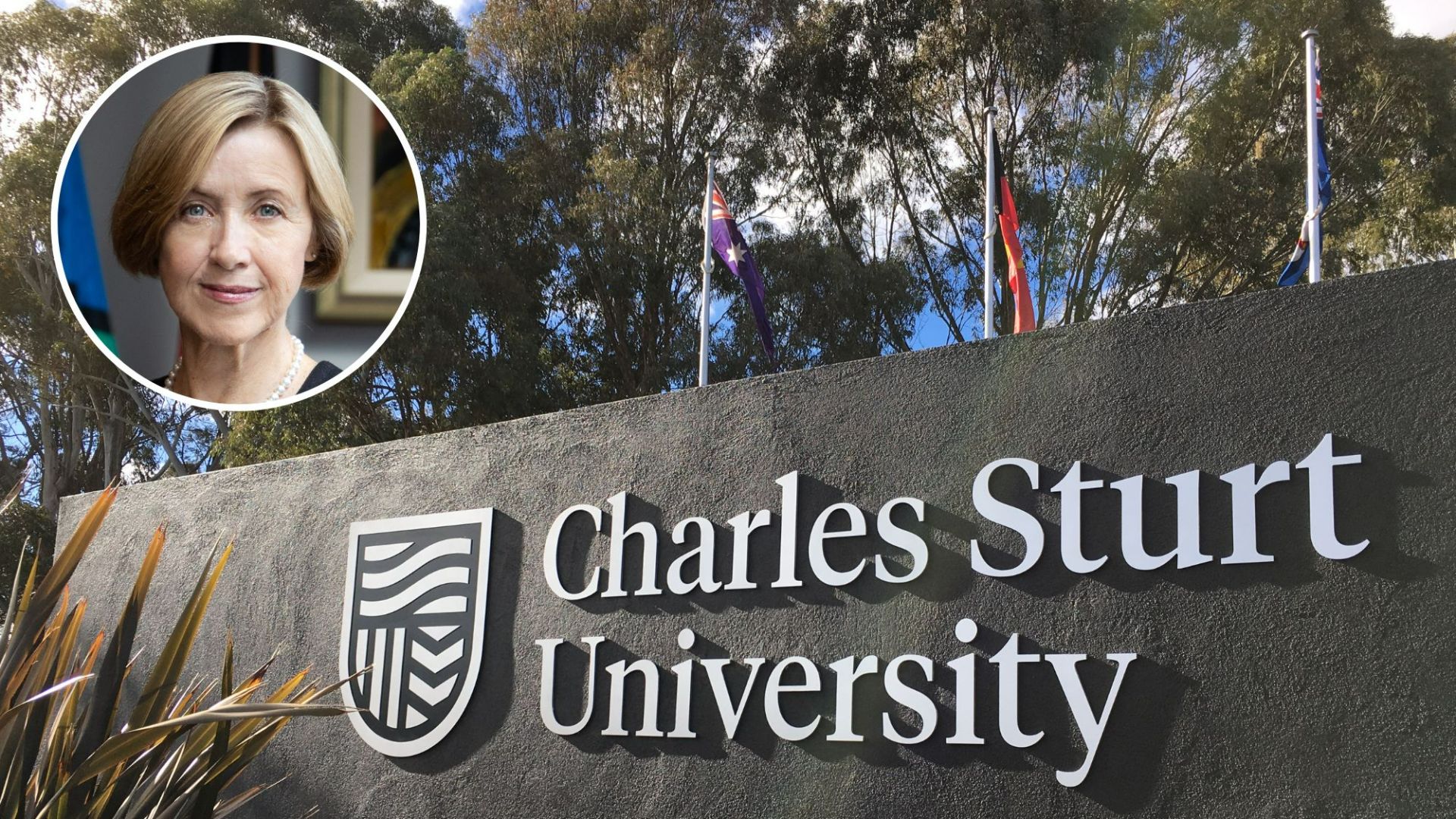
By Professor Renée Leon, Vice-Chancellor, Charles Sturt University
When the Great Western Highway closed a month ago, regional communities were reminded how easily they can be cut off, not just physically but politically. Decisions made in Sydney with not enough regard for local realities and the things that are actually working day in and day out reinforce a familiar sentiment, regional Australia is often an afterthought.
That’s evident in an interim report recently released by the NSW Legislative Council Standing Committee on Social Issues. The Committee was tasked with confronting the real challenges facing universities in NSW and kickstarting meaningful reform. Instead, for regional universities and our communities it’s been a missed opportunity.
Despite examining a sector with enormous regional reach and responsibility, the committee is yet to meaningfully engage with regional universities. The absence of voices from west of the Great Dividing Range is glaring.
This is critical for the Government because what often gets overlooked in discussions about universities is the quiet, transformational work happening outside metropolitan centres.
Regional universities, like Charles Sturt, are deeply connected to our communities. We are educating the country kids that will run our local economies. They are the teachers, doctors, nurses and dentists that regional towns and cities desperately need.
After they graduate, more than 80 per cent of our students stay in regional Australia. That’s not an accident, it’s the result of our very deliberate mission and design.
To date, the inquiry’s focus has detoured around the real issues threatening these vital outcomes and sidesteps the most consequential issue facing NSW regional universities. Its attention has been fixed on universities’ governance structures and consultancy spend. Of course, these issues matter but they aren’t the core drivers of our financial stress.
Simply put, it costs more to run universities in regional areas and we need a funding model that recognises that.
We have structurally higher costs than the beautiful old sandstones: multiple campuses, smaller cohorts, thin markets and important wrap‑around student support for first‑in‑family and low‑SES students. Right now, several of our courses are running at a loss, this includes Medicine, Dental Science and Veterinary Science. Critical courses for country workers who want to study in the areas they live in.
The result is a growing imbalance. Metro universities expand, while regional universities are asked to do more with less - train the future workforce, sustain essential services and anchor local communities.
This is not just a university sector issue. When regional universities are weakened, regional Australia feels it first with fewer health professionals, fewer teachers, and fewer opportunities for young people to build a future close to home.
The interim report is not the final word. There is still time before the final report in August to correct course. That must start with listening to regional universities and confronting head‑on the funding inequities built into the system.
If the NSW Parliament is serious about regional growth, resilience and fairness, it must stop treating regional universities as fringe players. We are not. We are vital to the future of NSW and Australia.




Social
Explore the world of social