
By Professor David M Watson, Professor of Ecology, Charles Sturt University Gulbali Institute for Agriculture Water and Environment. This article originally appeared in The Canberra Times on Wednesday 27 May 2026.
My family has a small property near Albury. It’s our pride and joy, five hectares of recovering sheep country, half of it set aside for bush. Since we’ve been here, I’ve spotted 195 bird species plus the occasional echidna and wallaby.
For the past 20-odd years, we’ve rotated a small mob of goats to keep a lid on the weeds and our freezer well-stocked.
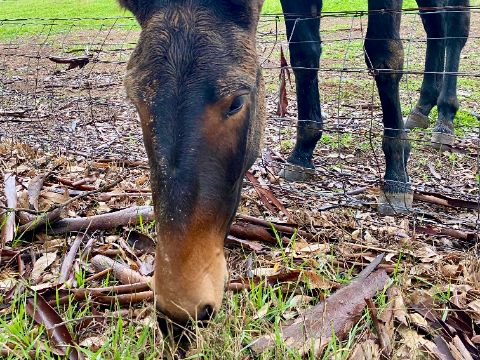 More recently, we added a horse and a mule and, while they’re valued family members, they’ve made me realise just how much of an impact horses have, and how important it is to keep our parks and reserve systems feral free.
Like the rest of the district, most of our topsoil is long gone, lost in the Federation drought. What’s left is clay, sticky when wet and rock hard when it’s dry.
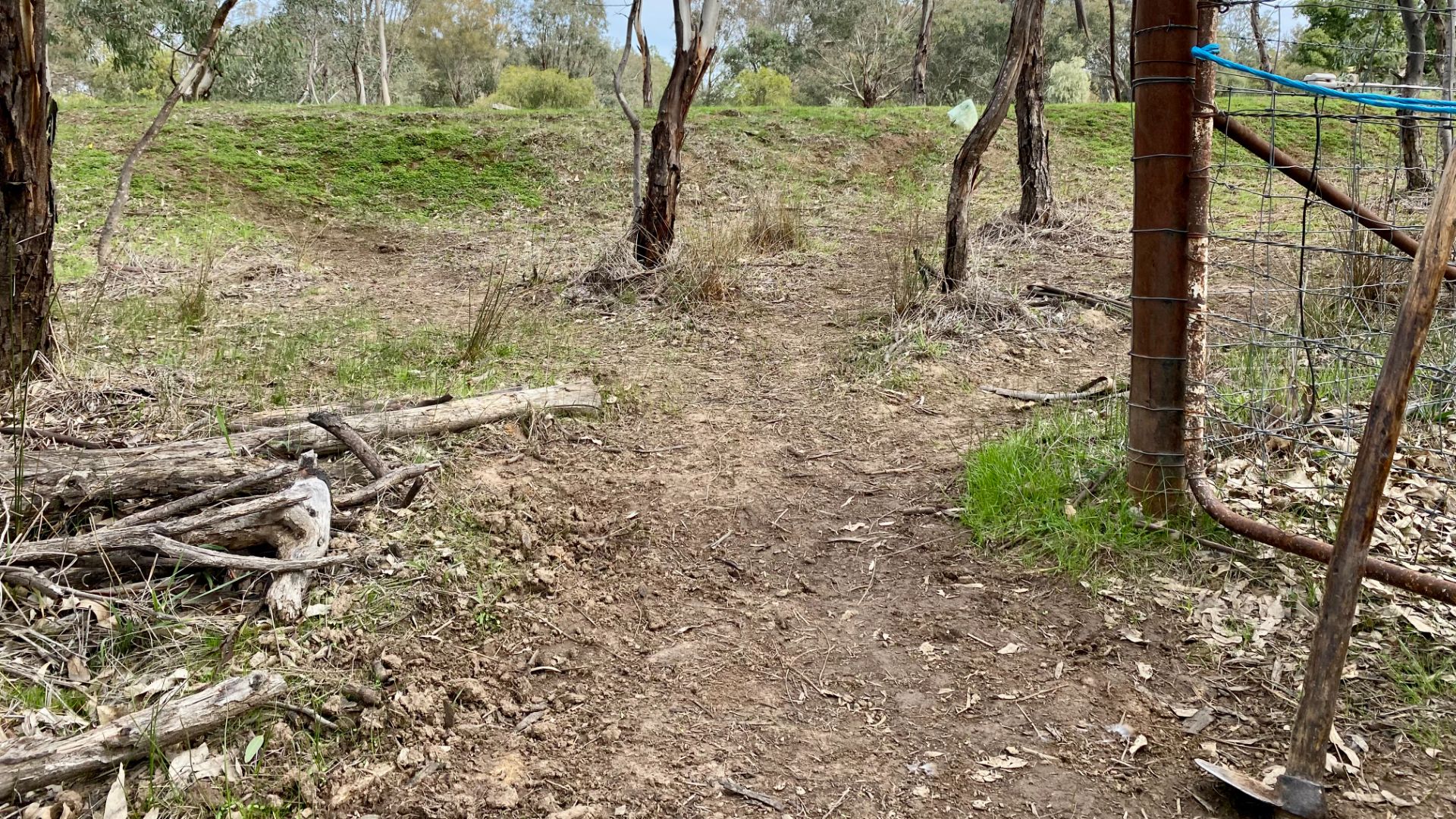
With the low rainfall this year, the horses spent the summer and autumn in the woodland set aside for wildlife. We moved them to the top paddock last week and spent the weekend looking at what they’ve left.
There’s plenty of trees, seedlings coming up and some deep litter beds in areas where they don’t go. It’s their trails that are my biggest concern; powdery clay exposed and running into the dams, clouding the water.
Those trails weren’t bare; they were crowded with thistles and plantain, Patterson’s curse and capeweed, weeds that can handle regular trampling, unlike our native grasses that have never experienced the impact of a 600-kilogram hooved animal on its daily commute.
The best I can do on our place is a compromise. It’s certainly better than when we found it. It’s supporting a whole lot of wildlife. I’m happy with how far we’ve come, and I’m confident it will continue to improve and safeguard more local populations.
Part of my acceptance of that is the knowledge that we’ve set aside reserves ─ national parks; places where cultural and natural heritage are the top priority, where ferals are controlled.
Although that was the original intent, today’s reality is a far cry from that. Feral horses thrive across the country ─ not just in the Alps, but across the top end and in woodlands from Echuca to Alice Springs.
Just seeing what two horses can do on our five hectares really saddens me to think what thousands of these animals are doing to some of our most fragile country.
Invasive species management might not be polite conversation, but it needs to be done. Otherwise, it will all just be one big paddock.
In four weeks, I’ll be driving to the far northwest corner of New South Wales, where I’ve been taking environmental science students for the past 24 years in the mid-year break.
Our first stop will be the two four-kilometre by five-kilometre predator-proof fenced areas where all kinds of animals have been reintroduced, bringing them back to the state.
Bilbies and quolls, bandicoots and bettongs, even pythons are thriving behind the fence, safe from feral cats and foxes and with no rabbits competing for food.
But outside those fences is a different story. Goats and pigs, once rare across the park, are now encountered daily, with cacti, buffel grass and Mexican prickly poppies appearing everywhere.
As the dust settles on this year’s federal Budget, the environment has roundly been regarded as missing out.
But, while most people understand that less money for health equals fewer nurses and less emergency ward beds, and less money for education means fewer teachers and crumbling classrooms, most Australians don’t have a comparable grasp of what fewer environmental dollars actually looks like.
While it was the Howard and Abbott governments that halved the federal environment department’s budget, it’s successive Labor governments that maintained this spend as the new normal.
Most national parks lack rangers, feral animal control program have been shelved and there’s increasingly greater reliance on non-government organisations (NGOs) to do the work.
Just two of them ─ Bush Heritage Australia and Australian Wildlife Conservancy ─ now manage more land for biodiversity that the entire National Parks estate.
It doesn’t have to be this way and you don’t need to look far to find inspiring examples. Ten years ago, New Zealand embarked on a bold mission, to eradicate all introduced predators from the country.
Predator Free 2050 is on track, with stoats, possums and rats already removed from two thirds of New Zealand’s offshore islands. That’s the kind of commitment we need in Australia, a cross-tenure, large-scale, plan to control invasive species and give the local species a fighting chance.
While this mission would need significant investment, the only thing stopping it is conviction.
Between Landcare groups, drought hubs, catchment management authorities and local land services, tens of millions of dollars are already committed to funding impactful environmental work.
Our wide brown land is long overdue for genuine investment. The sooner we start, the better.



Social
Explore the world of social