
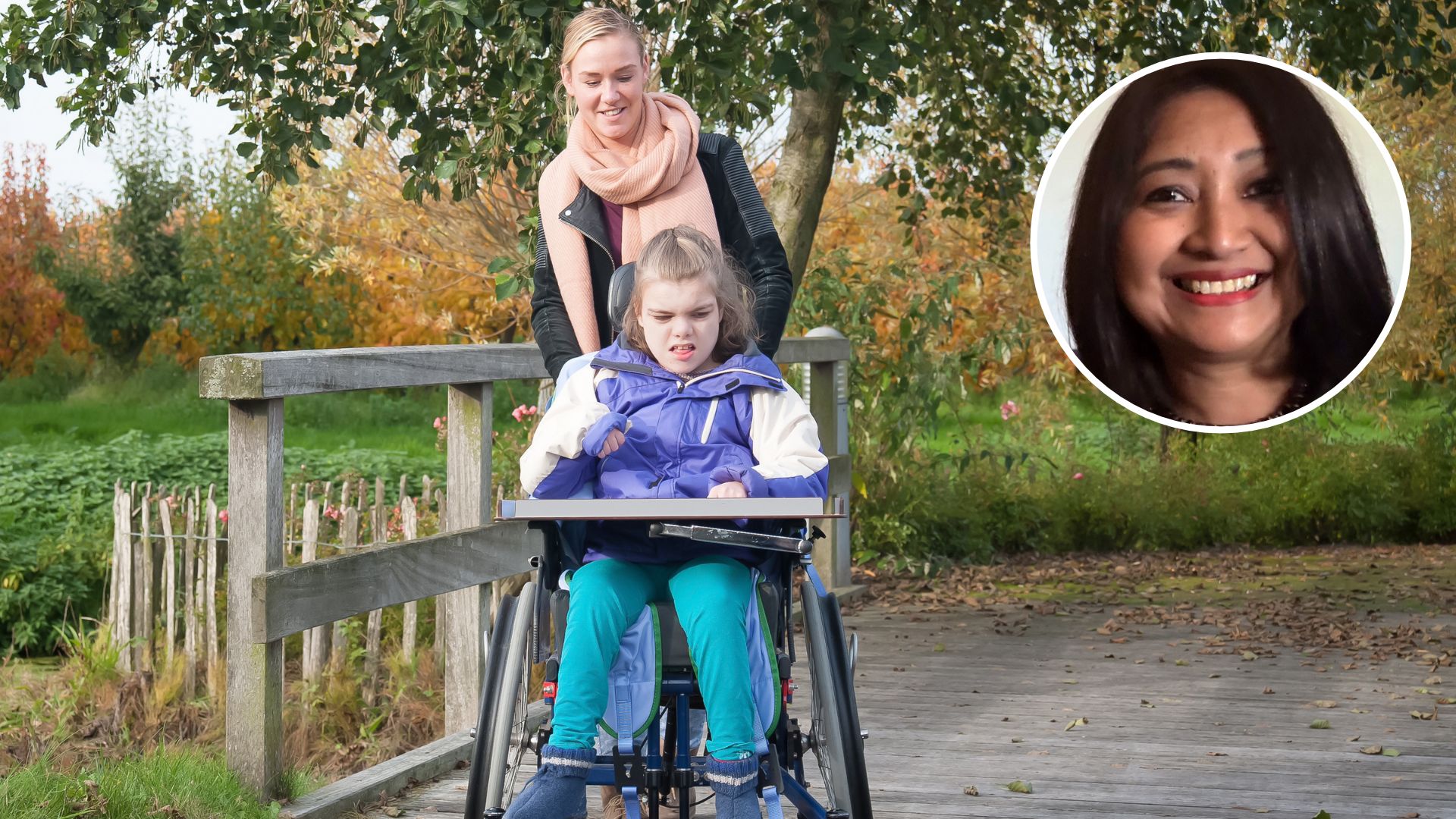
- A PhD graduate’s documentary on the lived experience of unpaid carers has aided policy development and increased the advocacy of carers across Australia
- There are approximately three million unpaid carers in Australia, with the estimated value of unpaid care approximately $80 billion in 2020
“Society needs to better understand the lived experience and contribution of unpaid carers,” according to recent Charles Sturt University PhD graduate Dr Dalanglin Dkhar.
Dr Dkhar (pictured inset, above) is a full-time carer for her son with disabilities, and she completed her PhD in the Charles Sturt Faculty of Arts and Education by producing a documentary on the lived experience of unpaid carers across Australia.
The documentary, Unconditional, focussed on the lived experience of four unpaid carers, and was made primarily for non-carers to boost their awareness of the lived experience of unpaid carers, recognise the important work they do and understand what support they need.
“It is so important that communities and workplaces understand how to support unpaid carers, and that can only come from understanding their lived experience,” Dr Dkhar said.
To replace this care with formal paid services in 2020, the estimated value of unpaid disability and ageing care in Australia was $77.9 billion, or $1.5 billion a week. (Deloitte Access Economics, 2020).
By 2022 there were approximately three million carers of the disabled and aged in Australia (ABS 2024).
The documentary has already changed the perception of carers across several metropolitan and local workplaces.
Unconditional has been screened for staff by several government departments, including Home Affairs, and is used as a training tool around the country and as part of University Curriculum.
As an unpaid full-time carer herself, Dr Dkhar said being a carer can be a life-long vocation of decades, not temporary, which is something not understood by non-carers and government agencies.
“Carers are most often parents – mothers and fathers – who develop multiple skills out of necessity, including health management, care prioritisation, and daily advocacy,” she said.
“No ‘how-to book’ is given to them and they are literally running from Day One and under a lot of stress, not so much from their loved one who they care for, but from the various institutions - ‘the system’ - which is supposed to be supportive, but with which they have to contend with daily.”
Among other positions, Dr Dkhar is a member of the Taskforce on Disability of the Anglican Church of the Canberra/Goulburn Diocese and has received invitations to serve on several advocacy boards and to speak at federal parliament on National Carers Week.
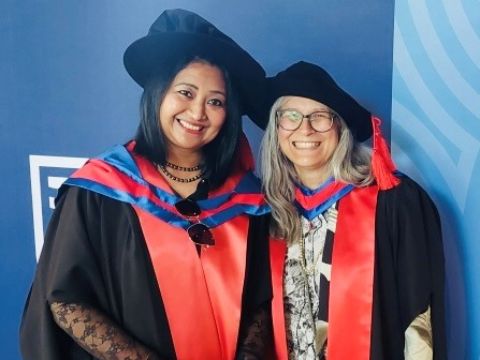 Her future research direction is drawn from her PhD documentary findings on the ‘inner life of the carer’.
“I see my PhD as a ‘political act’, as carers are relatively unseen by governments which know that carers will do the work unpaid anyway,” she said.
“My research has helped bring about change, in greater understanding of the carer’s lived experience, and there is still so much to do.”
Dr Dkhar praised her Charles Sturt PhD supervisors Dr Monica Short, Dr Emma Rush and Professor Eleanor Gates-Stuart for their inclusive approach to doctoral supervision.
“My supervisors and I share the belief that inclusivity in doctoral supervision is of key significance due to the two-way relationship between supervisors and supervisees,” she said.
Dr Dkhar will speak at an event on Tuesday 13 October in the federal parliament during National Carers Week 2026 (Sunday 11 to Saturday 17 October). The event is organised by Australia’s peak carer advocacy body, Carers Australia.
Later in National Carers’ Week her documentary Unconditional is being aired as an online event on Thursday 15 October to all Charles Sturt staff and students, with Vice-Chancellor Professor Renée Leon opening the session. A Q&A with her, one of the featured carers and supervisor will follow at the end of the screening.



Social
Explore the world of social