
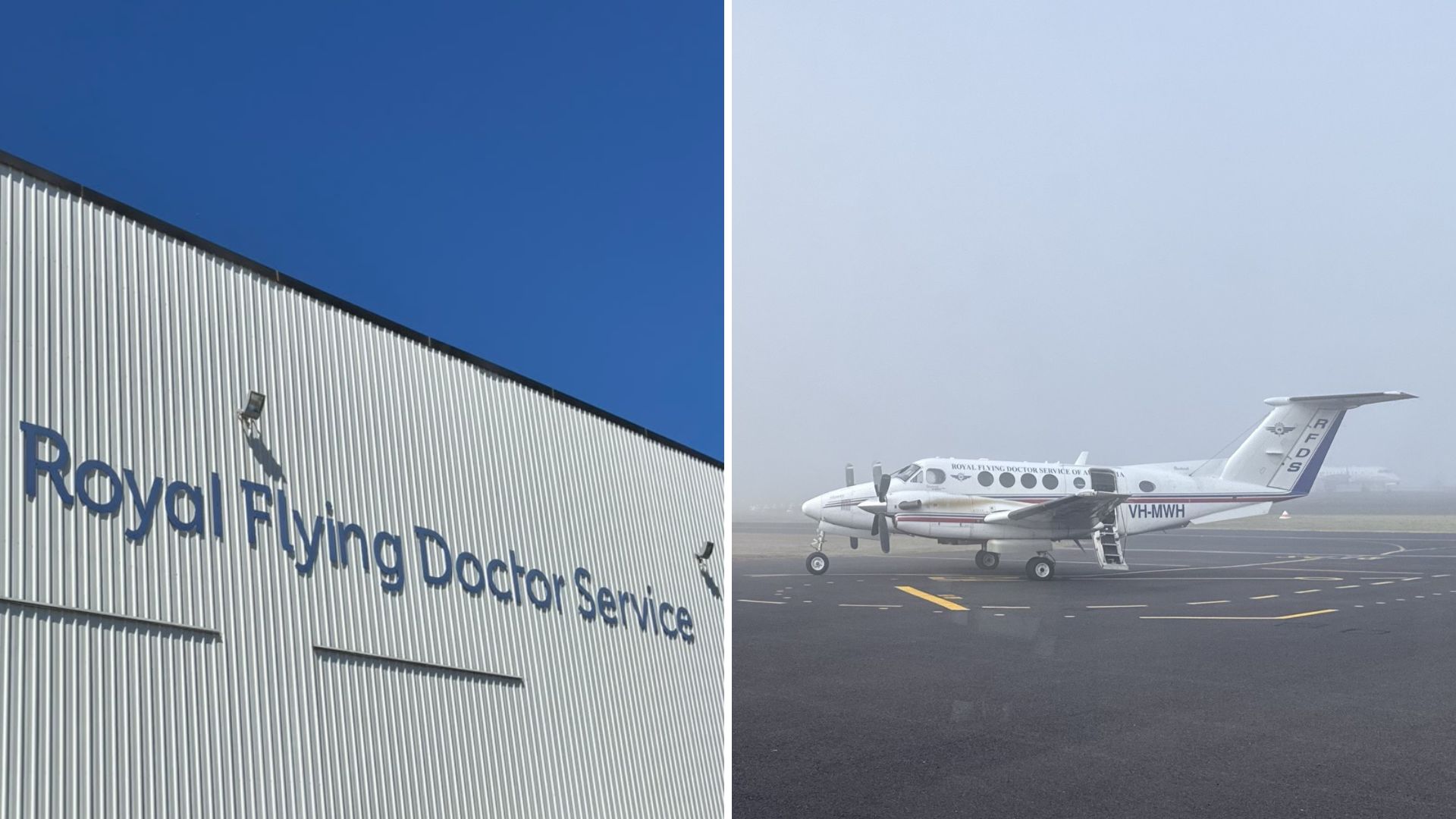
- Two final-year Charles Sturt medical students look forward to careers in rural and remote Australia after gaining hands-on experience through the new RFDS Clinical School partnership
- About 7 million Australians (27 per cent) live in rural, regional and remote Australia
- There are just 2.7 doctors per thousand in rural and remote areas compared to 4.3 doctors per thousand people in cities
Charles Sturt University medical students are gaining practical and memorable experience through the new Royal Flying Doctor Service (RFDS) Clinical School.
This is a partnership between the University and the RFDS South Eastern Section (RFDSSE) designed to prepare the next generation of rural and remote doctors.
The initiative provides students with learning opportunities across remote primary healthcare clinics, community health programs and rural medical services through Western and Far Western NSW.
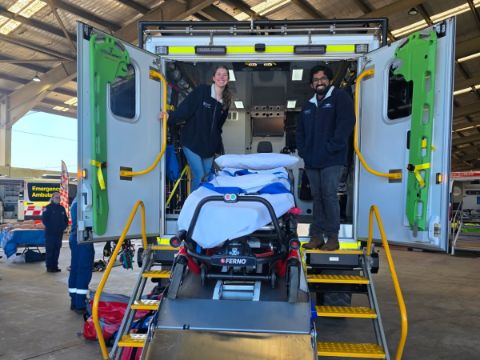 Ms Brianna Mead from Nowra and Mr Antez Varghese (both pictured left) from Forbes are among the first Charles Sturt students to undertake placements through the RFDS Clinical School based in Dubbo.
Both are 23 years old and completing the Bachelor of Clinical Science (Medicine)/Doctor of Medicine in the Charles Sturt School of Rural Medicine in Orange. They are in their fifth and final year of study and both hope to build their careers in rural and regional Australia.
“I want to pursue a career in medicine that allows me to stay in rural and regional areas of Australia,” Antez said. “I really enjoy procedural work, especially surgical, so I would love a mix of rural health with lots of procedures.”
Brianna said, “I am open to anything medical, except surgical. Ultimately, I know I will enjoy a career in medicine that allows me to stay rural and regional, in general practice and family medicine or oncology.”
Both have been based in rural NSW clinical practices the past few years; Antez is based at the Forbes-Parkes Clinical School for the past three years, and Brianna in Albury-Wodonga for one year, then Forbes-Parkes for two years.
As part of the first year of the new partnership between Charles Sturt and RFDS South Eastern Section, both students also completed a placement through the RFDS Clinical School in Dubbo, gaining exposure to remote primary healthcare, community health initiatives and rural medical practice across far western NSW.
One-in-four Australians (approx. seven million) live in rural, regional or remote areas. Compared with those in metropolitan areas, they have shorter lives, higher levels of disease and injury, and poorer access to and use of health services.
The way GPs are distributed across the country has an impact on rural, regional, and remote areas, with just 2.7 doctors per thousand in rural and remote areas compared to 4.3 doctors per thousand people in cities.
Charles Sturt Vice-Chancellor Professor Renée Leon said Antez and Brianna are exemplars of the students the School of Rural Medicine aims to attract and educate to provide professional healthcare in rural and regional Australia.
“At Charles Sturt University’s School of Rural Medicine, we aim to train students with the skills they’ll need to work as a rural doctor,” Professor Leon said.
“The students’ focus on rural generalist medicine will help them develop an understanding of the different role rural doctors play in primary and acute care settings. This focus will highlight their importance in our healthcare system.”
RFDSSE Chief Medical Officer, Dr Shannon Nott, said students gain a unique insight into rural and remote healthcare through the program.
“Through the RFDS Clinical School, Charles Sturt students gain exposure to much more than traditional clinical placements,” Dr Nott said.
 “It’s an immersive model of rural medical education that helps students build the skills, confidence and community connections needed for a career in rural practice.
“Students support remote clinics in communities such as Grawin, Nymagee, Weilmoringle and Warren, contribute to health education initiatives at community and agricultural events, and experience first-hand the breadth of healthcare delivery across the Far West and Western NSW.”
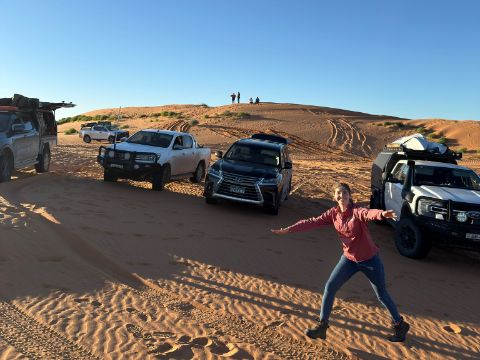
Brianna (pictured in the desert) said she was particularly drawn to study at Charles Sturt University for its focus on rural health and its location in Orange.
“Moving to Orange was a lot less of an adjustment for me coming from a regional town, rather than moving to a city to study medicine, especially coming straight out of high school,” she said.
Antez said he chose to study at Charles Sturt because it meant that he could complete his degree close to home and undertake placements locally.
“Charles Sturt offers a lot of clinical medicine quite early in the course, which I thoroughly enjoy,” he said. “Being an undergraduate degree also suited me well as I was a school leaver.”



Social
Explore the world of social