
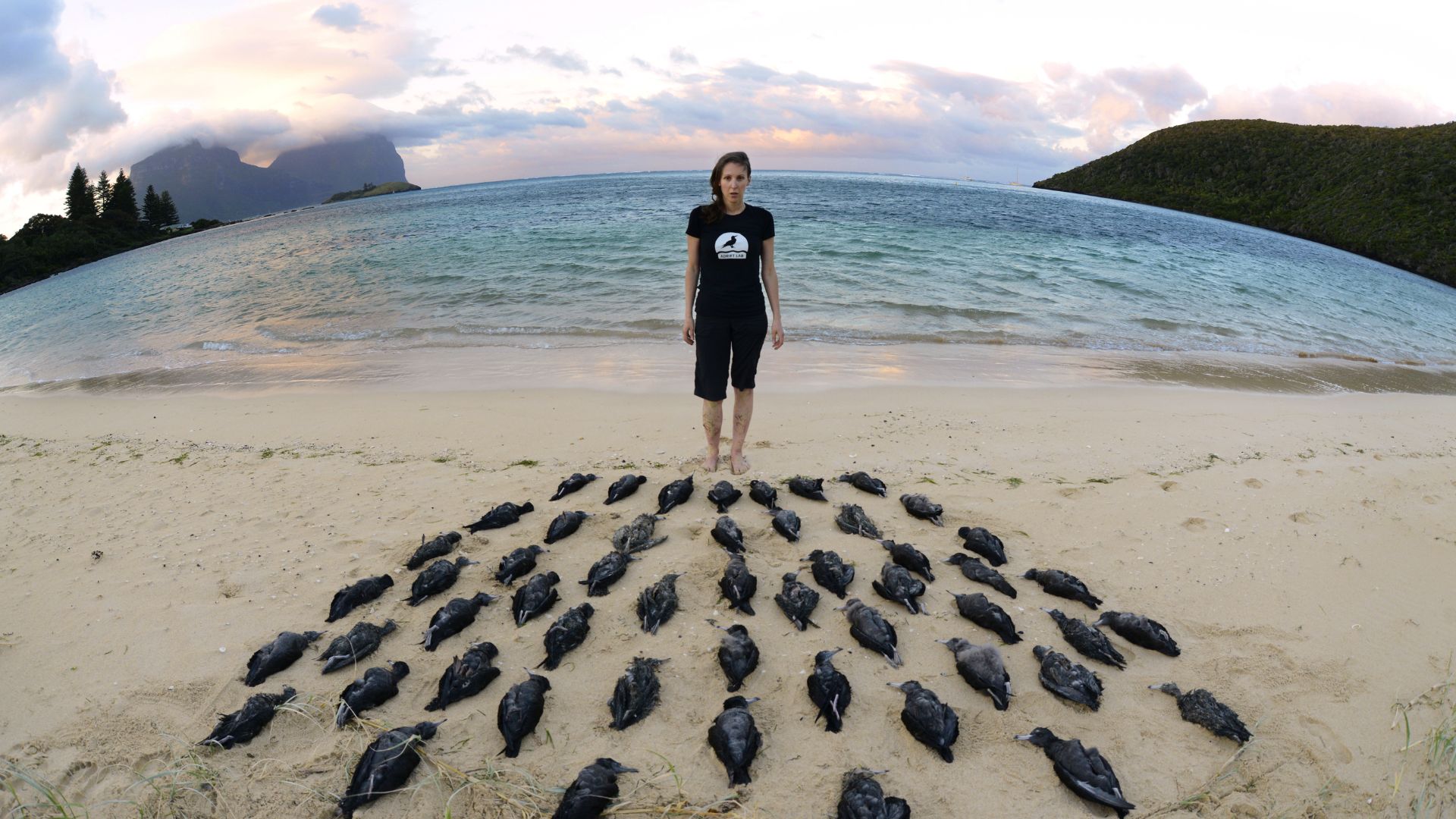
- Research led by Charles Sturt University resolves a 15-year-old ‘grand challenge’ in marine pollution science: plastic pollution doesn’t just injure seabirds it kills them
- The research found ingesting more than one gram of plastic caused at least an 11 per cent reduction in the probability that a bird would survive to return and breed, while birds that ingested more than five grams of plastic pollution were rarely seen again
In a world first, a Charles Sturt University researcher and her team have found direct evidence of wild seabirds that ingest plastic rubbish are killed, not just harmed.
 Dr
Jennifer Lavers (pictured top), an adjunct ecology researcher in the University’s
Gulbali
Institute for Agriculture Water and Environment, has closed a 15-year-old ‘grand challenge’ in marine pollution science: she has proven that plastic pollution doesn’t just injure individual seabirds, but drives declines in their populations.
Dr
Jennifer Lavers (pictured top), an adjunct ecology researcher in the University’s
Gulbali
Institute for Agriculture Water and Environment, has closed a 15-year-old ‘grand challenge’ in marine pollution science: she has proven that plastic pollution doesn’t just injure individual seabirds, but drives declines in their populations.
The Charles Sturt University-led study, recently published in Proceedings of the National Academy of Sciences, draws on 15 years of mark-recapture data on the Sable Shearwater (Ardenna carneipes), a medium-large seabird that normally feeds on squid found off Australia’s coastline.
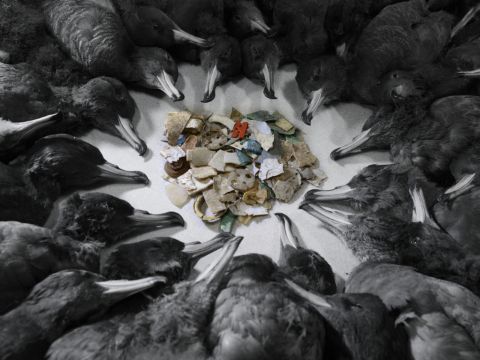
The findings are stark. Ingesting more than one gram of plastic — common among the birds studied — caused at least an 11 per cent reduction in the probability that a bird would survive to return and breed on Lord Howe Island in the western Pacific Ocean. Birds that had ingested more than five grams of plastic pollution were almost never seen again.
“Documenting the population-level impacts of plastics exposure in wildlife has been one of the ‘Grand Challenges’ in pollution research,” Dr Lavers said.
“Because it has been so difficult to accrue scientific data, some have wrongly concluded that plastic is not a serious issue for wild species.
“Demonstrating cause and effect in long-lived species that occupy vast oceans takes time and effort; our team used 15 years of data to show for the first time that the more plastic a bird consumes, the less likely it is to survive and return to their colony to breed.”
“Research into the spread of plastic rubbish across the world’s oceans has lagged around three decades behind other environmental crises, with little or no data on plastic’s true toll on wild seabird populations.”
Dr Lavers believes more than 1,000 marine, freshwater, and terrestrial species consume plastic pollution.
“For nearly all these species, we lack the detailed data to conclusively say ‘plastic is having an impact’,” Dr Lavers said. “But the damage is still happening and without immediate action to stem the flow of plastic into our environment, this will only get worse.”
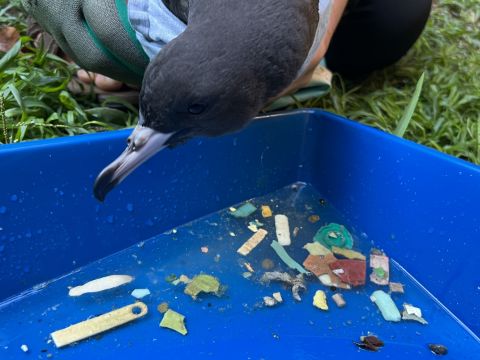 At present, the long lifespan of Sable Shearwaters mean that the Lord Howe population is currently in a slow decline. However, this could change rapidly as the impacts of plastic pollution in the Pacific Ocean catches up with the colony.
The researchers have recommended that additional monitoring methods ─ beyond recording chick fledging success and adult survival – should be considered when assessing the health of seabird colonies.
All animal handling was conducted under an Animal Research Authority in accordance with protocols approved by the Charles Sturt University Animal Ethics Committee.




Social
Explore the world of social