
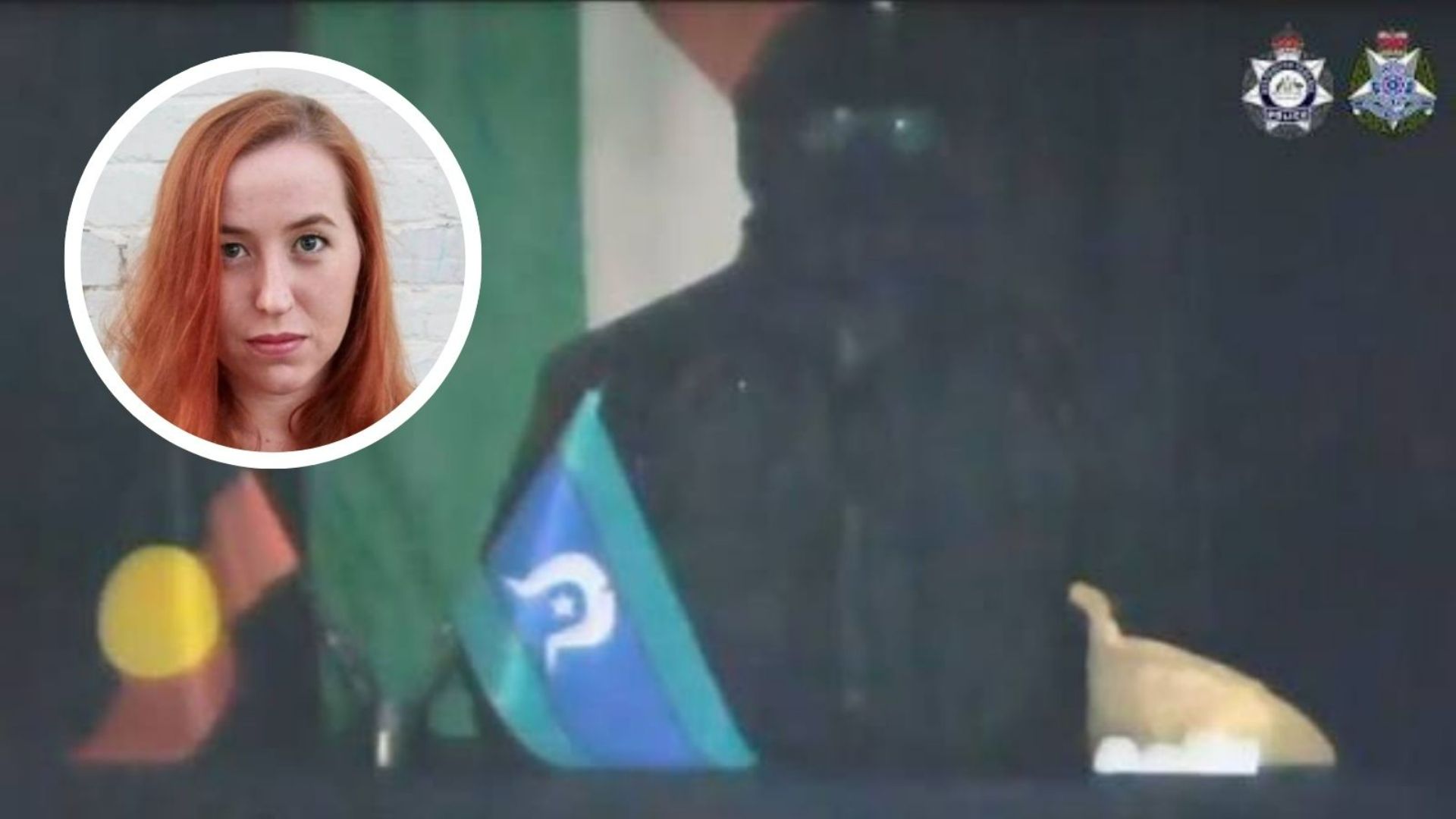
- Terror investigation into defence manufacturer attack highlights renewed concerns about politically motivated far-left violence
- Authorities warn Middle East conflict may be driving increased far-left extremist activity in Australia
By Charles Sturt University Associate Professor in Terrorism and Security Studies, Kristy Campion. Originally published by The Conversation.
At 3:55am on July 5 last year, an anonymous five-person cell allegedly committed an attack at Lovitt Technologies, a Victorian defence manufacturer.
Now, Australian authorities have announced they are investigating it as a possible act of far-left terrorism, “motivated by anarchist and revolutionary ideology”. In Australia, serious damage to property or risk to health and safety of the public can be considered a terrorist act.
Authorities have been concerned about right-wing terrorism for some years. News reports suggest it is the first time a left-wing attack has been investigated as a potential act of terror and it may pose a growing risk in Australia.
The group that attacked Lovitt Technologies allegedly set fire to three cars and vandalised the premises. Some ten days later, people representing the cell issued a claim of responsibility for the attack, published by pro-Palestinian movement Unity of Fields.
The cell claimed it targeted Lovitt Technologies as a “bottleneck” in the Australian supply chain for the production of Lockheed Martin’s F-35 fighter jet components. These, they argued, had been deployed in the service of colonialism, American imperialism and the arming of Israel. They believed it had contributed to the “accelerated genocide against the Palestinian people”.
They warned they possessed the addresses of “complicit” workers who manufactured these products on stolen Wurundjeri country. They specifically rejected their actions as “thoughtless vandalism” and instead described it as a “clear and serious threat” to those who continued making weapon components.
On Tuesday, Australian Federal Police Detective Superintendent Anthony Hall said: "We cannot overstate the seriousness of this criminality and the AFP, together with our partners, will not tolerate acts of terror motivated by extremist ideologies aiming to cause fear and anguish in our community."
The spectre of far-left terror has been monitored in Australia for decades. Since the late 1960s, the Australian Security and Intelligence Organisation (ASIO) has scrutinised extreme left-wing organisations and people.
Between 1968 and 1972, organisations such as the People’s Liberation Army and the Australian Liberation Army were part of a four-year campaign that included 17 major acts of vandalism, 15 acts of property damage, eight uses of fire/incendiary devices, two bombings and two shootings.
They galvanised in opposition to conscription, the Vietnam War and American imperialism, while championing Aboriginal emancipation and the abolition of the White Australia policy.
In 2020, official submissions to the Parliamentary Inquiry on Extremism and Radicalism in Australia noted the extreme left was a lower security threat than far-right terrorism. This was supported by submissions from ASIO which stated: “left-wing extremism is not currently prominent in Australia”. This changed in recent years.
In 2025, ASIO’s Director General Mike Burgess flagged the investigation of a person who described themselves as “a radical communist anarchist” while also idolising Adolf Hitler. Another in 2026 was described as “an individual allegedly inspired by an extreme left-wing ideology”.
In a 2026 address, Burgess stated: "This gets surprisingly little media coverage but Australian companies with perceived links to Israel are being subjected to repeated acts of vandalism and arson by far-left activists. I recognise criticism of the government of Israel is not of itself antisemitic but some of the threatening statements made by the perpetrators go well beyond political protest or commentary."
The extreme left differs from the mainstream left in key ways.
First, it legitimises the use of coercive political violence to achieve its goals. It argues violence is necessary to rebuild society. Its followers often call this “militancy”, “armed struggle”, or “self-defence” rather than admitting it is terrorism.
Second, adherents are generally motivated by hard left-wing ideologies such as anarchism, Marxism and communism, all of which aim to abolish the existing sociopolitical order.
Third, they generally hold ideological positions which are anti-capitalist, anti-corporate, anti-imperialist, anti-authority and anti-military.
West Germany’s Red Army Faction, one of the most prolific left-wing terrorist groups in history, was known for arson attacks resulting in property damage, and targeting military officials and bases as part of its opposition to American imperialism, nuclear weapons and the Vietnam War.
Left-wing terrorism is not a new feature of the Australian threat landscape. But recent events, and the threats associated with these events, would indicate it may be resurging.
Indeed, authorities have warned the conflict in the Middle East seems to have resulted in a spike in far-left extremism in recent years.




Social
Explore the world of social