

- Researchers recorded a motor neuron disease (MND) incidence of 3.72 cases per 100,000 people each year in the region
- Western NSW patients travel an average of 139 kilometres for specialist care, prompting calls for national MND notification
New research shows an unusually high rate of motor neuron disease (MND) across western NSW, more than four times the latest global estimate.
In some areas the prevalence was up to seven times higher than expected, with several higher-incidence regions overlapping with areas of more intensive agricultural activity.
Patients in the region are also travelling an average 139 kilometres for specialist care, with the research findings strengthening calls for MND to become a notifiable disease across Australia.
The first comprehensive population study of MND across the Western NSW Local Health District examined 51 people living with or newly diagnosed with the fatal neurodegenerative disease between 2023 and 2025.
Across the region, researchers recorded an age-standardised MND incidence of 3.72 cases per 100,000 people each year – more than four times the latest global estimate cited in the study.
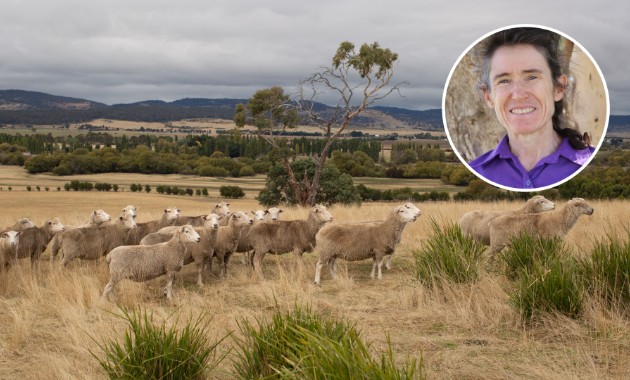
 Lead author Dr Amanda Wright (pictured on right, with co-researcher Dr Lyndal Henden) in the Charles Sturt University School
of Rural Medicine and Macquarie University’s Motor Neuron Disease Research Centre, said geography was creating significant challenges.
Lead author Dr Amanda Wright (pictured on right, with co-researcher Dr Lyndal Henden) in the Charles Sturt University School
of Rural Medicine and Macquarie University’s Motor Neuron Disease Research Centre, said geography was creating significant challenges.
“For the first time in Australia, we are mapping where people with MND live. What we are seeing raises important questions for rural health, with unexpectedly high rates emerging across parts of regional NSW,” Dr Wright said.
“That is particularly concerning in places like Oberon and Walgett, where we found some of the highest rates of MND and patients can face long distances and stretched local health services.”
Despite those distances, the average time from first symptoms to diagnosis was about nine months – shorter than previously reported Australian estimates – suggesting effective regional referral pathways can overcome some geographic barriers.
The study also revealed an unusual clinical pattern. Almost half of cases – 47 per cent – were bulbar-onset MND, a form of the disease that often first appears through changes to speech or swallowing rather than weakness in the arms or legs and can progress rapidly.
Among women in the cohort, 61 per cent had bulbar-onset disease – substantially higher than the 30 to 40 per cent generally reported – while women also showed higher incidence, prevalence and mortality than men, reversing the usual male predominance seen in MND.
The current study suggests that environmental influences might have attributable impacts on the incidence and prevalence of MND in agricultural regions such as Walgett and Oberon and need further investigation.
Researchers say these unusual patterns highlight why more complete population-level data is needed to understand where MND is occurring and why.
NSW became the first Australian jurisdiction to make MND a notifiable disease in September 2026, and Dr Wright said nationally consistent notification was now needed to close gaps in reporting.
“NSW has made an important start but MND does not stop at the border,” Dr Wright said.
“Walgett was one of the higher-prevalence areas in our study and sits on the Queensland border.
“People in these communities live, work and access healthcare across jurisdictions, often where GPs and other health services are already stretched.
“Better reporting across Australia would help us identify where disease burden is highest, where services are needed and where researchers should be looking more closely for answers.”
The findings add to evidence of a growing MND burden in Australia, with previous Macquarie-led research finding the annual number of deaths from MND more than tripled between 1986 and 2023.
Professor Kelly Williams, Head of Research at Macquarie University’s Motor Neuron Disease Research Centre, said the results had important implications for regional health planning.
“MND requires a whole network of care – neurologists, GPs, allied health, genetic counselling, respiratory support, intensive home-care, and palliative care as the disease progresses,” Professor Williams said.
“If the burden in regional Australia is higher than we have understood, that has real implications for governments in making sure those services are available. Better data would help us put the healthcare resources where patients actually need them.”
Dr Lyndal Henden, senior author and Academic Lead of MND Clinical Research at Macquarie Medical School, said that uncertainty demands an investigation of how genetic history and local environments may interact.
“By mapping prevalence across the region, we can identify communities where the observed burden of MND is higher, but it does not tell us what is causing the disease,” Dr Henden said.
“Better genetic testing, environmental and occupational exposure data and consistent case information across Australia will help us direct research to the right communities and ask much more precise questions about why MND occurs.”
The study offers an important 2023–2025 baseline from before mandatory notification began in NSW earlier this month.
The study, ‘Motor neuron disease in rural Australia: a population-based observational study of epidemiology, clinical characteristics and regional variation’, has been submitted to BMJ Open.
The findings were presented at this week’s National MND Conference 2026 in Adelaide.



Social
Explore the world of social