
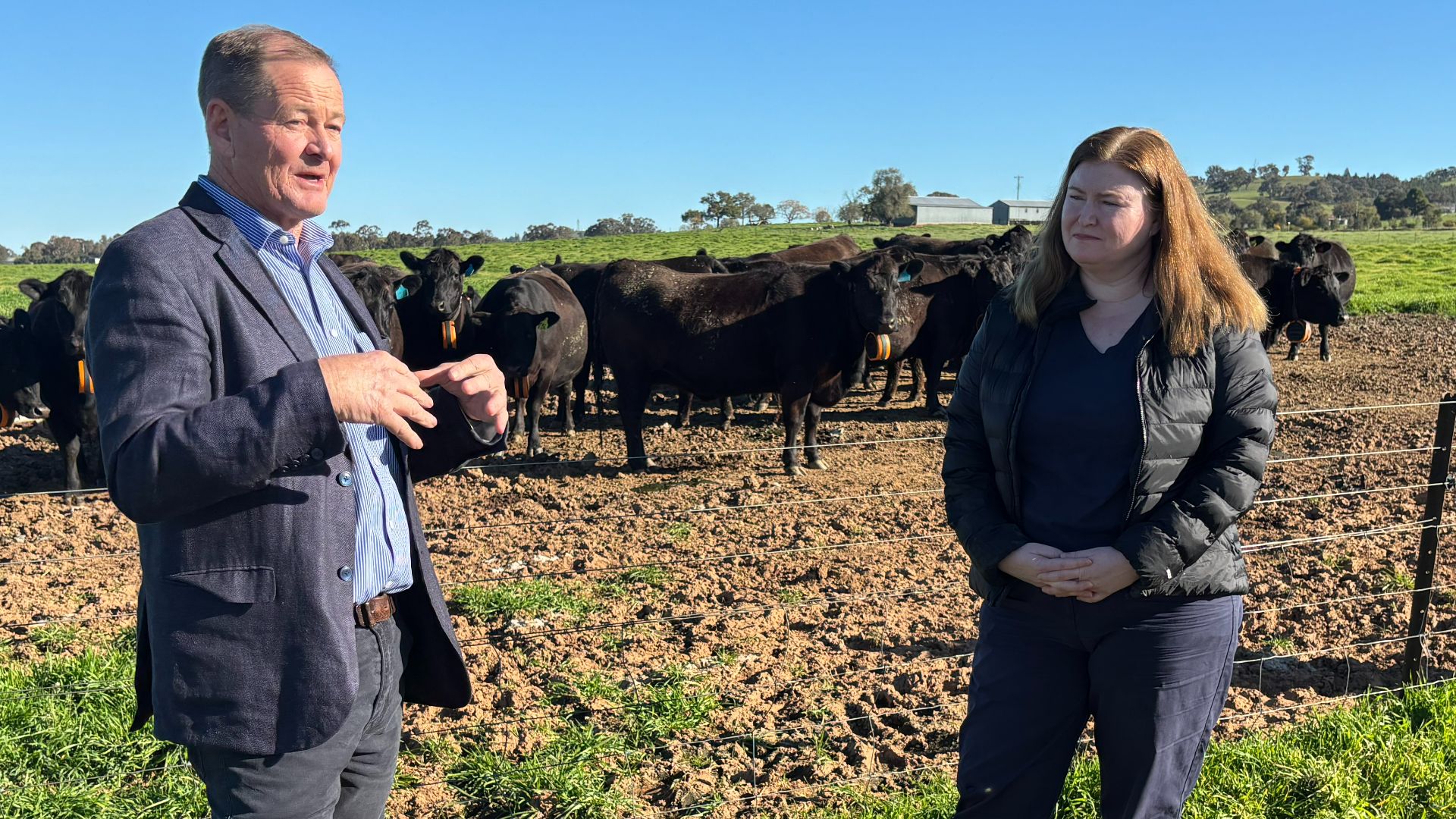
- Charles Sturt University Virtual Fencing Demonstration Trial uses GPS-defined boundaries and electronic neckbands to manage cattle without the need for traditional fencing
- Australia’s beef cattle farming industry is valued at $33.6 billion, with the broader red meat and livestock industry generating $77.1 billion in total annual turnover
Early results of a Charles Sturt University trial are demonstrating the significant potential of virtual fencing technology to transform livestock management, improve farm productivity and support animal welfare outcomes.
Conducted at the University’s Global Digital Farm in Wagga Wagga, the Charles Sturt Virtual Fencing Demonstration Trial uses GPS-defined boundaries and electronic neckbands to manage cattle movements without the need for traditional fencing.
The technology enables producers to create, modify and move grazing areas within minutes using a computer or mobile device, delivering unprecedented flexibility in livestock and pasture management.
One of the strongest early findings from the trial is how quickly cattle learn to respond to the audio stimulus delivered through the neckbands without needing electrical pulses.
At the beginning of the project, approximately 60 per cent of fence interactions were resolved using the audio warning alone. As the cattle adapted, that figure increased to about 97 per cent audio-only interactions, demonstrating that animals are responding to the warning cue without requiring electrical stimuli.
Early indications are that virtual fencing technology can operate as a communication tool rather than a correction device, reinforcing confidence in animal welfare outcomes.
Minister for Agriculture, Regional and Western NSW, The Hon. Tara Moriarty, said virtual fencing has the potential to deliver major benefits for producers across NSW.
"The NSW Government is proud to support this innovation to help farmers improve productivity while maintaining strong animal welfare standards,” Minister Moriarty said.
"The technology gives producers greater flexibility to manage grazing, reduce infrastructure costs and respond more quickly to changing seasonal conditions."
According to Meat and Livestock Australia data published in October last year, the beef cattle farming industry in Australia is valued at $33.6 billion, with the broader red meat and livestock industry generating $77.1 billion in total annual turnover.
The sector contributes approximately $14.3 billion in direct value-add to Australia's Gross Domestic Product (GDP) and supports more than 460,000 jobs across farming, processing and retail sectors.
Initial observations from the trial indicate the technology has the potential to improve the industry’s productivity by significantly reducing costs associated with building and maintaining internal fencing, lowering labour requirements and enabling more responsive grazing management.
Charles Sturt University Vice-Chancellor, Professor Renée Leon said the trial positions NSW as a leader in practical digital agriculture innovation.
“Virtual fencing technology has the potential to drastically improve farm productivity, strengthen environmental stewardship and reduce labour pressures,” Professor Leon said.
“The project also provides a platform for broader digital agriculture innovation in Australia, including automated livestock monitoring, health alerts, behavioural analysis and AI-assisted management systems.
“We are delighted with the early results that we’re seeing. It’s a fantastic example of the industry-shaping research that we have underway at Charles Sturt to solve real life problems in regional Australia.”
The technology also offers environmental benefits through the creation of temporary exclusion zones around waterways, riparian areas and areas undergoing rehabilitation.
A second phase of the demonstration trial is planned on a commercial beef enterprise near Jingellic, where the technology will be tested under larger-scale farming conditions, varied terrain, breeding cattle and riparian management scenarios.
The project is run in conjunction with the University of Adelaide, Meat & Livestock Australia and Gallagher eShepherd.



Social
Explore the world of social